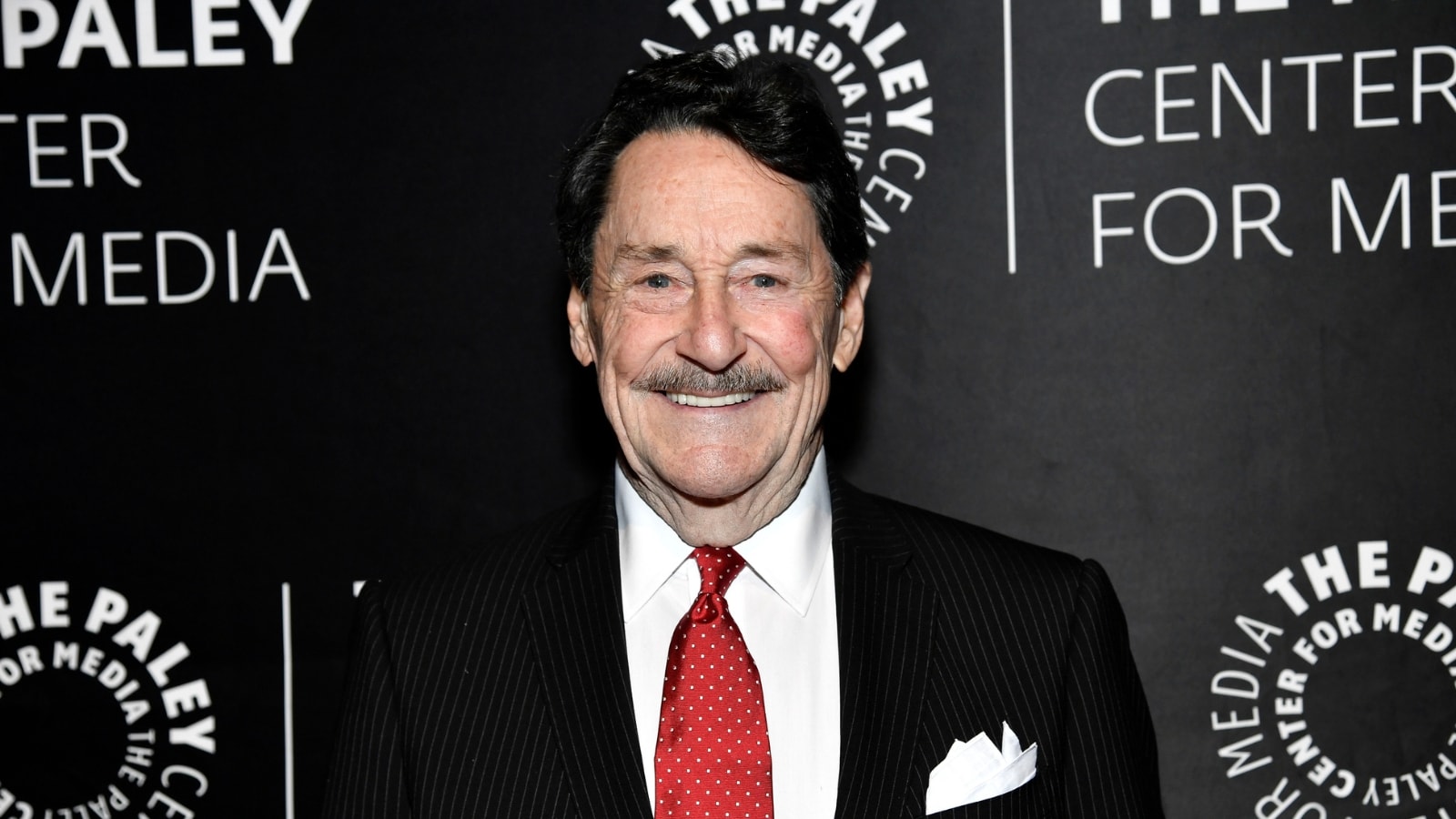
The gravel was never an accident. It was born from a place of observation, a deliberate choice by a young actor watching trucks grind up steep grades on the highways of his youth, listening to the guttural roar of heavy machinery straining against gravity. Peter Cullen did not simply voice Optimus Prime; he engineered the acoustic architecture of an entire generation's moral imagination. When the news of his passing at the age of 85 settles into the cultural consciousness, the immediate impulse across fandoms and media outlets will be to offer standard, polite eulogies about a man who played a cartoon robot. That response misses the mark entirely. Cullen was not just a voice actor doing a Saturday morning gig. He was the primary moral anchor for millions of children who grew up in the 1980s, providing a blueprint for compassionate authority during a decade defined by bombastic, chest-beating machismo.
Animation history is littered with actors who treated their craft as a paycheck between commercial auditions. Cullen approached the microphone with the gravity of Shakespearean theater. To understand why his performance as the leader of the Autobots resonated so deeply, you have to look backward at how television executives viewed children's entertainment in the early years of the Reagan administration. Deregulation had cleared the path for half-hour toy commercials disguised as cartoons. The mandate from toy manufacturers was simple: make it loud, make it fast, and move plastic merchandise off store shelves by Monday morning. Most voice performances from that era reflected that cynical transactional nature. They were shrill, caricatured, and disposable.
Cullen resisted this impulse by anchoring his interpretation of Optimus Prime in a very specific psychological reality. He did not base the character on a conqueror or a general barking orders from a safe distance. Instead, he modeled the cadence and tone after his older brother, Larry Cullen, a decorated captain in the United States Marine Corps. Larry had returned from Vietnam quiet, unassuming, and possessing a deep, calm strength that required no raised voice to command respect. "If you're a true leader," Peter recalled his brother telling him when he auditioned for the role, "you don't have to shout. When you shout, you're losing control." That single piece of advice transformed a Saturday morning robot into a masterclass in understated leadership.
The cultural impact of that choice cannot be overstated. Throughout the 1980s, pop culture was saturated with hyper-aggressive antiheroes. Sylvester Stallone and Arnold Schwarzenegger were blowing up entire armies while delivering one-liners. Action cartoons featured muscle-bound barbarians and screaming commanders. Into that sonic landscape walked Optimus Prime: a character with the power to level cities, yet who chose to speak in measured, deliberate, baritone sentences that prioritized the safety of others above his own survival. The famous line, "Freedom is the right of all sentient beings," was not delivered as a cheap political slogan. Cullen uttered it with a heavy, bruised resonance that suggested he had personally witnessed the cost of losing that freedom.
Animators and directors often talk about the chemistry of a recording booth, but the magic of the original 1984 Transformers series relied heavily on the dynamic between Cullen and Frank Welker, the voice of the treacherous Megatron. While Welker deployed a rasping, razor-sharp hiss that externalized pure ambition, Cullen provided the counterweight. Their vocal sparring matches created dramatic tension that elevated scripts that otherwise would have been forgotten as low-effort afternoon filler. Even when the plot mechanics grew absurd—involving alien energy cubes and bizarre planetary transformations—the dialogue between Optimus and Megatron retained a bizarre, theatrical weight. They sounded like tired veterans of a war that had gone on long past its logical expiration date.
The test of that emotional weight arrived abruptly in 1986 with The Transformers: The Movie. Studio executives, panicked by sagging toy sales and eager to clear the shelves for a new generation of merchandise, made the corporate decision to slaughter the iconic cast of characters, including Optimus Prime. The death scene was handled with a brutal, uncharacteristic finality for a children's film. As Optimus grayed, lost his color, and collapsed, millions of children experienced their first genuine brush with permanent fictional loss.
Decades later, fans who were children in 1986 still speak about that theater screening with the solemnity of war veterans recalling a lost platoon. The backlash caught Hasbro and the studio completely off guard. They had anticipated mild disappointment; instead, they faced an existential rebellion. Letters flooded studio headquarters. Children cried in lobbies. Death threats were mailed to writers who had signed off on the script. That visceral, angry grief was entirely a tribute to Peter Cullen's performance. A lesser actor would have made the death scene melodramatic or campy. Cullen played it with a quiet, exhausted dignity that forced an entire generation to confront mortality years before they were psychologically equipped to handle it.
The irony of Cullen's career is that he spent decades trying to distance himself from the voice before realizing its profound value to his audience. After the original series ended, he took on diverse voice work, ranging from the gloomy antagonist Eeyore in Disney's Winnie the Pooh to various monster vocalizations in feature films like Predator, where he provided the iconic clicking sounds and roars of the alien hunter. Yet, no matter how many disparate characters he voiced, the shadow of the red-and-blue semi-truck followed him through every recording studio in Hollywood.
When director Michael Bay began casting his live-action Transformers adaptation in the mid-2000s, the studio initially wanted a contemporary, high-profile movie star to voice Optimus Prime. They worried that Cullen, then in his sixties, lacked modern box-office cachet or that his voice had aged out of the demographic. The internet reacted with instantaneous, white-hot fury. Petitions circulated. Fan conventions erupted. The collective memory of a generation rallied around a single demand: if Optimus Prime did not sound like Peter Cullen, the movie was dead on arrival.
Bay, to his credit, listened. When Cullen walked into the audition room for the 2007 film, he did not need to audition; he simply opened his mouth and spoke those familiar words. The room went silent. The decades between the end of the cartoon and the modern blockbuster evaporated in a single breath.
Stepping back into the role for a new millennium presented a fascinating challenge. The cinematic version of Optimus Prime was no longer the cautious, diplomatic guardian of the 1980s cartoon. Bay’s films reimagined the Autobot leader as a hardened, weary combatant willing to execute enemies with brutal efficiency when pushed to the brink. This darker interpretation divided longtime fans. Some argued it violated the core pacifist ethos of the character; others saw it as a realistic evolution for a leader forced to fight an unwinnable, endless war against extinction.
Cullen navigated this tonal shift with remarkable professional agility. He injected the new dialogue with a heavier, more fatigued resonance. In those live-action films, Cullen's Optimus did not sound noble because he enjoyed righteousness; he sounded noble because he was desperately trying to hold onto his humanity—or his cybertronian equivalent—while drowning in an ocean of endless violence. He gave the digital effects a soul, transforming what could have been a noisy, unintelligible mess of shifting CGI metal into a tragic figure carrying the literal and figurative wreckage of his entire species.
The broader landscape of voice acting has shifted dramatically since Cullen first stepped up to a microphone in the 1970s. The industry has increasingly prioritized celebrity casting over professional voice actors, trading technical skill and character versatility for marketable names on a poster. This trend diminishes the craft, treating vocal performance as a marketing tool rather than an artistic discipline. Cullen’s career stands as a monument to the opposite philosophy. He was a character actor in the truest sense, someone who understood that the human voice is an instrument capable of conveying nuance, history, and moral gravity without the benefit of facial expressions or physical sets.
As the entertainment industry grapples with the ethical implications of artificial intelligence and voice cloning, the legacy of performers like Cullen takes on a new urgency. Corporations are already attempting to synthesize synthetic approximations of legendary actors to cut costs and bypass human talent. But an algorithm can calculate frequency and cadence; it cannot replicate the lived experience of a man who listened to his brother talk about the quiet cost of survival after returning from war. It cannot synthesize the empathetic weight that Cullen poured into every syllable, a weight earned through decades of working class perseverance, rejection, theatrical training, and profound respect for the audience sitting in the dark.
We are left now with the recordings. They exist on battered VHS tapes in dusty basements, on high-definition streaming platforms, and in the collective memories of adults who still catch their breath whenever they hear a large truck shift gears on a highway at dusk. Peter Cullen proved that an actor does not need to appear on screen to leave an indelible mark on human culture. He proved that imagination, delivered with absolute conviction, can turn steel into flesh and cartoons into myth. The engine has finally stopped running, but the echo of that voice remains carved into the foundation of modern pop culture, refusing to fade, refusing to yield, and reminding anyone willing to listen that true strength has no need to raise its voice.



