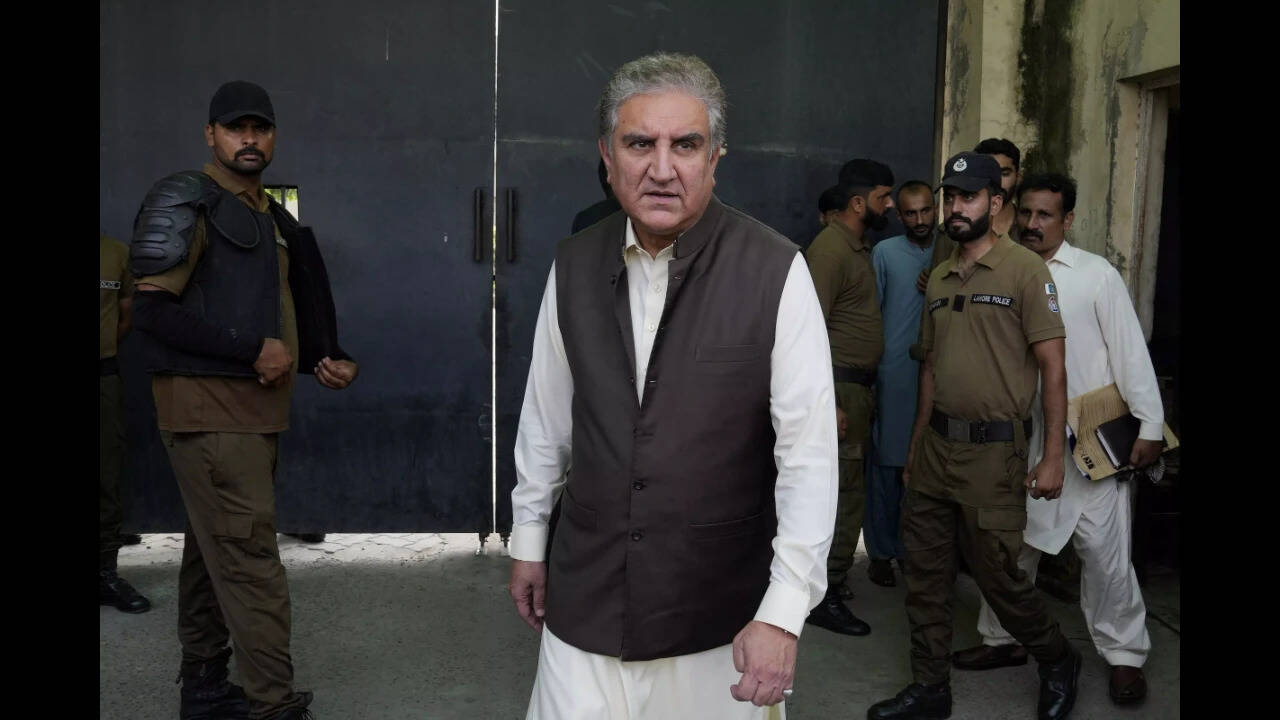
He fainted while walking inside his prison barrack, took a hard fall, and ended up in a cardiac ward.
When news broke in November 2026 that Pakistan's former foreign minister Shah Mahmood Qureshi had collapsed at Lahore's Kot Lakhpat Jail and was rushed to the Punjab Institute of Cardiology (PIC), most headlines treated it like a standard breaking news wire. One paragraph on the dizzy spell. One line on the hospital transfer. Done. If you found value in this article, you should look at: this related article.
That surface-level reporting misses the bigger picture. Qureshi isn't just any 70-year-old detainee having a bad health day. He's the vice-chairman of Imran Khan's Pakistan Tehreek-e-Insaf (PTI), a man who spent four decades at the top of Pakistani diplomacy, and someone who has been sitting behind bars since August 2023 without a clear exit ramp. When a prisoner of that profile hits the floor in a maximum-security facility, you're looking at a collision between aging biology, slow-motion courtroom strategy, and Pakistan's volatile political reality.
What Actually Happened Inside Kot Lakhpat Jail
Let's strip away the rumors and stick to the confirmed timeline. In early November 2026, Qureshi was taking a routine walk inside the compound of his barrack at Kot Lakhpat Jail in Lahore when he suddenly lost consciousness and collapsed. For another look on this event, see the recent update from NPR.
The fall wasn't minor. According to prison officials, the dizzy spell left him with physical injuries to his knee and arm. On-site jail medical staff ran initial blood tests, but a 70-year-old man blacking out without warning isn't something a prison dispensary can simply wave off with painkillers.
By November 10, authorities transferred him under heavy security to the Punjab Institute of Cardiology for specialized evaluation and cardiac monitoring. His legal counsel, Rana Mudassar Umar, confirmed the emergency transfer after Qureshi's family began sounding the alarm publicly.
His son, Zain Hussain Qureshi, visited him at Kot Lakhpat right after the incident and shared specific details on X. Alongside the fainting episode and blood work, Zain pointed out that his father urgently needed a CT scan and even had a cracked tooth requiring a qualified dentist—small details that reveal just how rough daily maintenance becomes during multi-year incarceration. Meanwhile, his daughter, Meher Bano Qureshi, reminded the public that three and a half years earlier, her father entered prison healthy before facing years of relentless confinement.
Why His Legal Case Keeps Dragging On
If you're wondering why a former foreign minister is still in jail years after his initial arrest, welcome to the maze of Pakistani anti-terrorism courts.
Qureshi was first taken into custody in August 2023. Initially, much of the state's focus centered on the high-profile cypher case—an accusation that he and Imran Khan leaked classified diplomatic communications. Here's the catch that casual readers often forget. Qureshi actually fought and won acquittals in major cases, including the cypher prosecution and specific anti-terrorism charges tied to the May 9, 2023 protests, such as the Mughalpura police vehicle arson case.
So why didn't he walk free?
Because in Pakistan's legal system, winning one case rarely opens the prison gate when prosecutors hold a stack of parallel First Information Reports (FIRs). Every time defense lawyers clear one hurdle, another rioting or conspiracy file tied to the May 9 unrest keeps him remanded in judicial custody. Meher Bano Qureshi publicly noted that over 90 bail hearings had passed without relevant police records even being produced in court.
I've watched South Asian political detentions play out like this for years, and the pattern is unmistakable. Prolonged pre-trial detention becomes the punishment itself. You don't need a final conviction to neutralize a senior opposition strategist if you can keep him shuttling between Kot Lakhpat barracks, armored prison vans, and anti-terrorism courtrooms for over three years.
The Real Medical Risk Behind Prison Walls
People often assume high-profile politicians get VIP treatment in Pakistani jails. Sometimes they do get better quarters than ordinary inmates. Even so, a prison cell at age 70 takes a brutal toll that no separate barrack can fix.
Think about the mechanics of a sudden syncope episode—the medical term for fainting—in a septuagenarian. When someone collapses while walking, doctors immediately look for three things:
- Cardiovascular triggers. Arrhythmias, sudden drops in blood pressure, or blocked arteries become far more likely under chronic stress and poor sleep. That's exactly why Lahore authorities didn't send him to a general hospital—they sent him straight to the Punjab Institute of Cardiology.
- Neurological warning signs. A sudden blackout paired with a hard fall requires imaging, which explains why Zain Qureshi specifically demanded a CT scan to rule out transient ischemic attacks or head trauma from hitting the concrete.
- Cumulative metabolic strain. Limited sunlight, disrupted meal schedules, restricted mobility, and years of psychological pressure quietly erode cardiovascular resilience.
You can't replicate a cardiac telemetry unit inside a 19th-century prison layout. Delaying specialized diagnostics by even 24 hours after an unexplained collapse creates massive liability for jail administrators—not just medically, but politically.
Why This Hospitalization Matters for Pakistani Politics
Make no mistake. In Islamabad and Lahore, a hospital transfer for a top PTI leader is never purely a medical event.
For Imran Khan's party, Qureshi has long been the seasoned parliamentary operator who bridges populist street energy with establishment diplomacy. Keeping him locked up since 2023 deprived PTI of its most experienced negotiator. Now, seeing him stretchered or escorted into a cardiology ward hands the opposition a potent emotional rallying point.
At the same time, the ruling coalition faces a lose-lose dilemma. If authorities keep an ailing 70-year-old former foreign minister behind bars after 90-plus bail hearings, domestic human rights groups and international observers sharpen their criticism of Pakistan's judicial independence. Yet if courts grant him medical bail, it cracks open the legal containment strategy used against PTI's top tier since 2023.
Honestly, this is where state overreach usually hits a wall. You can manage courtroom calendars, and you can delay police case files, but you can't negotiate with a 70-year-old's blood pressure.
How to Follow Verified Updates Without Falling for Rumors
Whenever a prominent Pakistani politician enters a hospital, social media turns into a rumor mill within minutes. Fake medical reports circulate on X, WhatsApp forwards exaggerate diagnoses, and partisan accounts claim everything from imminent release to critical life support.
If you want accurate information as Qureshi's medical evaluation and bail petitions unfold, stick to three verification habits:
- Cross-check family statements first. Zain Hussain Qureshi and Meher Bano Qureshi post direct updates from jail visits and hospital corridors on their verified X accounts, giving you unfiltered details on tests and doctors' recommendations.
- Track Lahore Anti-Terrorism Court (ATC) dockets. Look for statements from his lead counsel, Rana Mudassar Umar, regarding whether medical boards at the Punjab Institute of Cardiology submit formal fitness-for-custody reports.
- Verify through established newsrooms. Rely on on-the-ground
What Really Happened When Shah Mahmood Qureshi Collapsed in Jail
news
Former Pakistani Foreign Minister Shah Mahmood Qureshi didn't just suffer a minor fainting spell behind bars. When the senior Pakistan Tehreek-e-Insaf (PTI) leader collapsed inside Lahore's Kot Lakhpat Jail in May 2025, it triggered an emergency transfer to the Punjab Institute of Cardiology (PIC) and immediately reignited fierce debate over how Pakistan treats its high-profile political detainees.
You've probably seen the bare-bones wire reports. They tell you a 68-year-old politician felt chest pain, dropped during morning prayers, and ended up in a hospital bed. That's the surface story. If you follow South Asian politics closely, though, you know nothing involving PTI's top brass happens in a vacuum.
Let's strip away the political spin from both sides and look at the actual sequence of events, the medical realities, and the legal pressure cooker Qureshi has been sitting in since 2023.
The Morning Inside Kot Lakhpat Jail
It started right around Fajr, the dawn prayer. According to statements from his family and legal team, Qureshi experienced sudden, severe chest discomfort and collapsed inside his cell block at Kot Lakhpat Jail.
Jail medical staff didn't take chances. Given his age and well-documented history of cardiac issues, prison authorities arranged an immediate emergency transfer under heavy security to the Punjab Institute of Cardiology in Lahore. He wasn't sent to a general ward. Doctors admitted him straight into the Coronary Care Unit (CCU) for continuous monitoring.
His daughter, Meher Bano Qureshi, confirmed the hospitalization publicly shortly after the transfer. Her message was blunt and urgent. She stated that her father had fallen ill after morning prayers, needed specialized cardiac evaluation, and asked supporters to pray for his recovery while demanding unrestricted family access.
Within hours, doctors ran a battery of diagnostic tests—electrocardiograms (ECGs), troponin blood panels to check for heart muscle damage, and echocardiograms. While initial reports from hospital sources indicated his vital signs stabilized after emergency intervention, physicians kept him under strict observation to rule out acute coronary syndrome or an impending myocardial infarction.
Why His Health Deteriorated Behind Bars
People often assume high-profile politicians get five-star treatment in Pakistani prisons. Sometimes they do. Often, they don't.
Kot Lakhpat Jail isn't a luxury suite. During Punjab's brutal pre-monsoon heatwaves—when temperatures in Lahore routinely push past 42°C (107°F)—ventilation inside older prison barracks becomes a serious medical hazard, especially for detainees approaching seventy. Heat stress combined with chronic hypertension and severe psychological strain creates a textbook trigger for cardiac events.
Qureshi had been incarcerated continuously since August 2023. Think about that timeline for a second. Nearly two years of uninterrupted detention, constant court appearances, and endless legal battles take a measurable toll on anyone's cardiovascular system.
Even before his collapse, Qureshi's lawyers had repeatedly flagged his declining health before anti-terrorism courts in Lahore. They argued that prolonged confinement without consistent specialist care was putting his life at risk. Those warnings weren't just courtroom theater, as the emergency dash to PIC proved.
What Most People Get Wrong About Qureshi's Legal Trap
If you only read headlines, you might think Qureshi was jailed for a single crime and just waiting out a sentence. That's completely inaccurate.
His legal situation reflects a pattern familiar to anyone watching Pakistani politics over the past decade—the revolving-door arrest mechanism. Even when higher courts granted him bail in one case, law enforcement agencies routinely produced fresh arrest warrants in separate cases before he could walk out the prison gates.
The Cipher Case Acquittal That Didn't Free Him
In June 2024, the Islamabad High Court overturned the convictions of both Imran Khan and Shah Mahmood Qureshi in the high-profile cipher case, where prosecutors had accused them of leaking a classified diplomatic cable. On paper, that should have been a massive breakthrough.
It wasn't.
Punjab police immediately kept Qureshi in custody over cases linked to the May 9, 2023 protests—the nationwide demonstrations that erupted after Imran Khan's initial arrest, during which protesters targeted military installations and state buildings. Prosecutors charged Qureshi with incitement and conspiracy across multiple jurisdictions in Lahore, Rawalpindi, and Multan.
The Grinding Pace of Anti-Terrorism Courts
Trials under Pakistan's Anti-Terrorism Act move through dense procedural bottlenecks. Dozens of co-accused, hundreds of prosecution witnesses, and frequent adjournments mean detainees spend months—sometimes years—in judicial custody before a verdict is ever reached.
Unlike Imran Khan, who has been held primarily at Adiala Jail in Rawalpindi, authorities kept Qureshi separated in Lahore's Kot Lakhpat Jail. Separating PTI's chairman and vice-chairman wasn't an accident. It prevented them from coordinating legal strategy directly while forcing Qureshi's family and lawyers to split their efforts across cities.
How PTI and the Government Reacted
The political fallout from his hospitalization was immediate and predictable.
PTI leadership seized on the incident to accuse the federal government and Punjab's provincial administration, led by Chief Minister Maryam Nawaz, of deliberate medical neglect. Party spokespersons argued that keeping an elderly former foreign minister—a man who represented Pakistan at the United Nations and across global capitals—in harsh detention conditions amounted to political victimization.
Government officials pushed back hard against that narrative. Punjab's prison department and provincial ministers pointed out that jail authorities followed standard medical protocol without delay, transferring him to the province's premier public cardiac hospital the moment he reported chest pain. From their perspective, immediate admission to PIC's CCU proved the state was fulfilling its duty of care.
Both arguments miss a deeper structural problem. Whether you blame the current administration or previous ones—and honestly, every major Pakistani political party has used harsh detention against opponents when in power—Pakistan's prison healthcare infrastructure simply isn't equipped to manage chronic cardiac patients long-term. Reactive emergency transfers aren't a substitute for preventive specialist care.
Why Shah Mahmood Qureshi Still Matters in Pakistani Politics
Some commentators wrote Qureshi off politically after 2023. That's a mistake.
Unlike newer technocrats or social-media-era figures inside PTI, Qureshi brings traditional political weight that's hard to replace. As the hereditary custodian (Sajjada Nashin) of the shrine of Hazrat Bahauddin Zakariya in Multan, he commands deep electoral influence across South Punjab—a region that routinely decides who forms the government in Islamabad.
He has served as Pakistan's Foreign Minister twice—first under the Pakistan Peoples Party (PPP) from 2008 to 2011, and later under Imran Khan's PTI government from 2018 to 2022. That kind of institutional memory and diplomatic credibility is rare inside PTI's current leadership ranks, especially with so many senior figures either jailed, underground, or sidelined.
When Qureshi refused to abandon Imran Khan after May 9—even as dozens of other PTI leaders held televised press conferences quitting the party—his standing among PTI's grassroots voters shot up. Staying loyal in Kot Lakhpat Jail cemented his reputation inside the party in a way speeches never could.
What to Watch Next in His Medical and Legal Battle
If you're tracking how this situation develops, ignore the daily Twitter noise and focus on three concrete indicators.
First, watch the medical board's formal discharge report from the Punjab Institute of Cardiology. Under Pakistani jail manuals, if a specialized medical board certifies that a detainee requires ongoing tertiary cardiac care unavailable inside prison facilities, his legal team gains strong grounds to petition the Lahore High Court for medical bail—similar to precedents used by other senior politicians in past years.
Second, track his pending bail petitions in the May 9 anti-terrorism cases in Lahore. Courts tend to scrutinize prolonged pre-trial detention much more closely once an official government hospital documents a serious cardiac episode.
Third, pay attention to whether his family is granted regular, unrestricted visitation during his recovery. In Pakistani politics, access to a hospitalized leader often signals whether behind-the-scenes political temperatures are cooling down or heating up. Keep your eyes on the Lahore High Court docket over the coming weeks—that's where the real outcome will be decided, not in press conferences.