Washington and Tel Aviv thought a heavy bombing campaign would break Tehran. They expected either a popular uprising or a quick political surrender. Instead, the three-month war that ended with the June 2026 peace agreement proved something entirely different. Military superiority doesn't automatically buy you political outcomes.
If you look at the raw destruction, Iran took massive hits. Yet, top geopolitical analysts like Steven David from Johns Hopkins University argue that Tehran actually walks away from this mess far stronger than the United States.
That sounds completely backward to anyone watching western news broadcasts. How does a country with battered infrastructure and a battered economy come out ahead? It comes down to basic geography, structural resilience, and a complete miscalculation by western planners.
The War That Geography Refused to Lose
You can build the smartest precision weapons in the world, but you can't move mountains or rewrite maps. Planners in Washington forgot that simple rule. Iran sits directly on top of the global energy architecture. By controlling the Strait of Hormuz, they held a knife to the throat of the global economy throughout the entire conflict.
When Tehran clamped down on the strait, energy markets went wild. Shipping insurance costs skyrocketed overnight. Even with massive military escorts, the global economy couldn't handle the friction. According to reports from the Asia Group, major powers like China actually used the crisis to solidify their own positions, while the US spent trillions trying to play maritime cop.
Iran used its physical location to project power far beyond its actual military weight. They proved they don't need a massive conventional navy to dictate terms to the rest of the world. They just need to stay right where they are.
Why Regime Change Fails Every Single Time
Western strategy always relies on the same tired assumption. The idea is that if you apply enough external military pressure, local populations will overthrow their leaders. We saw this failed logic in Iraq. We saw it in Afghanistan. We just saw it again in Iran.
Before the war, the Islamic Republic faced real internal discontent and heavy economic stress. But external threats don't break societies; they weld them together. When the bombs started falling, the domestic opposition largely quieted down to face the existential threat.
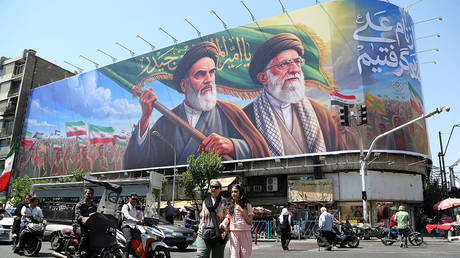
Even the elimination of Ali Khamenei didn't spark the chaotic power vacuum western intelligence predicted. The transfer of authority to Mojtaba Khamenei happened almost immediately. It showed deep institutional continuity. The political order didn't melt away. It hardened.
The New Resistance Security Belt
University of Chicago professor Robert Pape points out that Iran has shifted completely from a doctrine of basic survival to one of aggressive regional influence. Tehran isn't just playing defense anymore. They built a massive security belt stretching from the Persian Gulf all the way through Iraq and Syria to the Red Sea.
Look at how the Houthis operated in the Bab al-Mandab during this conflict. They weren't just side players. They acted as a central lever of Iranian strategy, hitting global shipping lines and forcing the US and Israel to fight a multi-front war they couldn't contain. Trita Parsi noted that this conflict exposed the limits of Israeli deterrence. Despite carrying out bold, high-tech strikes, Israel found itself more isolated, while Iran proved its network of partners could effectively synchronize their operations under fire.
How to Read the New Middle East Map
If you want to understand where the region is heading now, stop looking at old alliance structures. The post-Cold War era of a single superpower running the show is dead. We are looking at a messy, fragmented regional setup where middle powers call the shots.
Russia and China have already moved in to deepen their presence through agreements involving Pakistan and Iran. This isn't a stable balance of power, but a fluid environment where alliances change based on immediate needs. To protect your interests or analyze global markets moving forward, you have to track these specific steps.
First, stop measuring a nation's power purely by its GDP or the number of stealth fighters it owns. Look at compound security assets like domestic drone production networks, supply chain independence, and geographic choke points. Second, watch the shift in local hedging. Traditional American allies in the Gulf are already diversifying their security partnerships because they saw that Washington's military umbrella couldn't stop regional disruption. The smart money is moving toward regional diplomacy, not reliance on western intervention.