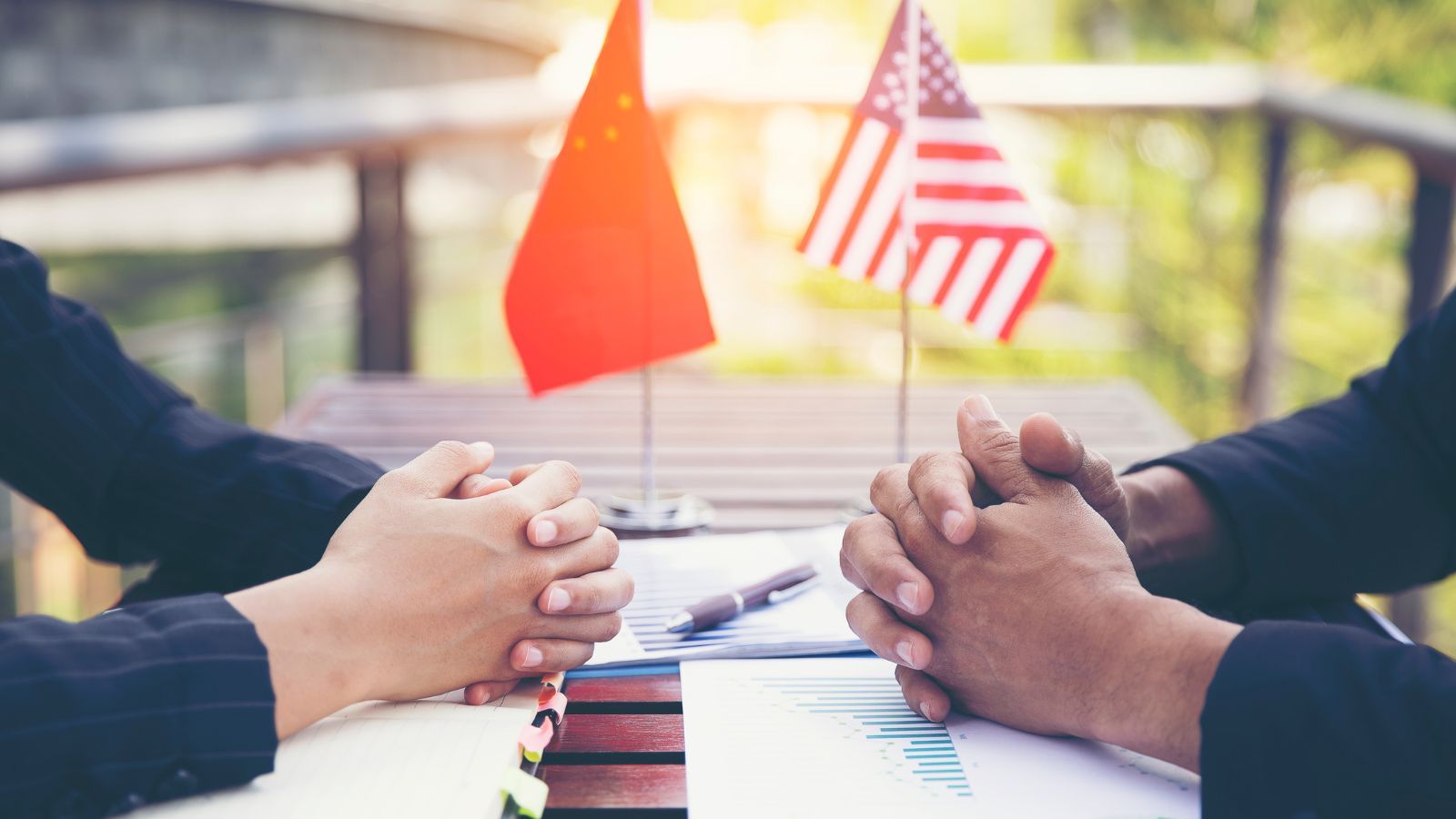
Everyone loves a dramatic handshake at a G20 summit. When Donald Trump and Xi Jinping sat across from each other in Buenos Aires in December 2018—and later signed the Phase One deal in January 2020—cable news treated it like the end of a cold war.
They missed the point entirely.
The shift from an all-out tariff war to a fragile trade truce wasn't a sudden change of heart by two strongmen. It was mutual economic exhaustion disguised as statesmanship. Both leaders walked into the ring convinced the other would blink first, and both ended up absorbing massive domestic pain before realizing an off-ramp was the only way to survive politically.
If you're trying to understand how two economies worth over $35 trillion combined went from slapping duties on hundreds of billions of dollars in goods to signing a cease-fire, you have to look past the podium speeches. You need to look at soybeans, factory orders, and the quiet panic happening inside boardrooms from Shenzhen to Des Moines.
Why the Tariff War Escalated So Fast
Before there was a truce, there was a miscalculation. In early 2018, the Trump administration leaned on Section 301 of the Trade Act of 1974 to target Chinese intellectual property practices and forced technology transfers. The opening salvo hit $50 billion worth of Chinese imports with a 25% tariff.
Washington assumed Beijing would fold quickly. After all, China exported far more to the United States than it bought in return, meaning Beijing would eventually run out of American goods to tax.
That math was technically right. The political psychology was dead wrong.
Xi Jinping couldn't afford to look weak at home, especially after abolishing presidential term limits earlier that year. So Beijing matched Washington dollar for dollar, targeting goods designed to inflict maximum political pain on Trump's voter base. American farmers became instant collateral damage. U.S. soybean exports to China plummeted by roughly 75% in 2018 compared to the previous year, forcing the U.S. Department of Agriculture to roll out $28 billion in bailout packages across 2018 and 2019 just to keep rural states afloat.
By mid-2019, the fight had spiraled way beyond steel, aluminum, and industrial machinery. Tariffs covered roughly $370 billion in Chinese goods and over $110 billion in U.S. exports. Supply chains didn't just bend; they snapped.
What Actually Forced Both Sides to the Table
People talk about the Phase One agreement as a masterclass in negotiating pressure. Honestly, it was more like two exhausted boxers leaning on each other in the eleventh round so neither hits the canvas.
Pain in the Heartland and on Wall Street
By late 2019, Trump was staring down a reelection campaign. The manufacturing renaissance he promised was stalling under the weight of retaliatory tariffs and higher input costs for American factories. Data from the Federal Reserve Bank of New York and Columbia University showed that U.S. companies and consumers—not Chinese exporters—were absorbing almost the entire cost of the tariffs. Every time Trump tweeted about raising rates, the S&P 500 tanked. You don't win reelection in the U.S. with an angry farm belt and a jittery stock market.
Beijing's Quiet Domestic Slowdown
Xi had his own fires to put out. China's GDP growth slowed to 6.1% in 2019, its weakest pace in nearly three decades. Foreign manufacturers were actively scouting exit routes to Vietnam, Malaysia, and Mexico to dodge U.S. customs duties. Worse, a devastating outbreak of African swine fever wiped out roughly half of China's pig herd, sending pork prices soaring and creating an urgent domestic food inflation crisis. Beijing desperately needed American agricultural imports again, even if party officials would never admit it publicly.
Inside the Phase One Trade Truce
When Vice Premier Liu He flew to Washington in January 2020 to sign the Phase One deal alongside Trump, both sides declared victory. Look closely at the text, though, and you see a cease-fire built on kick-the-can compromises rather than structural reform.
Here is what the truce actually locked in:
- Purchase commitments: China pledged to buy an additional $200 billion worth of U.S. goods and services over two years above 2017 baseline levels, spanning agriculture, energy, manufacturing, and financial services.
- Tariff rollbacks (barely): Washington canceled a planned December 2019 tariff hike on consumer electronics like smartphones and laptops, and cut the tariff rate on $120 billion of Chinese goods in half, from 15% to 7.5%.
- The elephant left in the room: The U.S. kept 25% tariffs on $250 billion of Chinese industrial goods intact as enforcement leverage, and completely punted on Chinese state subsidies—the very issue that triggered the war in the first place.
If you've ever negotiated a complex commercial contract, you recognize this playbook immediately. When two parties can't agree on the core dispute, they slap a huge headline number on future purchase orders, claim a win for the press, and push the hardest clauses into a "Phase Two" round that neither side actually wants to schedule.
Did the Trade Truce Actually Work
Short answer? Not really.
Even before COVID-19 scrambled global shipping lanes in early 2020, trade economists warned that China's $200 billion purchase target was mathematically detached from reality. You can't conjure tens of billions of dollars in extra liquefied natural gas, aircraft, and farm capacity out of thin air overnight.
Research from the Peterson Institute for International Economics later tracked the final numbers through the end of 2021. China bought only about 58% of the U.S. exports it had committed to under the agreement—barely enough to match its pre-trade-war buying pace, let alone hit the promised surge.
Meanwhile, the tariffs that stayed behind quietly rewired global trade. American importers didn't bring factories back to Ohio en masse. Instead, they routed assembly through Southeast Asia, while Chinese firms built component plants in Vietnam and Mexico to keep selling into the U.S. market. The U.S. bilateral trade deficit with China dipped temporarily, only for America's overall global trade deficit to hit record highs.
How Businesses and Investors Should Read U.S.-China Truces Today
If you run a supply chain, manage procurement, or allocate capital based on headlines out of Washington and Beijing, stop treating trade truces like peace treaties. They're temporary pauses in a long-term structural rivalry.
Start treating tariff volatility as a permanent operating cost rather than a passing storm. Audit your tier-two and tier-three suppliers right now—not just where your final product is assembled, because customs authorities increasingly scrutinize country-of-origin rules when components still originate in China. Keep a dual-sourcing buffer for critical inputs, maintain flexible inventory contracts that allow tariff pass-through adjustments, and never build a five-year margin forecast around a handshake deal between politicians.