If you listen to the victory laps coming out of Washington, you might walk away thinking the United States just bought the world's largest island. If you listen to officials in Copenhagen and Nuuk, it sounds like nothing fundamental changed at all.
Both sides are spinning the exact same document.
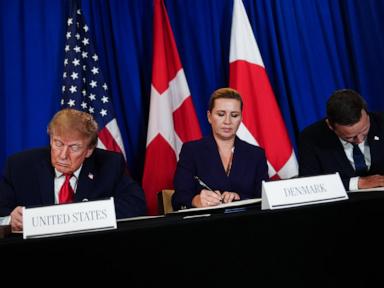
On September 22, 2026, President Donald Trump, Danish Prime Minister Mette Frederiksen, and Greenlandic Prime Minister Jens-Frederik Nielsen sat down at the United Nations Headquarters in New York to sign a trilateral defense pact. That single ceremony brought an end to months of brutal diplomatic friction, tariff threats, and talk of forced annexations that nearly fractured NATO from the inside out. Yet the gap between how the agreement is being sold and what the actual legal text says is massive. Understanding the real mechanics of the Trump Greenland and Denmark agreement requires looking past the political theater and reading the fine print of an amended 75-year-old treaty.
Did the United States Actually Buy or Take Control of Greenland
No. Not even close.
Despite President Trump telling Fox News in early November that "we got it, and it's permanent", the United States did not acquire sovereignty, title, or ownership over a single square inch of Greenlandic soil. The legal foundation of the September 2026 deal is explicitly an amendment and supplement to the Agreement of 27 April 1951, the Cold War defense treaty between Washington and Copenhagen.
Under that 1951 framework—which remains intact—the United States unambiguously recognizes the sovereignty and territorial integrity of the Kingdom of Denmark. What changed in 2026 is that Greenland wasn't just talked about in the back room. For the first time, the Government of Greenland signed directly as an equal party alongside Washington and Copenhagen, with the agreement executed in triplicate across English, Danish, and Greenlandic. As Greenlandic Prime Minister Jens-Frederik Nielsen put it during the New York ceremony, this wasn't merely a deal about Greenland—it was a deal with Greenland.
Why does this distinction matter so much? Because European diplomacy managed to turn an existential sovereignty crisis into a technical defense update. Early in 2026, when the White House floated economic coercion and even asked the Joint Chiefs of Staff to draw up military options, Denmark didn't fold. Copenhagen rallied all 27 European Union member states, coordinated routine European troop deployments to the High North, and framed the standoff as a direct threat to the survival of NATO. Once Trump backed off the tariff and annexation threats in January, negotiators spent eight months quietly translating Washington's core security demands into language that kept Danish sovereignty and Greenlandic self-determination completely untouched.
What the New Defense Deal Actually Gives Washington
Strip away the campaign-style rhetoric, and you find a sharp, practical expansion of American military footprint and veto power in the Arctic. For years, Pentagon planners worried that melting sea ice was opening the Arctic backdoor to Russian submarines and Chinese infrastructure money. The 2026 agreement addresses those anxieties head-on through five specific mechanisms.
Two New Military Bases and Expanded Space Operations
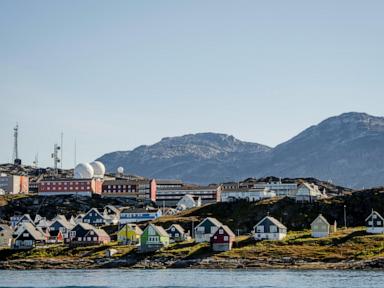
For decades, the U.S. military presence on the island was concentrated at Pituffik Space Base (formerly Thule Air Base) in the far northwest. Under Article IV of the new pact, Washington gets the green light to modernize and expand Pituffik—a critical node for missile warning and space surveillance—while establishing two brand-new Defense Areas at Narsarsuaq in the south and Mestersvig on the eastern coast.
Think about the geography there. Pituffik watches over the polar approach. Narsarsuaq sits right near the southern tip of the island, overlooking the GIUK (Greenland-Iceland-United Kingdom) gap where Russian naval vessels enter the North Atlantic. Mestersvig anchors the eastern flank facing the Greenland Sea. Together, those three points form a triangle covering the entire maritime approach to North America, giving the Pentagon the infrastructure needed for projects like the "Golden Dome" missile defense architecture.
Unrestricted Air and Undersea Access
The 1951 treaty already gave American forces broad leeway, but Article VI of the 2026 update removes nearly all ambiguity around transit. U.S. military aircraft can fly over and land anywhere in Greenlandic territory, including territorial waters. More importantly, U.S. public vessels are granted explicit undersea access and freedom of movement within Greenland's territorial waters. In an era where undersea cables and Arctic submarine patrols dictate nuclear deterrence, locking down submerged transit rights without bureaucratic friction is a massive operational win for the U.S. Navy.
Unmanned Installations and Buffer Zones
Modern Arctic warfare isn't just about thousands of troops shivering in barracks. It's about sensors, radar arrays, and autonomous listening posts. Article V formalizes the American right to build, maintain, and service unmanned military installations across the island. Alongside that, Article VII creates security buffer zones around every Defense Area, prohibiting any local land use in the vicinity that could compromise base security, paired with tighter joint counter-espionage coordination.
A Hard Veto on Non-NATO Militaries
If you want to know what really kept defense officials in Washington awake at night, look at the exclusion clause. The 2026 treaty explicitly bars any non-NATO state from setting up manned or unmanned military installations—or maintaining any persistent military presence—anywhere in Greenland unless all three signatories agree. Since Washington holds one of those three signatures, Russia and China are permanently locked out of establishing an Arctic military foothold on the island.
Investment Screening Power
Military bases are easy to spot; state-backed mining companies and telecom bids are trickier. Previously, Beijing tried to finance airport expansions in Greenland, triggering alarm bells in both Copenhagen and Washington. The new pact brings the United States directly into the consultation loop on foreign direct investment and sensitive economic activities. While critics in Nuuk worry this gives Washington an informal veto over who develops Greenland's rare earth minerals, U.S. officials see it as closing the backdoor to debt-trap diplomacy.
Why This Agreement Has No Expiration Date
One of the loudest talking points from the White House is that the deal is "forever". On that specific point, the text backs them up.
Article XI states flatly that the agreement has no end date and can only be amended by mutual consent. Even more consequential is the independence continuity clause. Greenland has a legal pathway under Danish law to vote for full independence—a topic that dominates local politics in Nuuk. Washington refused to invest billions into new radar sites and runways at Narsarsuaq and Mestersvig only to risk getting evicted a decade later if Greenlanders severed ties with Denmark.
So the negotiators built a legal bridge. If Greenland exercises its right to become an independent sovereign nation, the treaty automatically remains binding on the new state, and Greenland remains anchored inside the NATO defense umbrella. In exchange for accepting those long-term constraints, Greenland secured binding economic and environmental guardrails. The United States is now legally obligated to award all contracts for goods, services, and construction tied to existing and new bases to Greenlandic companies "to the maximum extent possible," while adhering to strict protections for traditional hunting and fishing grounds.
The Political Fallout in Nuuk, Copenhagen, and Washington
Signing a treaty at the UN is one thing; getting it ratified and living with the political scar tissue is another.
In early November 2026, Greenland's parliament, the Inatsisartut, voted to ratify the agreement following weeks of intense committee scrutiny. Over in Copenhagen, the Danish Folketing scheduled its final ratification vote for November 19, with broad bipartisan backing. In the United States, because the pact modifies an existing 1951 agreement nested under the 1949 North Atlantic Treaty, the White House is treating it as an executive agreement—meaning it bypasses the two-thirds Senate ratification hurdle entirely.
Yet beneath the smooth legislative mechanics, trust has taken a beating.
In Nuuk, the opposition party Naleraq fiercely opposed the pact, arguing that Greenland got locked into permanent military obligations—even post-independence—without a guaranteed fixed financial payout or a public referendum. Even within the governing coalition, the mood is sober rather than celebratory. Greenlandic Foreign Minister Múte B. Egede openly described the months of American annexation threats as a "serious breach of trust" that won't heal overnight.
European foreign policy analysts at institutions like Chatham House have pointed out a similar dynamic across the continent. Yes, Denmark and Greenland outmaneuvered coercive diplomacy and kept the alliance intact. No territory changed hands, NATO's role in the Arctic was formally reinforced under Article II, and Denmark committed to stepping up its own surveillance and regional defense posture. Still, watching a U.S. president openly muse about seizing an ally's territory shattered decades of automatic confidence in Washington.
How to Read the Next Phase of Arctic Geopolitics
If you're tracking defense policy, critical minerals, or transatlantic relations, don't stop paying attention just because the ink is dry. The real test of the 2026 pact happens during implementation, where technical details have a way of turning into political flashpoints.
Watch three specific markers over the coming months:
- Follow the Folketing vote and local procurement rules. After Denmark completes its parliamentary procedures on November 19, the Pentagon has to stand up the actual contracting mechanism that prioritizes Greenlandic businesses. If major construction contracts at Narsarsuaq or Mestersvig bypass local firms due to "technical capabilities," expect immediate pushback from Nuuk.
- Monitor the Permanent Committee's investment screening guidelines. Article X leaves the exact mechanics of U.S.-Danish-Greenlandic consultation on foreign investments to be worked out by relevant authorities. How strictly Washington tries to block non-Western mining capital will determine whether Greenlanders view this deal as a security shield or an economic straitjacket.
- Track NATO's "Arctic Sentry" integration. Look beyond bilateral U.S. base expansions to see how quickly European allies—especially Norway, Sweden, and the UK—integrate joint intelligence and exercises into the new framework.
Read the primary text published by the White House and the Danish Prime Minister's Office alongside the UK House of Commons Library research briefing on the treaty rather than relying on cable news soundbites. The real story isn't that America bought Greenland—it's that three governments found a legal formula to turn a dangerous diplomatic standoff into a permanent Arctic security architecture.