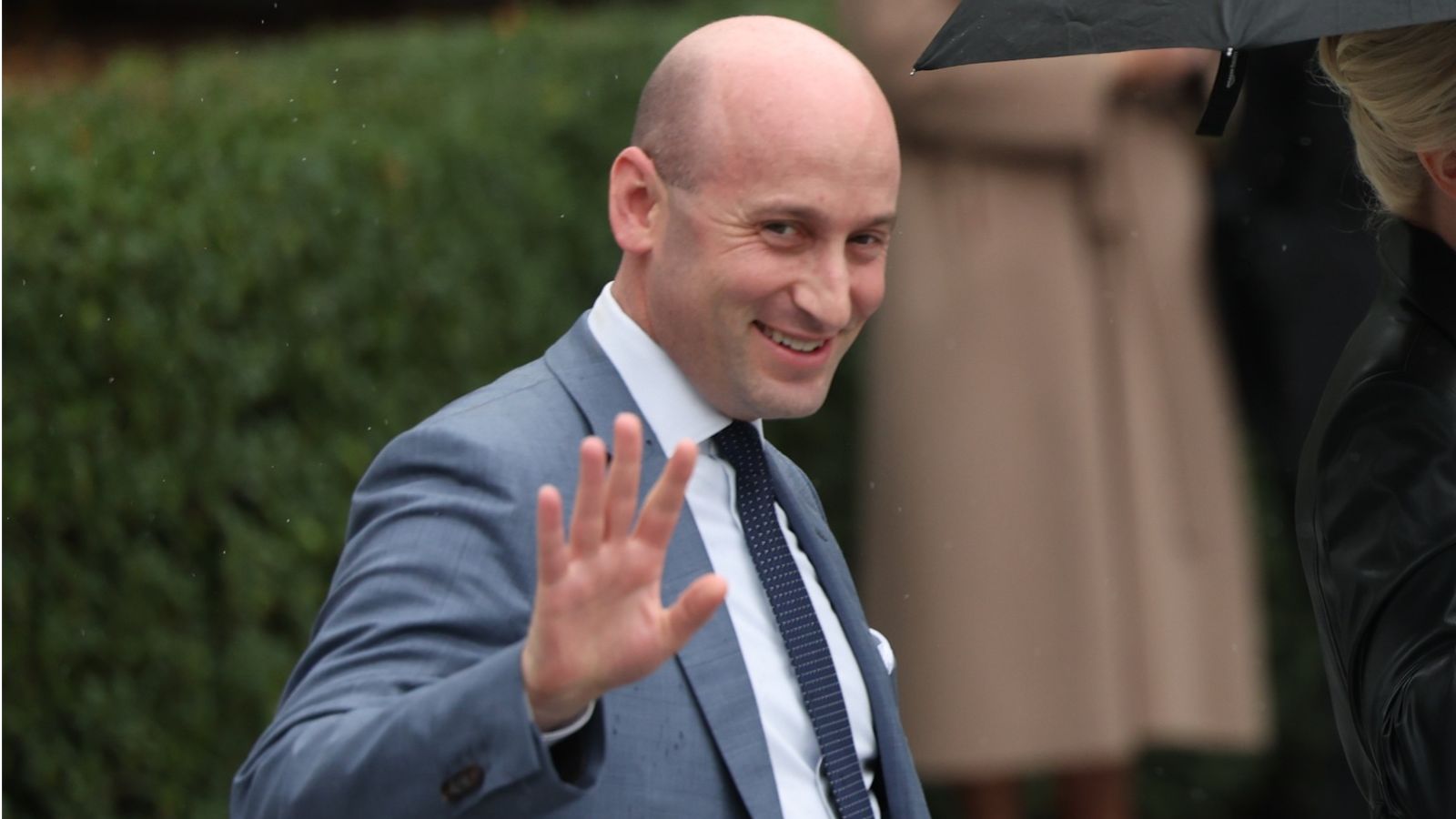
Most political pundits treated Donald Trump’s decision to make Stephen Miller his White House chief of staff as a predictable loyalty reward. They're missing the actual power play.
On November 9, 2026, the 41-year-old immigration hardliner officially replaced Susie Wiles in the West Wing's top administrative chair. That move happened just days after Republicans got crushed in the 2026 midterm elections, handing control of both the House and the Senate back to the Democrats. When a president loses Congress and immediately elevates his most uncompromising ideologue to manage the entire executive branch, he isn't signaling a pivot to the center. He's preparing for trench warfare. For another view, read: this related article.
If you've spent years watching how Washington operates, you know the chief of staff isn't supposed to be the main ideological firebrand. Traditionally, that job belongs to a pragmatic gatekeeper—someone like Wiles, who kept the trains running and managed competing egos. Miller is the exact opposite. He's the guy who spent a decade building the legal and bureaucratic machinery behind Trump's hardest policies. Now, he holds the keys to the entire White House schedule, personnel pipeline, and policy flow.
Who Stephen Miller Actually Is Beyond the Cable News Clips
To understand why this promotion changes everything for the next two years, you have to look past the shouting matches on Sunday morning talk shows. Stephen Miller isn't a typical MAGA hanger-on who discovered populism in 2015. He's been running the exact same playbook since he was a teenager in coastal California. Further insight regarding this has been provided by Reuters.
Born in 1985 and raised in a liberal Jewish family in Santa Monica, Miller started picking ideological fights before he could legally vote. At 16, he was already calling into conservative radio shows like The Larry Elder Show and firing off letters to local papers complaining about political correctness and bilingual announcements at Santa Monica High School. His own uncle, David Glosser, later wrote publicly about the irony of his nephew's crusade, pointing out that their family had escaped anti-Jewish pogroms in early 20th-century Belarus only because America kept its doors open.
Miller didn't soften at Duke University. While studying political science there in the mid-2000s, he wrote a regular column for the student paper, The Chronicle, and gained national airtime defending the accused players during the 2006 Duke lacrosse scandal. That campus notoriety plugged him straight into conservative media networks, connecting him with figures like David Horowitz.
Here's the part most profiles gloss over: Miller didn't go straight into campaign theatrics after graduating in 2007. He went to Capitol Hill and learned the plumbing of the federal government. After brief stints working as a press secretary for Reps. Michele Bachmann and John Shadegg, he landed in the office of Alabama Senator Jeff Sessions in 2009.
Working under Sessions for seven years turned Miller from a campus provocateur into a lethal legislative technician. While other conservatives talked broadly about border security, Miller studied obscure sections of the Immigration and Nationality Act, analyzed visa caps, and helped tank the 2013 bipartisan "Gang of Eight" immigration reform bill. When he jumped to Trump's presidential campaign in early 2016 as a speechwriter and policy adviser, he brought an entire blueprint with him.
The Blueprint He Built Across Two Trump Terms
Almost every major immigration shockwave of the Trump era carries Miller's fingerprints. Unlike other first-term aides who burned out, got fired, or wrote tell-all books, Miller survived all four years of the first administration—and spent the Biden years running America First Legal, a conservative legal group that filed dozens of lawsuits to tie up federal agencies and prep executive actions for a potential return.
When Trump returned to office in January 2025, Miller stepped in as White House Deputy Chief of Staff for Policy and Homeland Security Advisor. Even before his November 2026 promotion, his reach went way beyond border enforcement. Look at what his policy shop drove between 2017 and late 2026:
- The 2017 Travel Ban and Refugee Cuts: Miller helped craft the executive orders restricting entry from several Muslim-majority countries, leaning heavily on Section 212(f) of the Immigration and Nationality Act—an authority the Supreme Court eventually upheld in 2018. He also pushed to slash annual refugee admissions down to a historic low of 15,000 by fiscal year 2021.
- Zero Tolerance and Family Separation: During the first term, he was a primary driving force behind the 2018 deterrence policy that separated thousands of migrant children from their parents at the southern border before massive public backlash forced Trump to halt the practice.
- The 2025–2026 Mass Deportation Campaign: Back in power in 2025, Miller pushed aggressive enforcement quotas, reportedly setting targets of 3,000 arrests a day and deploying masked, heavily armed federal agents into American cities like Chicago and Minneapolis. Backed by roughly $170 billion in enforcement and border funding from the July 2025 "One Big Beautiful Bill Act," arrests of long-term undocumented residents with no criminal records spiked sharply.
- Targeting Legal Immigration: People constantly assume Miller only cares about unauthorized border crossings. That's dead wrong. He has openly praised the restrictive Immigration Act of 1924, pushed rules penalizing green card applicants who use public benefits, championed efforts to end birthright citizenship, and backed the January 2026 State Department suspension of immigrant visa issuance across 75 countries.
- Federal Workforce Purges and University Pressure: During 2025 and 2026, Miller helped steer efforts to shrink the civil service—resulting in tens of thousands of federal employees losing their jobs—while orchestrating federal funding pressure campaigns against elite universities.
In 2019, leaked emails published by the Southern Poverty Law Center showed Miller repeatedly sending links from white nationalist websites and fringe blogs to Breitbart editors during the 2015–2016 election cycle to shape coverage around race and crime. Over a hundred congressional Democrats demanded his removal at the time, and the SPLC added him to its list of extremists. Trump didn't blink then, and he certainly isn't blinking now.
Why the Post-Midterm Shake-Up Matters Right Now
You can't separate Miller's promotion from the electoral bloodbath Republicans just suffered. After voters handed both chambers of Congress to the Democrats in November 2026, polling showed deep public fatigue with aggressive domestic raids. A Reuters/Ipsos poll found 54% of Americans disapproved of the administration's immigration crackdown compared to just 36% who approved, while Associated Press voter surveys showed roughly six in ten respondents felt enforcement had gone too far.
Incoming House Democratic leadership, including Hakeem Jeffries and Senate Minority Leader Chuck Schumer, immediately vowed to launch sweeping oversight investigations into the administration's enforcement tactics, civil service purges, and executive actions.
On November 20, 2026, Trump briefly confused political observers by musing at a press conference that his deportation approach might have been "too tough" and floating the idea of working with Democrats on immigration. A few moderate Democrats even tested the waters with phone calls to Department of Homeland Security officials.
Don't fall for the head fake.
Personnel is policy in Washington. If Trump genuinely wanted a grand legislative bargain with a Democratic Congress, he would have kept a seasoned political broker like Susie Wiles in the chief of staff office. By putting Stephen Miller in charge of the entire White House apparatus, Trump signaled that he intends to govern unilaterally through executive orders, regulatory rewrites, and agency directives for the rest of his term. Miller spent the first term holding secret meetings specifically to bypass what he called "hostile bureaucrats," and he views legislative compromise on immigration as total surrender.
What Changes Under a Miller-Run West Wing
When a policy obsessive becomes chief of staff, the entire rhythm of the presidency shifts. Previously, Miller had to lobby Wiles or compete with economic advisers who worried that mass deportations and strict visa freezes would trigger labor shortages and inflation. Now, Miller controls the paper flow hitting the Resolute Desk.
Expect three immediate shifts across Washington:
- Zero Legislative Compromise: Any bipartisan deal involving border funding paired with legal protections for Dreamers or farmworkers is effectively dead on arrival. Miller will use his gatekeeper power to kill compromises before they ever gain traction in the Oval Office.
- Maximum Executive Action: With Democrats holding subpoena power in the House and Senate, the administration won't pass major conservative bills. Instead, Miller will accelerate regulatory crackdowns—tightening H-1B visa audits, slowing down green card processing backlogs, expanding workplace enforcement, and testing the absolute outer limits of presidential authority in federal court.
- Strict Ideological Loyalty Tests: Miller has long favored purging career officials and political appointees deemed insufficiently committed to the agenda. As chief of staff, he oversees White House personnel, meaning cabinet agencies will face even tighter ideological discipline.
How Individuals and Businesses Should Prepare for 2027
If you're an employer relying on international talent, a foreign national living in the United States, or someone tracking how executive power will collide with a Democratic Congress, you shouldn't wait for the headlines to hit your inbox. Immigration attorneys, including employment-based specialists like Rahul Reddy, are already warning clients that regulatory friction is about to spike.
Take concrete steps now rather than reacting later:
- Audit corporate visa compliance immediately. If your company sponsors H-1B, L-1, or O-1 workers, review every Public Access File, verify wage levels against job duties, and prepare for unannounced site visits from Fraud Detection and National Security officers.
- File renewals as early as legally permitted. Processing delays and Requests for Evidence routinely climb when administrative scrutiny tightens. Submit extensions at the earliest possible window—typically six months before expiration—rather than cutting deadlines close.
- Rethink non-essential international travel. Foreign nationals with pending adjustment-of-status applications or complex visa histories should consult qualified immigration counsel before leaving the country, especially given expanded visa suspensions and heightened consular vetting.
- Keep physical documentation accessible. Maintain organized, up-to-date copies of I-94 arrival records, approval notices, tax filings, and recent pay stubs.
Stephen Miller didn't climb from a Santa Monica high school radio caller to the most powerful unelected official in Washington by accident. He outlasted every moderate, every general, and every traditional Republican strategist who thought they could manage Donald Trump—and now he's running the building.
Check out The Shadow Behind the Throne to see how Stephen Miller's family history and early political years shaped the ideology he now brings to the White House chief of staff role.