Blaming social media algorithms or a single tragic news cycle for the street violence erupting across European cities misses the real fire burning underneath. When bricks fly through shop windows in British coastal towns, French suburbs, or Dutch municipalities, pundits immediately reach for easy cultural explanations. They're wrong. Behind the riots, Europe is wrestling with hard choices between an aging workforce that needs immigration to fund pensions, a brutal housing shortage, and stagnant wages that leave working-class neighborhoods feeling abandoned.
I've spent years analyzing European economic and social policy, and the pattern is always the same. You don't get sustained civil unrest just because people are angry at a screen. You get it when young men have zero realistic path to owning a home, public services visibly crumble, and politicians promise contradictory outcomes they mathematically can't deliver.
The Math European Leaders Refused to Do Out Loud
For twenty years, mainstream governments in London, Paris, Berlin, and The Hague quietly relied on a simple economic shortcut. Because birth rates across the European Union fell well below the replacement rate of 2.1 children per woman, governments needed working-age taxpayers to pay for generous state pensions and healthcare systems.
Look at the demographic reality documented by Eurostat. Europe's old-age dependency ratio—the number of people aged 65 and over compared to those aged 15 to 64—has climbed steadily past 33 percent and is projected to pass 50 percent within a few decades. That means fewer than two working adults supporting every retiree.
Politicians had three options to keep the books balanced:
- Raise taxes aggressively on current workers and corporations.
- Cut pension payouts and force people to work well into their late sixties or seventies.
- Bring in millions of immigrants to expand the tax base quickly.
They picked option three because it looked painless on a spreadsheet.
Here's what went wrong. Nobody built the infrastructure to match the population growth. You can't add hundreds of thousands of residents to a country every year without constructing proportional housing, clinics, schools, and transit lines. Yet strict zoning laws, high interest rates, and sluggish construction kept housing supply flat across Western Europe.
When a twenty-four-year-old warehouse worker in northern England or a suburban resident outside Lyon watches rents swallow half their paycheck while emergency room wait times stretch past ten hours, resentment builds. They aren't reading demographic white papers from the OECD. They just know their standard of living is shrinking while politicians tell them GDP is growing.
Why Spark Events Turn Into Full-Scale Street Violence
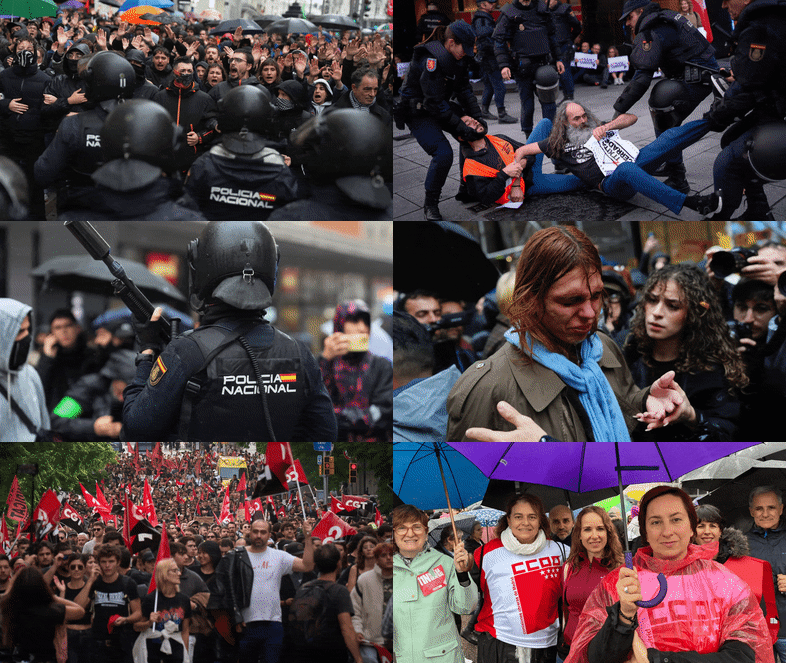
Every wave of European unrest has a specific match that lights the fuse. In France during the summer of 2023, the fatal police shooting of 17-year-old Nahel Merzouk in Nanterre triggered days of looting, burned town halls, and over €1 billion in insured property damage according to France Assureurs. In the United Kingdom during July and August 2024, false rumors spread online following the horrific knife attack on young girls in Southport sparked anti-immigrant riots across dozens of towns from Rotherham to Belfast. In the Netherlands, heated local protests broke out outside municipal buildings over plans to house asylum seekers in small towns already struggling with a severe housing deficit.
Different triggers. Different ideological crowds. Exact same structural rot.
If you look closely at the map of where violence actually breaks out, it rarely starts in wealthy financial districts. It happens in deindustrialized towns, outer-ring suburbs (banlieues), and neglected coastal communities. These are places where the local high street died a decade ago, bus routes were slashed to save municipal budgets, and youth centers closed down during austerity drives.
The Illusion of Control in Policing and Justice
When the glass starts breaking, governments always reach for the exact same playbook. They announce emergency Cobra meetings, promise "swift justice," and deploy riot police.
After the August 2024 riots in Britain, Prime Minister Keir Starmer's government fast-tracked court hearings and handed down multi-year prison sentences within days. That restored order on the streets quickly, sure. It also exposed a massive institutional crisis: England and Wales already had prisons operating near 99 percent capacity, forcing the government to activate Operation Early Dawn—a contingency plan holding defendants in police cells until prison beds opened up—and accelerate early release schemes for other offenders.
You can't arrest your way out of a structural social breakdown when your prisons are full, your police forces are understaffed, and local councils are declaring effective bankruptcy. Birmingham City Council, Europe's largest local authority, issued a Section 114 notice in 2023 essentially declaring it couldn't balance its budget. When local government collapses, street-level social cohesion goes with it.
The Political Trap Blocking Real Solutions
Why don't European leaders just fix the underlying issues? Because every genuine fix carries massive political pain that voters punish at the ballot box.
Consider the housing crisis. In countries like the UK, Ireland, and the Netherlands, homeowners form the most reliable voting bloc. Policies that actually lower housing costs—like aggressively overriding local planning vetoes to build high-density apartments or reforming property taxes—infuriate existing homeowners who view their property as their primary retirement nest egg. So politicians talk tough about border controls while quietly blocking the very construction projects that would ease living costs for young families.
The same paralysis hits pension reform. When French President Emmanuel Macron raised the minimum retirement age from 62 to 64 in 2023 using constitutional powers to bypass a parliamentary vote, millions took to the streets in union-led strikes and violent clashes. Voters want Nordic-style welfare states, American-style low taxes, and minimal demographic change all at the exact same time.
That triangle doesn't close. Something has to give.
How Social Media Amplifies Offline Grievance
It's tempting to blame tech platforms entirely. Telegram channels, TikTok livestreams, and X (formerly Twitter) clearly act as accelerants. During recent European disturbances, encrypted messaging groups coordinated flash mobs, shared locations of vulnerable storefronts, and spread fabricated identities of suspects within minutes of an incident.
The European Union responded by leaning heavily on the Digital Services Act, threatening platforms with fines up to 6 percent of global annual turnover if they fail to remove illegal hate speech and incitement to violence rapidly.
Content moderation has limits, though. Deleting a Telegram channel doesn't reopen a shuttered youth club in Marseille or build 300,000 affordable homes in the Midlands. Algorithms exploit existing anger; they don't manufacture poverty out of thin air. When analysts treat civil unrest purely as an information warfare problem, they miss the economic desperation making people receptive to radicalization in the first place.
What Actually Works to Lower the Temperature
If you want to understand how Europe avoids repeating this cycle every summer, stop listening to campaign slogans and look at what successful municipal and national policies actually accomplish on the ground.
- Tie immigration targets directly to infrastructure capacity. Several European economists and policy institutes, including analysts at Bruegel, have argued that migration policy fails when treated in isolation from urban planning. Countries like Denmark have pursued strict integration rules paired with aggressive urban renewal in low-income neighborhoods, specifically targeting the concentration of poverty rather than ignoring it until unrest erupts.
- Deregulate housing supply near transit hubs. Nothing cools generational resentment faster than affordable rent. European governments need to strip away redundant environmental and local aesthetic vetoes around existing rail stations so private and public builders can actually put up apartments where jobs exist.
- Shift fiscal investment back to municipal services. Austerity in local policing, mental health clinics, and vocational training is a false economy. Spending a few million euros keeping community centers and technical colleges open in post-industrial towns costs a fraction of the hundreds of millions lost to riot damage, insurance payouts, and emergency policing.
- Tell voters the truth about demographics. Politicians have to level with citizens about the trade-offs between retirement ages, tax rates, and labor shortages. Treating voters like adults reduces the space for populist conspiracy theories to flourish.
How to Read European Political Risk Going Forward
If you're tracking European markets, investing in real estate, or simply trying to make sense of where European politics is heading next, stop watching national GDP headlines. Aggregate growth numbers hide deep regional rot.
Instead, watch three specific indicators across major European economies:
- Youth unemployment and NEET rates (young people not in education, employment, or training) in secondary cities outside capitals like London, Paris, and Berlin.
- Housing completions versus net migration figures published annually by national statistics offices like the ONS in Britain or INSEE in France.
- Municipal budget deficits, which signal where public policing, sanitation, and social support will fail first.
Until European governments make the hard fiscal and housing choices they've spent two decades dodging, the calm between protests is just a pause. Watch the housing permits and local council budgets, not the press conferences—that's where the next flashpoint is already taking shape.