The Trump administration just dropped a regulatory bombshell that could strip food assistance from 6.3 million Americans. If you only read the political headlines, you'd think this is just another routine budget fight in Washington. It isn't.
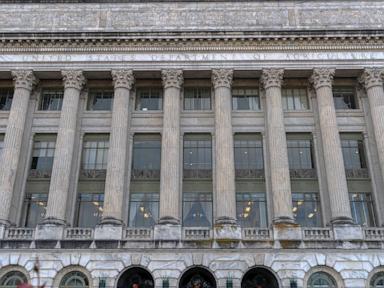
On November 10, 2026, the U.S. Department of Agriculture (USDA) published a proposed rule in the Federal Register—officially titled "Supplemental Nutrition Assistance Program: Reforming Categorical Eligibility". Beneath that dry bureaucratic label sits an aggressive plan to dismantle Broad-Based Categorical Eligibility (BBCE). Forty-six states and territories rely on this exact policy to help working families, seniors, and people with disabilities afford groceries.
I've tracked federal nutrition policy for years, and I can tell you right now: the standard media coverage misses the real mechanics of how this rule works. People assume SNAP cuts only hit households that aren't working or people gaming the system. In reality, this specific rule targets the exact safety valve states use to prevent the "benefits cliff"—where earning fifty extra dollars at a minimum-wage job costs a parent two hundred dollars in grocery money.
Let's strip away the partisan talking points and look at what is actually happening inside the USDA's numbers, who loses out, and what households and advocates can do before the public comment window slams shut.
How the USDA Rule Actually Works
To understand why 6.3 million people are suddenly on the chopping block, you have to understand how SNAP eligibility normally functions. Under strict baseline federal rules, a household cannot qualify for food stamps if their gross monthly income tops 130 percent of the federal poverty line. For a family of four in 2026, that's roughly $42,900 a year. For a family of three, it sits around $35,500.
Baseline federal rules also impose rigid asset limits. Have a little too much money sitting in a checking account for an emergency car repair? You're disqualified.
Congress created a workaround years ago so states could adjust for local living costs without waiting on Washington. Through BBCE, if a household qualifies for a state-run benefit funded by Temporary Assistance for Needy Families (TANF)—even something as simple as a state-funded brochure, referral service, or child care support—the state can automatically link them to SNAP. That link allows states to raise the gross income limit (often up to 165 or 200 percent of the poverty line) and waive the strict asset test.
The Trump administration's November 2026 proposal guts that pathway.
Under the new rule, states could no longer use non-cash TANF services or "authorized-to-receive" notices to confer SNAP eligibility. Instead, a household would have to actually receive direct, ongoing TANF cash assistance to bypass the federal SNAP thresholds. Because very few low-income working families receive traditional cash welfare anymore, eliminating that bridge instantly forces millions of households back under the strict 130 percent federal income cap and rigid asset tests.
Why This 2026 Version Hits Twice as Hard as 2019
If you feel a sense of déjà vu, you're paying attention. Back in 2019, during the first Trump term, the USDA tried a similar move to restrict BBCE. Back then, federal analysts estimated roughly 3.1 million people would lose benefits, and a federal court eventually blocked the effort.
This 2026 version is far more aggressive.
In 2019, the administration proposed allowing states to keep the categorical link if a household received at least $50 a month in cash or certain non-cash benefits for six months. The 2026 proposal scraps that compromise completely. By limiting the pathway strictly to direct TANF cash assistance and cutting out non-cash support, the USDA's own Regulatory Impact Analysis projects 6.3 million people will lose SNAP by fiscal year 2029—more than double the 2019 projection.
The financial scale is massive. According to data compiled from the USDA's regulatory filings by the Food Research & Action Center (FRAC), the rule strips away $50.8 billion in food benefits over five years. Compare that to the $10.5 billion cut estimated in 2019.
The Administration's Argument Versus Reality
Agriculture Secretary Brooke Rollins and administration officials frame this rule as a long-overdue crackdown on waste, fraud, and bureaucratic shortcuts. Their core argument is simple: BBCE became a loophole that allowed states to hand out taxpayer-funded food benefits to households with incomes and savings above standard federal limits.
Officials also claim that removing the BBCE pathway will reduce state payment error rates and focus scarce federal dollars strictly on the poorest Americans.
That sounds tidy on paper. On the ground, it falls apart.
First, BBCE doesn't mean wealthy people are buying steaks with food stamps. Even when a state raises the gross income threshold to 200 percent of the poverty line, every single household still has to pass SNAP's strict net income test after subtracting allowable expenses like rent, utilities, and child care. If your net income is too high, your benefit calculation drops to zero anyway. What BBCE actually does is help families living in high-cost states—or families with high rent and child care bills—qualify for modest grocery support even if their pre-tax paycheck looks slightly above the national poverty line.
Second, bringing back the asset test punishes financial responsibility. Imagine a working single mother saving $3,500 in a credit union account so she doesn't get evicted if her transmission blows. Under strict federal asset rules, that emergency fund can disqualify her from SNAP. She's forced to drain her savings just to buy milk and eggs.
Third, the claim that this cuts bureaucracy is backwards. State agencies now have to verify bank balances, vehicle values, and retirement accounts for millions of applicants who previously qualified through streamlined state data. FRAC estimates the rule will dump $1.23 billion in added administrative costs onto the system over five years—with states forced to pick up roughly $928 million of that tab—while forcing struggling families to spend an estimated $71.7 million worth of their own time hunting down paperwork.
Who Actually Gets Dropped From SNAP
The political rhetoric often paints SNAP recipients as able-bodied adults refusing to work. The USDA's own demographic modeling tells a completely different story.
More than half—53.7 percent—of the working-age households losing benefits due to the income cutoff actually have earned income from a job. Even more striking, those working families account for roughly 74 percent of the total lost benefits in the income-loss group. When a parent picks up an extra shift or gets a small cost-of-living raise, they cross the 130 percent gross income cliff and lose their entire grocery lifeline overnight.
Seniors take a massive hit too. Roughly 17.9 percent of SNAP households that include an adult age 60 or older would fail the newly reimposed tests. Many older Americans live on fixed Social Security checks while holding modest savings to cover medical bills or funeral expenses. Reinstating rigid asset limits directly penalizes retirees who managed to save a few thousand dollars over a lifetime of work.
The Hidden Domino Effect on School Lunches and WIC
Cutting SNAP never stays contained inside SNAP. Federal nutrition programs are wired together through direct certification systems, meaning losing food stamps triggers an automatic chain reaction across other safety nets.
Look at what happens to kids when their parents lose BBCE-linked SNAP:
- Free School Meals: Right now, children in SNAP households are automatically enrolled in free school breakfast and lunch without their parents having to fill out separate income forms. Under the USDA's projections, 1.78 million children will lose that automatic eligibility by the 2029 school year. While the agency expects roughly 1.66 million of those kids to requalify by filing separate paper applications, tens of thousands won't make it through the red tape. About 93,000 children will be bumped down to reduced-price meals, and 28,000 children will end up paying full price.
- WIC (Women, Infants, and Children): Roughly 5,500 mothers, infants, and young children will lose automatic WIC eligibility outright, while another 16,500 will be forced through separate income verification hurdles every year.
- Summer EBT: Approximately 42,000 low-income children will lose summer grocery benefits annually once the rule hits full implementation.
And don't forget the economic ripple effect on local main streets. SNAP dollars don't sit in offshore bank accounts; they get spent immediately at neighborhood supermarkets, corner bodegas, and farmers markets. Pulling $50.8 billion out of grocery registers over five years isn't just a household crisis—FRAC's analysis projects it will wipe out more than 14,000 jobs across grocery retail, trucking, and food production.
The Timing Couldn't Be Worse
Policy doesn't happen in a vacuum, and context matters enormously here.
Americans are dealing with stubbornly high grocery prices. Food inflation ticked upward again in October 2026, with basic holiday and pantry staples running roughly 11 percent higher than a year earlier. Food banks across the country are already reporting record lines.
On top of high grocery prices, this regulatory rule lands right after President Trump signed the One Big Beautiful Bill (H.R. 1) into law in July 2025. That legislation already imposed sweeping new work requirements on SNAP participants, shifted billions in program costs onto state budgets, and prompted the Congressional Budget Office to project $187 billion in federal nutrition cuts over a decade. In states like Arizona, SNAP enrollment already plummeted by 52 percent between July 2025 and April 2026 following those statutory changes.
Layering an executive rollback of BBCE on top of H.R. 1 creates a massive double squeeze. Meanwhile, 214 House Democrats and Senate Agriculture Committee members have already sent formal letters demanding Secretary Rollins withdraw the rule, arguing it violates congressional intent after lawmakers repeatedly rejected BBCE repeal during past Farm Bill negotiations. Legal challenges under the Administrative Procedure Act are practically guaranteed if the USDA finalizes the rule.
What You Need to Do Right Now
Whether you rely on SNAP to feed your family, work in community advocacy, or just want your voice heard before this rule becomes permanent, waiting until 2027 is a mistake.
First, understand the timeline. Because this is a proposed federal rule (published November 10, 2026 under Docket FNS-2026-0001 / Fed. Reg. Vol. 91, No. 72454), nothing changes in your EBT account tomorrow morning. The USDA opened a 30-day public comment period. Under federal administrative law, the agency must read, categorize, and respond to substantive public comments before issuing a final rule.
Second, submit a public comment immediately. Go to Regulations.gov and search for "Reforming Categorical Eligibility" or Federal Register number 91 FR 72454. Don't just copy and paste a form letter—federal regulators group identical form letters together and count them once. Write three or four sentences in your own words explaining how asset limits, child care costs, or school meal connections affect your household or local community. Unique, personal comments carry far more legal weight when courts later review whether the agency ignored public evidence.
Third, prepare your household paperwork early if you live in a BBCE state. If you currently receive SNAP in one of the 46 states using Broad-Based Categorical Eligibility, keep a clean folder with your most recent pay stubs, rent or mortgage receipts, utility bills, and child care expenses. Even if the rule faces court injunctions next year, states are already tightening recertification reviews under the 2025 law. Having documented expense deductions ready ensures your caseworker calculates your maximum allowable net-income deduction rather than dropping your case over missing paperwork.