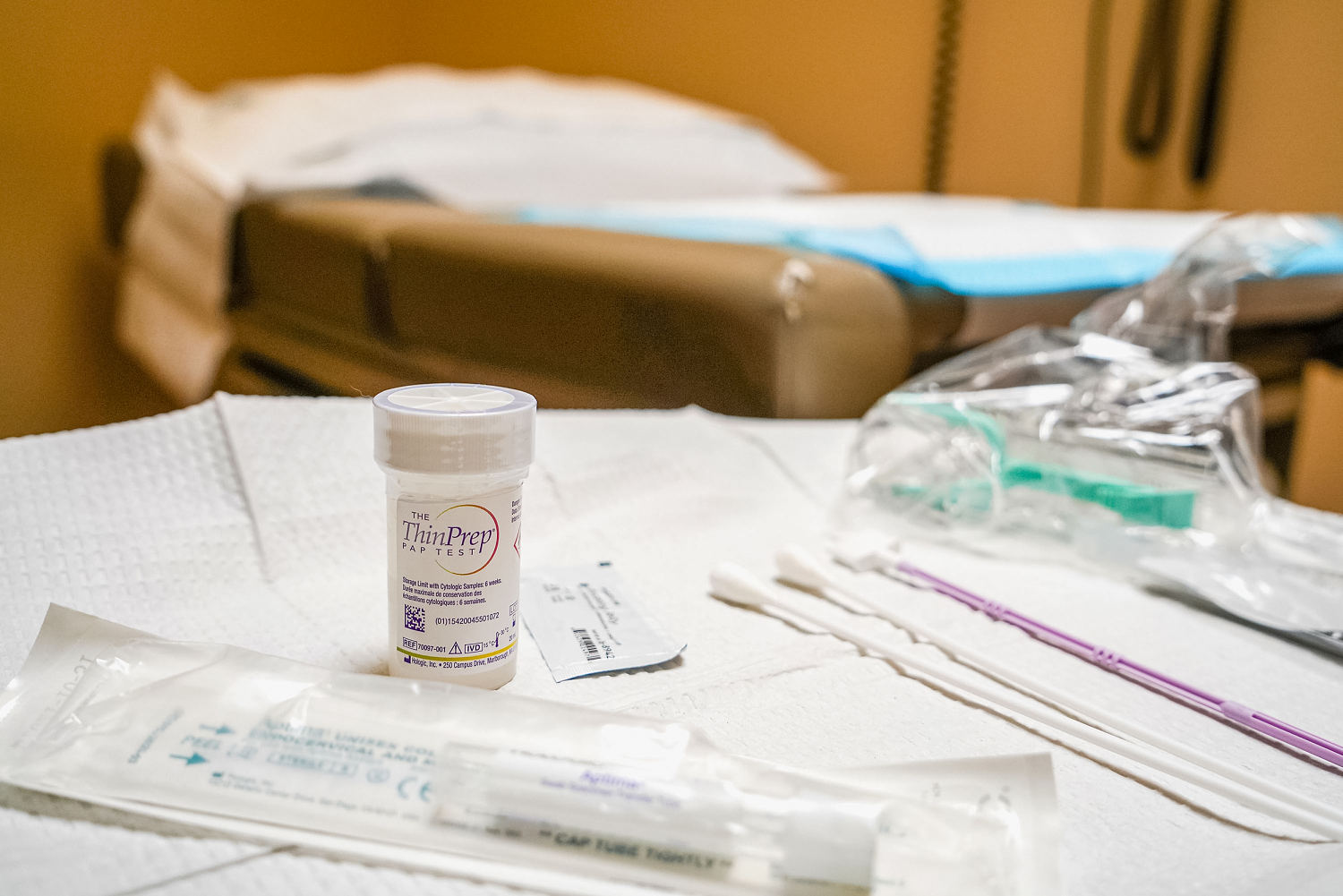
The traditional Pap smear is officially losing its crown as the go-to cervical cancer test for women over 30. Under updated federal guidance from the U.S. Preventive Services Task Force (USPSTF) alongside aligned recommendations from the Health Resources and Services Administration (HRSA) and the American Cancer Society (ACS), human papillomavirus (HPV) testing is taking center stage—and for the first time, self-collected vaginal swabs are a mainstream option.
If you've spent your adult life dreading the cold metal speculum every few years, this is massive news.
But the headlines are creating a ton of confusion. People think the Pap test is completely dead, or that a self-swab means you never have to step foot in a gynecologist's office again. Neither is true. Let's break down what the new cervical cancer guidance actually changes, why the science finally forced this shift, and what you need to do before your next appointment.
Why Federal Guidance Is Pushing HPV Tests Over Pap Smears
For decades, the Pap smear was the undisputed gold standard of preventive women's health. Since its introduction in the mid-20th century, it slashed cervical cancer deaths by catching abnormal cells before they turned deadly.
So why sideline a test that works? Because we found a much earlier warning system.
A Pap test looks at cervical cells under a microscope to see if they've already started mutating into precancer or cancer. An HPV test looks for the actual culprit behind almost every case of cervical cancer: high-risk strains of the human papillomavirus.
Think of it like checking a house for fire damage versus installing a smoke detector. The Pap smear spots cellular damage after the virus has already been hanging around for years. Primary HPV testing catches the high-risk viral infection before those cells ever start changing.
The data backing this up isn't subtle. Major clinical trials, including a landmark study of over 19,000 women published in JAMA, proved that primary HPV testing detects high-grade precancerous cervical lesions earlier and with significantly higher sensitivity than cytology (the Pap test) alone. Even better, a negative HPV test gives you far stronger reassurance that you won't develop precancer over the next five years than a negative Pap does over three.
That higher accuracy is why the USPSTF voted to steer women ages 30 to 65 toward primary high-risk HPV screening every five years, matching the direction the American Cancer Society already took when it updated its own playbook.
The Biggest Misconceptions About the New Screening Rules
Whenever medical panels update cancer guidelines, panic and bad assumptions spread fast. Having watched patients navigate shifting screening schedules for years, I see the exact same misunderstandings pop up every time.
Misconception 1 The Pap smear is gone forever
Not even close. First, if you're between ages 21 and 29, the USPSTF still recommends a traditional Pap test every three years. Why not test younger women for HPV? Because HPV is wildly common in your twenties, and your immune system almost always clears it on its own within a year or two. Testing 23-year-olds for HPV just flags temporary infections that were never going to cause harm, leading to unnecessary anxiety and invasive follow-up procedures.
Second, even if you're between 30 and 65, co-testing (doing an HPV test and a Pap test together every five years) or getting a Pap smear alone every three years remain acceptable backups when primary HPV screening isn't available. And if your HPV test comes back positive? Your doctor will often run a Pap test on that same sample—or bring you in for one—to see if the virus has actually caused cellular changes.
Misconception 2 You only need to see your OB-GYN once every five years
Please don't make this mistake. Stretching your cervical cancer screening interval from three years to five years does not mean you skip your annual well-woman visit.
Your yearly appointment covers blood pressure, breast exams, contraception or menopause management, pelvic floor issues, STI screenings, and general preventive care. Cervical screening is just one line item on that checklist. Honestly, decoupling the speculum exam from the annual visit might actually make people more likely to show up for their yearly checkups.
Misconception 3 Getting the HPV vaccine means you can skip screening
If you got Gardasil in middle school or in your twenties, you're protected against the highest-risk cancer-causing strains (including HPV 16 and 18). That drops your lifetime risk dramatically. Still, the vaccine doesn't cover every single strain capable of causing cervical cancer, and people who were vaccinated after becoming sexually active could have been exposed beforehand. Both the USPSTF and the ACS are crystal clear on this point. Vaccinated women still follow the exact same screening schedule.
How Self-Collected HPV Tests Actually Work
Here's the part of the new cervical cancer guidance that truly changes the patient experience: you don't always need a clinician to scrape your cervix anymore.
Following FDA approvals for self-collection devices, federal guidance now endorses patient-collected vaginal samples for primary HPV screening. Instead of putting your feet in stirrups for a pelvic exam, you use a soft swab to collect a sample from inside your vagina—either behind a closed curtain at your doctor's office or, with an ordered kit, in your own bathroom at home.
Studies reviewed by the USPSTF show that self-collected vaginal swabs detect high-risk HPV nearly as accurately as samples collected directly from the cervix by a clinician. Why does that matter so much? Because cervical cancer screening rates in the United States have been slipping, and most invasive cervical cancers occur in people who are under-screened or haven't been screened at all.
For survivors of sexual trauma, people with vaginismus or severe pelvic pain, transgender men, rural patients hours away from an OB-GYN, and busy parents who can't take half a day off work, a pelvic exam isn't a minor annoyance. It's a wall that keeps them out of care entirely.
There is one catch you need to know about timing. Under American Cancer Society guidelines, if you do a self-collected HPV test and it comes back negative, you repeat it in three years, not five. The five-year interval applies when a clinician collects the sample directly from your cervix. And if your self-swab comes back positive for high-risk HPV? You will still need an in-person speculum exam so your provider can examine your cervix and check for abnormal cells.
Your Cervical Cancer Screening Schedule by Age
Because different medical organizations sometimes move at slightly different speeds, knowing where you fall by age saves you from awkward surprises at the clinic.
- Under age 21: No screening at all. Cervical cancer is extraordinarily rare in teens and young adults, and screening this group causes far more harm from false positives and unnecessary cervical procedures than benefit.
- Ages 21 to 24: Under USPSTF guidance, get a Pap test every three years. (Note that the American Cancer Society recommends waiting until age 25 to start screening altogether, though most U.S. clinics and insurers still follow the USPSTF's age-21 start).
- Ages 25 to 29: You're in the transition zone. The USPSTF sticks with a Pap test every three years until age 30, while the ACS prefers primary HPV testing every five years starting at age 25. Ask your provider which protocol their practice follows.
- Ages 30 to 65: Primary high-risk HPV testing every five years is now the preferred standard. You can use a clinician-collected sample (every five years) or an approved self-collected vaginal swab (check with your doctor on whether your repeat interval is three or five years based on the specific guideline they follow). Co-testing every five years or a Pap test every three years remain valid alternatives.
- Over age 65: You can stop screening completely—if you have had adequate prior normal screenings (such as two consecutive negative HPV tests or three negative Pap tests in the past 10 years, with the most recent within five years) and no history of high-grade precancer. Never assume you age out automatically without confirming your past records.
- After a hysterectomy: If your cervix was removed during a total hysterectomy and you have no history of high-grade cervical precancer (CIN 2 or CIN 3) or cervical cancer, stop screening. If you had a supracervical hysterectomy where your cervix was left intact, you still need routine screening.
What Happens When an HPV Test Comes Back Positive
Hearing "you tested positive for HPV" triggers immediate dread for most patients, mostly because people hear "virus" and jump straight to "cancer."
Take a breath. Testing positive for high-risk HPV does not mean you have cervical cancer.
Roughly 80% of sexually active adults acquire HPV at some point in their lives. Even in your thirties and forties, your immune system clears the vast majority of HPV infections within one to two years without any medical treatment. The virus only becomes dangerous when a high-risk strain—especially HPV 16 or HPV 18, which together cause about 70% of cervical cancers—persists quietly over many years.
When your primary HPV test comes back positive, labs don't just stop there. Modern screening relies on genotyping and reflex testing. If you test positive for HPV 16 or 18, your doctor will usually recommend a colposcopy—an in-office procedure where they look closely at your cervix through a lighted magnifying instrument and take tiny biopsies if anything looks suspicious. If you test positive for other high-risk HPV strains, the lab typically runs a Pap test or dual-stain test on your existing sample. If those cells look normal, you simply come back in one year to verify that your body cleared the virus.
Insurance Coverage and What to Ask Your Doctor Right Now
Guideline updates only help if your insurance pays for them without sticking you with a surprise lab bill. Under the Affordable Care Act, preventive services recommended with an "A" or "B" grade by the USPSTF—and guidelines adopted by HRSA—must be covered by most private insurers with zero out-of-pocket copay. Because HRSA aligned its guidance in early 2026 and the USPSTF finalized its shift toward primary HPV testing and self-collection, broader insurer coverage for self-collection kits is rolling out through 2026 and into 2027.
Don't walk into your next checkup blind and hope the clinic handles the billing codes properly. Do these four things before your appointment:
- Pull your exact screening history. Log into your patient portal and check the date and result of your last Pap or HPV test. Knowing whether you had an HPV test or just a Pap determines whether you're due at the three-year or five-year mark.
- Ask your clinic which primary HPV test they stock. Some smaller primary care offices still default to co-testing or Pap smears out of habit. Call ahead and ask if they offer primary HPV screening—and whether FDA-approved in-clinic or at-home self-collection kits are available.
- Verify zero-dollar preventive coding with your insurer. If you use an at-home self-collection kit ordered through telehealth or your doctor's portal, confirm your plan covers both the test kit and the lab processing under preventive care before you mail it in.
- Keep your annual exam on the calendar. Even if your next HPV test isn't due until 2031, book your yearly preventive visit anyway—and if you're behind on screening because you've been avoiding a pelvic exam, ask for a self-swab this week.


