A green card has always felt like a golden ticket. It signals that you've made it through the grueling, expensive immigration pipeline and secured the right to live, work, and build a life in the United States permanently. But a massive shift just occurred at the highest level of the American legal system, and it radically changes the security of that status for anyone who travels outside the country.
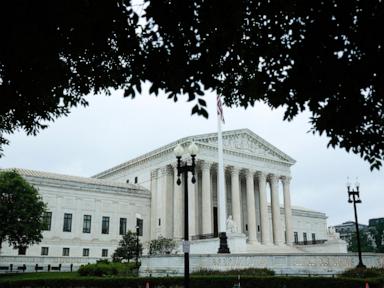
The Supreme Court just fundamentally shifted the power dynamic at the border. In a 6-3 decision along ideological lines in the case Blanche v. Lau, the conservative majority gave federal border agents exceptional discretion to bypass standard protections generally afforded to Lawful Permanent Residents (LPRs).
If you or a loved one holds a green card, you need to understand that the rules of international travel just changed. It is no longer as simple as showing your card and walking through customs.
The Illusion of Permanent Protection
For decades, the standard understanding was clear. If you are a green card holder, you are presumed to have the right to reenter the U.S. after a short trip abroad. Border agents couldn't just strip your status on a whim.
The law provides specific exceptions, though. If a permanent resident has committed a "crime involving moral turpitude"—a notoriously vague legal phrase that covers everything from trademark counterfeiting to theft and fraud—they lose that automatic right. They get reclassified as an "applicant seeking admission," meaning they are treated like an outsider trying to get in for the first time.
Here is the twist that led to the Supreme Court battle. Who decides you committed that crime, and when do they have to prove it?
Previously, federal appeals courts held that immigration officials needed "clear and convincing evidence" at the border to strip someone of their green card benefits. They couldn't just act on an unproven accusation or a pending charge. They needed a conviction or a confession in hand before stripping you of your status at the port of entry.
The Supreme Court just obliterated that requirement.
The Case That Changed the Rules
The battle centers around Muk Choi Lau, a Chinese national who gained his U.S. green card in 2007. Five years later, Lau was indicted on New Jersey state charges related to selling counterfeit goods. Before his case was resolved, he took a brief trip to China.
When Lau flew back into New York's John F. Kennedy International Airport in 2012, border agents flagged his pending indictment. Using that unproven charge, a Customs and Border Protection (CBP) officer determined Lau fit the "moral turpitude" exception.
The agent confiscated Lau's green card on the spot. Instead of normal entry, the government placed him on temporary "parole" status just so he could physically enter the country to face his criminal trial. Lau later pleaded guilty to the counterfeiting charge and was subsequently hit with deportation orders.
Lau fought his removal for over a decade. His legal team argued that the border agent overstepped in 2012 by demoting his status before he was actually convicted. The Second Circuit Court of Appeals agreed with Lau, ruling that the government cannot treat a permanent resident as an applicant for admission based purely on a charge or suspicion.
Justice Clarence Thomas, writing for the 6-3 Supreme Court majority, completely reversed that line of thinking. Thomas wrote that the Immigration and Nationality Act simply doesn't require border officers to have clear and convincing evidence of an offense at the moment of reentry. Officers have to make quick, on-the-spot judgments. According to the majority, a pending indictment or a strong reason to believe an offense occurred is enough to downgrade a traveler's status right then and there.
Why Justice Jackson Called It a Blank Check
The court's three liberal justices issued a blistering dissent. Led by Justice Ketanji Brown Jackson, the minority warned that the ruling hands the executive branch dangerous, unchecked power.
"I worry that the Court has now handed the Government a massive blank check," Jackson wrote.
The core of her argument highlights a bizarre legal paradox. Under this ruling, the government can downgrade your status at the border based on a mere assumption or pending charge, and then use the subsequent months or years while you are on parole to gather the actual evidence needed to deport you. Jackson argued this sequencing completely undermines the plain terms of immigration law.
Think about what happens when your green card is confiscated at the airport. You aren't just facing a future court date. Your daily life in the U.S. takes an immediate, devastating hit.
Without your physical card or recognized permanent status, your right to work is thrown into limbo. Good luck opening a bank account, securing a housing lease, maintaining your health insurance, or enrolling in school. You are physically on U.S. soil, but legally, you are stranded at the border.
The Shifting Burden of Proof
This isn't just dry legal theory. It completely flips the script on due process.
In a standard deportation proceeding inside the U.S., the government bears the heavy burden of proving you did something wrong to justify kicking you out. You are protected by a baseline presumption of innocence.
But if you step off a plane and CBP classifies you as an "applicant for admission," the burden of proof flips onto your shoulders. Suddenly, you carry the legal weight of proving why you deserve to be allowed back into the United States. Defeating an immigration charge when you carry the burden of proof is vastly more difficult.
This affects a massive web of people. While Lau's case involved trademark counterfeiting, immigration lawyers are sounding the alarm for anyone with any unresolved legal issues. It could be a pending drug charge, an old unresolved arrest, or even a relatively minor offense like shoplifting. If a border officer spots an open charge or an active indictment on their screen, they now have the green light to take your card and put you in removal proceedings.
Immediate Steps for Green Card Holders
This ruling changes how permanent residents must approach international travel. If you have a green card, you cannot afford to be casual about your legal history. Take these concrete steps before you book any international flights.
- Audit your record: If you have ever been arrested, charged, or indicted—even if the case was dismissed, settled, or occurred years ago—gather every scrap of paperwork. You need certified disposition records showing exactly how the case ended.
- Freeze travel if you have open cases: If you have an active, unresolved criminal charge, do not leave the United States. Period. It doesn't matter if you are innocent or if your attorney says the charges will be dropped next month. If you leave, you risk losing your green card at the airport when you try to return.
- Consult an immigration attorney, not just a criminal defense lawyer: Criminal defense attorneys are great at handling state or federal crimes, but they often do not understand the hidden immigration consequences of things like plea deals or pretrial intervention programs. Before you travel, have an experienced immigration lawyer review your background.
- Carry proof of ties: If you must travel and have a minor past issue that was fully resolved, carry physical proof of your ongoing life in the U.S., including tax returns, employment verification letters, and property deeds.
The reality is tough, but ignoring it won't help. The presumption of safety that green card holders enjoyed during international travel has been compromised. A routine vacation or a quick trip to visit family abroad can now trigger a cascade of life-altering legal consequences if you have a pending legal matter. Protect your status by staying grounded until your record is completely clear.