Twelve years of rust, bureaucratic stalling, and frozen diplomacy finally ended on October 24, 2026. When North Korean leader Kim Jong Un crossed the newly opened New Yalu River Bridge into the Chinese border city of Dandong, most headlines treated it like a routine ribbon-cutting photo op. They missed the real story entirely.
You're looking at a massive geopolitical pivot disguised as an infrastructure project. For years, Beijing built a four-lane, 3-kilometer span at a cost of roughly $310 million, only to watch it terminate abruptly in a North Korean cornfield near Sinuiju. Pyongyang dragged its feet on connecting roads and customs facilities for over a decade while bilateral ties soured over United Nations nuclear sanctions. Now, suddenly, the concrete is poured, the gates are up, and Kim himself is shaking hands with top Chinese officials on the Chinese side of the river.
Why the sudden urgency? Follow the money, the artillery shells, and the timing.
Why the New Yalu River Bridge Sat Empty for Twelve Years
To understand what changed in October 2026, you have to understand how embarrassing this bridge used to be for Beijing. China finished its structural work back in 2014. The goal was obvious: replace the aging, single-lane Sino-Korean Friendship Bridge—a relic built by Imperial Japan in 1943—with a modern artery capable of handling round-the-clock container shipments and heavy freight.
Then politics got in the way.
As Pyongyang ramped up its nuclear and ballistic missile testing through the late 2010s, China backed tough UN Security Council sanctions. Kim Jong Un responded by freezing high-level engagement and leaving the North Korean approach roads unfinished. Later, the COVID-19 pandemic slammed the border shut altogether. For twelve years, tourists in Dandong paid to walk out onto the Chinese side of the span just to stare at a dead end. Even China's state-affiliated Global Times published rare, pointed reports quoting frustrated Dandong residents who watched their promised economic boom evaporate.
When Chinese Premier Li Qiang and North Korean Premier Pak Thae Song formally opened the crossing via video addresses on October 15, 2026, it wasn't just an engineering milestone. Nine days later, Kim's personal visit turned a decade-old symbol of friction into a calculated display of alignment.
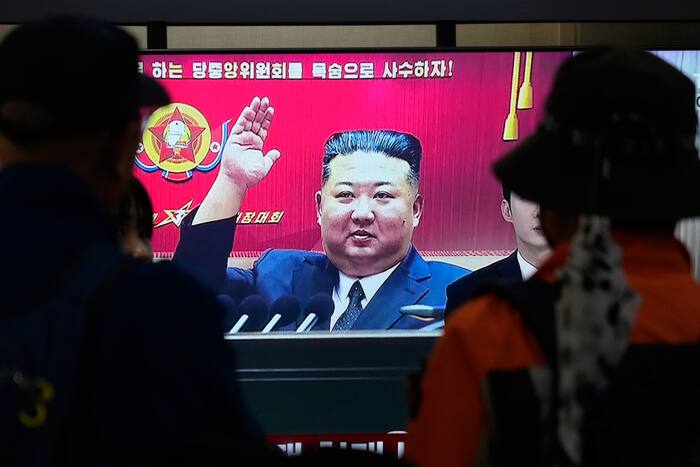
What Actually Happened During Kim Jong Un's Dandong Visit
Kim doesn't leave North Korea lightly. This October trip marked only his sixth visit to China since taking power, and his first since attending a massive military parade in Beijing alongside Xi Jinping and Vladimir Putin in September 2025.
Unlike his summit trips to Beijing, this visit was tight, surgical, and deeply symbolic. Here is what actually went down on the ground in Liaoning Province:
- High-Level Reception: Kim was met by Wang Huning, a top-ranking member of the Chinese Communist Party's Politburo Standing Committee and the party's chief ideological theorist. Sending Wang rather than a provincial governor signaled that Beijing viewed the crossing as a major state priority.
- Industrial Optics: Kim and Wang didn't just sign papers; they toured a local automotive manufacturing plant in Dandong. For a North Korean regime desperate to modernize its domestic manufacturing and civilian supply chains, touring Chinese factory floors sends an unmistakable message about what Pyongyang wants out of this reopened corridor.
- Wartime Nostalgia: Both sides explicitly tied the inauguration to the anniversary of Chinese forces entering the Korean War in October 1950. Kim framed the visit as a tribute to fallen soldiers while pledging to "carry forward their historical friendship and expand practical cooperation".
Notice what was missing from the immediate coverage? Pyongyang's own state media held back from reporting Kim's border crossing right away, letting China's Xinhua News Agency break the visuals first. That kind of choreographed asymmetry usually means delicate backchannel negotiations are still underway behind closed doors.
The Russia Factor Nobody Wants to Admit
If you're trying to figure out why Kim suddenly cares about Chinese highway capacity in late 2026, look north toward Vladivostok.
Over the past two years, Pyongyang leaned heavily into its military partnership with Moscow, shipping thousands of troops and massive stockpiles of conventional munitions to support Vladimir Putin's war in Ukraine. In early September 2026—just weeks before the Yalu River ceremony—North Korea and Russia opened the first-ever road bridge spanning their short shared border.
Suddenly, North Korea had brand-new road links to both of its heavyweight neighbors within a span of six weeks. That isn't a coincidence.
Here's the uncomfortable truth for Pyongyang: Russia can supply fuel, grain, and military hardware, but Moscow cannot rebuild North Korea's civilian economy. As Professor Leif-Eric Easley of Ewha Womans University noted following the bridge opening, China remains economically indispensable to North Korea in ways Russia simply cannot replace. Russian trade is heavily skewed toward wartime logistics and weapons transfers. If Kim wants consumer goods, industrial machinery, electronics, and construction materials to keep domestic elites happy, everything still flows through Dandong.
Even more importantly, Kim hates being dependent on a single patron. Playing Moscow and Beijing off each other is a classic North Korean survival tactic dating back to Kim Il Sung during the Cold War. By opening the Russian road bridge in September and personally inaugurating the New Yalu River Bridge in October, Kim locked in two separate lifelines—giving himself room to maneuver if either neighbor tries to squeeze him.
Dandong's Shadow Economy and Cyber Hubs
Mainstream news reports love talking about container trucks and legal customs checkpoints. They rarely mention what else operates out of Dandong.
For years, Liaoning Province—and Dandong specifically—has functioned as the primary offshore nerve center for North Korea's sanctions-evasion networks and state-backed IT workers. Analysts at the Korea Economic Institute of America (KEI) have pointed out that Dandong serves as a critical operational hub for North Korean cybercriminals and illicit financial brokers who funnel hard currency back to Pyongyang.
Think about what a four-lane, 24-hour highway crossing does for those networks.
Under the old 1943 Friendship Bridge, traffic was bottlenecked onto a narrow, aging structure where every truck, railcar, and passenger was easy to monitor and throttle. A modern four-lane bridge built for continuous heavy cargo dramatically expands the volume of physical goods, cash, and personnel moving across the river. Even while North Korea continues to hold back on issuing general tourist visas to Chinese citizens, commercial and official traffic can now scale up fast without hitting physical bottlenecks.
Why Seoul and Washington Are Watching Closely
The timing of Kim's border crossing also collided directly with regional summit diplomacy. With Xi Jinping hosting the Asia-Pacific Economic Cooperation (APEC) summit in Shenzhen in mid-November 2026, diplomatic circles spent weeks buzzing over whether U.S. President Donald Trump might attempt another surprise encounter with Kim on Chinese soil.
By locking in stronger economic backing from both China and Russia beforehand, Kim entered the autumn diplomatic calendar holding a much stronger hand. Meanwhile, inter-Korean relations have hit rock bottom. Pyongyang has escalated rhetoric against Seoul, restarted border loudspeaker broadcasts, and slammed the door on dialogue with South Korea. When Kim can extract industrial support from China and military backing from Russia simultaneously, Seoul has almost nothing left on the table that outweighs the political risks Pyongyang attaches to North-South engagement.
How to Track What Happens Next on the Yalu River
If you're following Korean Peninsula security, supply chains, or East Asian geopolitics, don't rely on official press releases from Xinhua or KCNA to tell you whether this bridge actually changes things. State media will always call it a triumph. Instead, watch three concrete indicators over the coming months:
- Commercial Satellite Imagery of the Sinuiju Customs Yard: The true test of the New Yalu River Bridge isn't the ribbon-cutting—it's truck density. Watch commercial satellite imagery analysts (such as 38 North and Beyond Parallel) to see whether heavy container rigs actually fill the new Sinuiju customs terminal or if traffic remains sporadic.
- Chinese General Administration of Customs Data: Beijing publishes monthly bilateral trade figures broken down by province. Look specifically at Liaoning Province exports to North Korea—particularly machinery, vehicles, and refined materials—to measure whether the bridge unlocks real civilian trade growth or just absorbs existing Friendship Bridge volume.
- Chinese Group Tourism Announcements: North Korea's refusal to broadly reopen to Chinese tour groups remains a glaring bottleneck. If Beijing and Pyongyang announce formal tour-bus crossings over the new four-lane span, you'll know the rapprochement has moved beyond cautious logistics into full economic normalization.
Cross-border bridges between China and North Korea are never just concrete and steel. They're barometers. Right now, the needle on the Yalu River just swung sharply toward deeper integration—and Washington, Seoul, and Tokyo are going to have to deal with a North Korea that is far less isolated than it was a year ago.