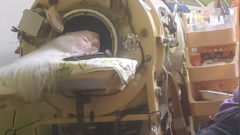
The heavy yellow metal cylinder hummed with a rhythmic, mechanical sigh. For decades, that sound meant the difference between life and suffocation for Mona Randolph. When you hear about the iron lung, you probably picture a terrifying, ancient relic of a bygone medical era, a metal coffin keeping a helpless patient trapped in the 1950s. That view is totally wrong.
Mona Randolph did not see her iron lung as a prison. She saw it as a friend. After contracting polio in 1956 at the age of 20, the 750-pound negative-pressure ventilator became her sanctuary. While the world moved on to modern positive-pressure ventilators and plastic tubes, Mona, like a handful of remaining polio survivors in the United States, chose to stick with her mechanical cylinder. Her sister recently shared the realities of that life, revealing a story that is less about medical tragedy and much more about an aggressive, stubborn will to live.
The Engineering of a Mechanical Sigh
Most people do not understand how an iron lung actually works. Modern ventilators force air into your lungs through a tube pushed down your throat or via a tight mask. It is invasive. It feels unnatural.
The iron lung does the exact opposite. It uses negative pressure, meaning it mimics the natural way your body breathes.
- You lie inside the airtight steel drum with only your head exposed through a tight rubber collar.
- A mechanical pump changes the air pressure inside the cylinder.
- When air is pulled out of the tank, the partial vacuum forces your chest to expand, drawing air into your lungs through your nose and mouth.
- When air pushes back into the tank, your chest compresses, and you exhale.
It is a passive, strangely comfortable way to breathe for someone whose diaphragm muscles were completely destroyed by the poliovirus. For Mona, spending hours each day inside that machine gave her the physical stamina to face the waking world. It was a grueling routine, but it kept her alive.
Why Survivors Refused Modern Medical Upgrades
You might wonder why someone would choose an 800-pound iron cylinder over a sleek, modern ventilator. The answer comes down to comfort and autonomy.
Tracheostomies—cutting a hole in the windpipe to attach a modern ventilator—come with huge risks. We are talking about constant respiratory infections, mucus buildup, and the inability to speak normally. The iron lung left the throat completely untouched. Inside the cylinder, survivors could talk, sing, eat, and read.
Living this way required an army of support. The rubber seals around the neck had to be perfectly airtight, requiring constant adjustments. If the power went out, the threat was immediate and lethal. Survivors had to rely on family members or caretakers to pump the heavy leather bellows by hand until electricity returned. It was a fragile existence, completely dependent on the reliability of aging machinery and the absolute devotion of loved ones.
The Mental Armor of Survival
You don't survive six decades dependent on a machine without developing a serious mental edge. Mona Randolph possessed a steely, sharp mind that refused to let physical limitations dictate her world. Her sister recalls that while the machine took care of her lungs, Mona took care of everything else.
She managed her household. She engaged with visitors. She remained deeply invested in the lives of those around her.
This was not a passive life of waiting to die. It was a deliberate, daily choice to stay here. When your entire physical existence is reduced to a mechanical rhythm, your mind has to expand to fill the room. The real story of the iron lung isn't the metal; it's the sheer defiance of the human spirit inside it.
The Logistics of a Disappearing Lifeline
Living in an iron lung in the 21st century presented massive practical nightmares. The companies that manufactured these machines went out of business decades ago. Spare parts do not exist.
When a part broke, survivors had to rely on custom machinists, specialized mechanics, or historical aircraft restorers to fabricate new gears and leather collars from scratch. It was a race against time and mechanical wear. As the number of historic polio survivors dwindled to just a few individuals across the globe, the specialized knowledge required to maintain these machines began to vanish too.
To keep a machine running meant navigating a world that had completely forgotten the disease that necessitated it. Yet, the individuals who relied on them pushed forward, proving that quality of life is defined by perspective, connection, and an unyielding determination to take the next breath.