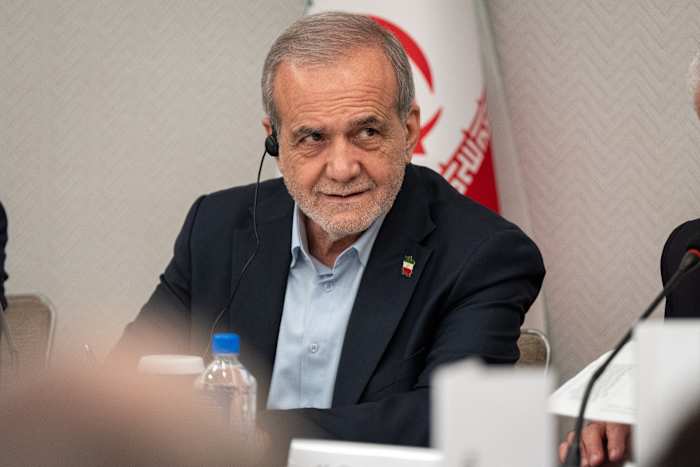
Geopolitical posturing rarely matches reality, but Tehran's latest rhetoric takes ambition to a new level. Iranian President Masoud Pezeshkian recently declared that the international community has accepted Iran's victory in its ongoing conflict with the United States. According to state media reports citing the IRNA news agency, Pezeshkian argued that the war should wrap up immediately because Iran successfully held its ground, defied Washington's heavy-handed demands, and maintained physical control over the vital Strait of Hormuz.
You shouldn't take these statements at face value. They represent a classic high-stakes messaging strategy designed for domestic consumption and regional positioning, even as foreign policy pressure mounts from Western capitals.
The Reality Behind the Strait of Hormuz Standoff
At the core of Tehran's claim is control over the Strait of Hormuz. For roughly six months following the outbreak of the war launched by the U.S. and Israel, this critical energy corridor has faced severe disruptions and effective closures. Tanker traffic has bottlenecked, shipping insurance costs have skyrocketed, and global energy markets have scrambled to find alternative routes.
Iran views its continued defiance against Western naval presence as a definitive strategic win. Pezeshkian went as far as claiming that the entire world approved of their victory while casting sharp criticism on Washington's standing abroad.
Washington sees things differently. The Trump administration is pushing forward with an aggressive counter-strategy, promising an unprecedented campaign of financial isolation and economic warfare. Rather than conceding defeat, the White House is doubling down on economic pressure, aiming to force Iran's leadership to dismantle its nuclear ambitions and fully unblock the strait for international shipping.
Cracks in Western Diplomatic Messaging
While Tehran beats the drum of victory, Western diplomacy is wrestling with internal contradictions. A prime example emerged when U.S. Ambassador to Turkey and special envoy for Syria, Tom Barrack, made waves during an interview with entrepreneur Mario Nawfal. Barrack openly stated that Israel "still" occupies the Golan Heights in violation of United Nations resolutions.
This statement directly clashes with the official U.S. recognition policy established back in 2019 when Washington formally recognized Israeli sovereignty over the territory. Naturally, the remark triggered immediate domestic blowback from conservative political figures in the United States, showcasing how fragmented diplomatic messaging can complicate broader foreign policy goals in the region.
Finding Routes Around the Bottleneck
While politicians argue over who won or lost, nations heavily reliant on Middle Eastern energy aren't waiting around for a diplomatic breakthrough. France and Saudi Arabia are actively coordinating plans to bypass the restricted Strait of Hormuz entirely.
French President Emmanuel Macron and Saudi Crown Prince Mohammed bin Salman are holding high-level discussions in Paris to address the crippled maritime trade lines. Proposed workarounds involve expanding pipeline capacities across Saudi Arabia, ramping up overland trade through Omani ports sitting safely outside the Persian Gulf, and designing new regional rail networks. These projects aim to secure long-term energy independence from chokepoints controlled by hostile actors.
On the ground in Syria, the security vacuum continues to draw kinetic responses. An Israeli drone strike recently hit a vehicle in the southwestern Syrian village of Beit Jin, wounding one individual. The Israeli military defended the action by stating it targeted a militant operative in the final stages of preparing an attack. Since the collapse of the Bashar Assad regime, Israel has systematically targeted remaining military assets to prevent hostile groups from filling the power vacuum, maintaining an indefinite footprint in the buffer zone despite regional protests.
Watch how energy markets react to the upcoming European-Saudi infrastructure talks. That tells you more about the real balance of power than any speech coming out of Tehran.
Iran says Deal to End Mideast War 'Declaration of US Defeat'
This video provides additional context on how Iranian officials frame regional agreements and ceasefire developments as strategic victories over Washington.
http://googleusercontent.com/youtube_content/1