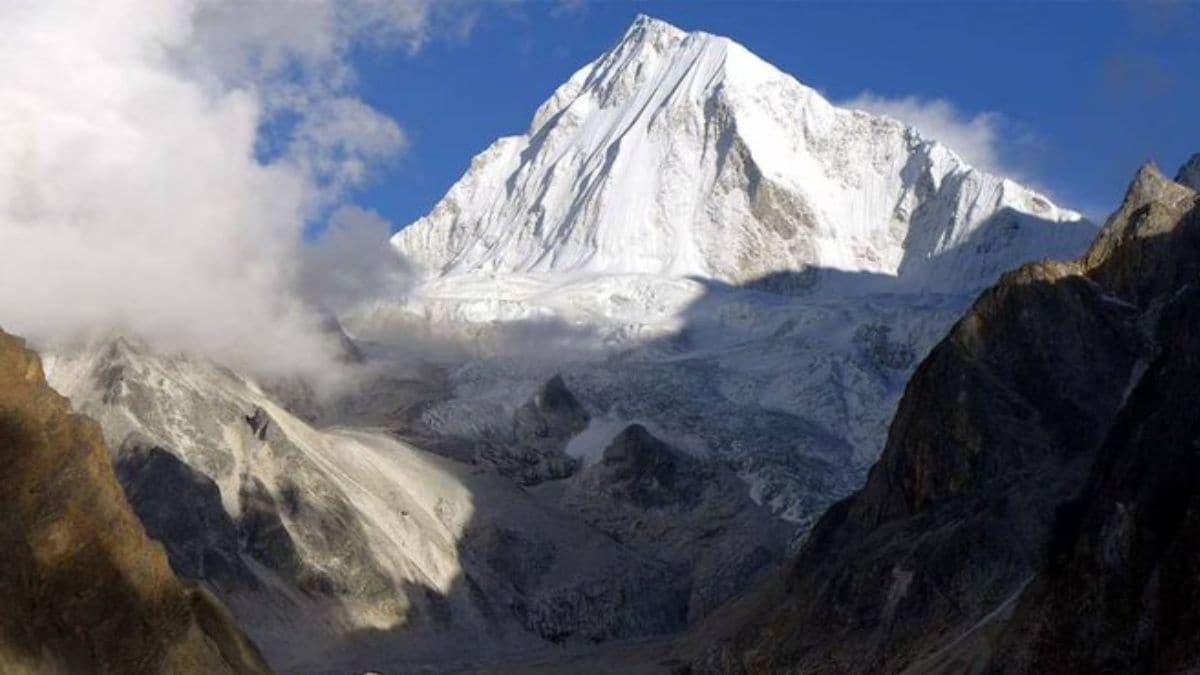
Mountain climbing always carries inherent risks, but when an entire expedition support team vanishes at base camp, the conversation shifts from extreme sport risk to systemic predictability. An avalanche slammed into the base camp of Himlung Himal in the Manang region of Nepal, leaving 12 support staff missing after four bodies were recovered. While headlines often focus on the glamour of scaling a 7,126-meter peak, this disaster exposes the harsh reality faced by the local Sherpas, kitchen crew, and guides who arrive weeks before foreign climbers ever touch the mountain.
The disaster didn't happen in a vacuum. Days of persistent rain and heavy snowfall across Nepal created unstable snowpacks and triggered landslides that disrupted major expeditions on neighboring peaks like Manaslu and Dhaulagiri. Meteorological warnings had already been issued by the Department of Hydrology and Meteorology, urging trekking agencies and travelers to exercise extreme caution. Yet, the logistics of high-altitude commercial climbing often force support crews up the mountain early to secure camps, regardless of worsening forecasts.
The Anatomy of a High-Altitude Disaster
When you look at how expeditions operate on peaks like Himlung Himal, the pressure on local staff becomes glaringly obvious. Expedition organizers sent support crews ahead to clear snow, pitch tents, and prepare logistics before foreign clients arrived. Those clients were still days away when the snow wall gave way. This means every single person killed or missing in this initial strike was a Nepali national—working professionals whose livelihoods depend on taking on risks that commercial clients pay to minimize.
Rescue operations faced immediate roadblocks. Heavy fog, low clouds, and continuous snowfall grounded private and military helicopters in Kathmandu and Pokhara, delaying aerial reconnaissance. When a specialized volunteer team from the Nepal National Mountain Guides Association (NNMGA) finally reached the site, they had to probe through roughly 14 feet of packed avalanche debris. After recovering four bodies—two climbing guides and two kitchen staff—the rescue teams had to make the grim assessment that no other survivors remained under the snow.
Why Warnings Fail When Livelihoods Are on the Line
Climbers and guides know the weather in the high Himalayas can turn lethal in minutes. So why do teams keep pushing upward despite red alerts? The answer comes down to economic pressure. The autumn climbing window is short, and expedition companies operate on razor-thin margins. If a support crew waits out every storm in a teahouse or base camp town, the entire season's revenue evaporates.
This tragedy also follows a devastating monsoon season that left thousands displaced and hundreds dead across other parts of Nepal. Experts point out that the broader Himalayan region is experiencing accelerated glacier retreat, permafrost thaw, and geological instability, transforming standard seasonal weather into compound crises. When heavy rain falls at elevations where it used to snow, slopes become primed for catastrophic failures.
The aftermath leaves families in Kathmandu and mountain villages mourning workers who were simply doing their jobs. As rescue teams descend and seasonal expeditions are officially called off, the mountaineering community faces uncomfortable questions about baseline safety protocols, insurance coverage for support staff, and whether commercial expedition timelines need a complete overhaul to adapt to a warming climate.


