Political purists are scratching their heads, but working-class voters in Maine just sent a loud message to the Washington establishment. Graham Platner, a 41-year-old Marine veteran and oyster farmer, dominated the state’s Democratic Senate primary with over 70% of the vote. He achieved this despite a heavy stream of personal controversies that would have instantly buried any traditional politician.
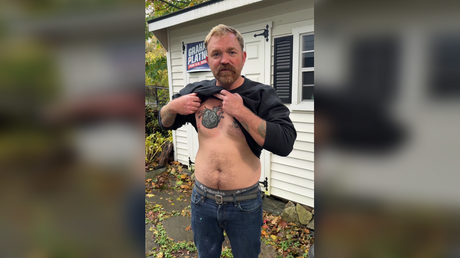
The national headlines focused on a single, shocking detail: a tattoo resembling a Nazi symbol that Platner wore on his chest for nearly two decades before covering it up. For pundits looking from the outside, his primary victory seems inexplicable. How does a party that routinely condemns white supremacy nominate a man with an SS Totenkopf etched into his skin?
If you think this victory means Maine Democrats are suddenly soft on extremism, you're missing the real story. Voters didn't choose Platner because of his past mistakes; they chose him because they’re utterly exhausted by a polished, corporate political class that feels entirely out of touch with everyday survival.
The Raw Appeal of an Unpolished Outsider
To understand how Platner defeated the state’s political elite—including Governor Janet Mills, who suspended her campaign in April after realizing she couldn't catch him—you have to look at the economic reality on the ground. Maine is a deeply rural, fiercely independent state where soaring housing costs, predatory healthcare systems, and disappearing middle-class jobs dominate daily conversations.
Platner didn't show up in a tailored suit reading from a sanitized teleprompter. He campaigned with a thick beard, a gruff voice, visible tattoos, and a working-class background from the small coastal town of Sullivan. Backed by progressive icons like Senator Bernie Sanders, Platner packed town halls by railing against income inequality, corporate monopolies, and the billionaire class.
When his opponents dropped opposition research revealing incendiary Reddit posts from a decade ago, offensive language, and a controversial skull-and-crossbones tattoo, Platner didn't run to a public relations firm to craft a slick denial. Instead, he leaned completely into a narrative of personal redemption. He talked openly about his battle with post-traumatic stress disorder, depression, and severe alcohol abuse following combat deployments in both Iraq and Afghanistan.
For voters who have watched their own families struggle with addiction, mental health issues, and economic despair, Platner’s messy baggage didn't feel disqualifying. It felt human. He presented himself as a flawed guy who hit rock bottom, did the work to change, and emerged ready to fight for people the system left behind.
The Battle Over the Totenkopf Tattoo
The most intense scrutiny centered on the tattoo on his chest, identified as a Totenkopf—a skull-and-crossbones symbol heavily utilized by the Nazi SS. Platner has repeatedly maintained that he received the tattoo during a heavy night of drinking while serving in the military, completely unaware of its historic ties to white supremacy. Once the symbol’s meaning became a public issue, he had it covered with an entirely new design.
Critics claim this explanation is hard to swallow. Conservative operatives, including former romantic partners, went to the press alleging that Platner knew exactly what the symbol meant, even claiming he referred to it by its German name in private conversations. His campaign team has vehemently denied those specific allegations, calling them politically motivated smears designed to protect the status quo.
The debate quickly turned into a referendum on political purity tests. His supporters argue that if society believes in criminal justice reform and rehabilitation, it must also believe that individuals can move past youthful ignorance. Opponents counter that some symbols are simply too toxic to ever forgive, arguing that a major political party should have zero tolerance for anything resembling hate speech.
Redefining the Dirtbag Democrat
Platner’s rise is part of a broader shift in American politics, a phenomenon some political analysts call the rise of the "dirtbag" Democrat. For years, the national Democratic strategy relied on recruiting hyper-vetted, highly credentialed Ivy League graduates who say all the right things but rarely connect with rural or blue-collar communities.
By nominating an oyster farmer with plenty of rough edges, Maine Democrats are taking a page out of the populist playbook. They recognize that working-class voters often respond more to perceived authenticity and shared economic pain than to moral perfection. Platner explicitly hit back at his critics during his victory speech at a YMCA gym in Blue Hill, claiming national pundits keep searching for a single headline to define him because they fail to understand the populist movement behind his campaign.
This unconventional profile sets up one of the most high-stakes matchups of the midterm elections. Platner will face incumbent Republican Senator Susan Collins, a moderate powerhouse running for a sixth term. The race is a critical, must-win battleground for Democrats aiming to reclaim control of a tightly divided Senate.
Collins has spent decades building a reputation as a pragmatic dealmaker, but Platner’s strategy will target her long record directly. He has already labeled her as spineless and corporate-backed, openly attacking her support for foreign military interventions by stating she has never met a war she didn't like.
Navigating the General Election Minefield
While progressive activists are celebrating, mainstream Democratic strategists are privately panicking. Winning a primary among deeply committed progressive voters is completely different from winning a statewide general election in a purple state.
Republicans are already sharpening their knives. The Senate Leadership Fund has launched aggressive attacks, labeling Platner a dangerous deviant, and conservative groups are preparing to flood Maine’s airwaves with multi-million-dollar ad campaigns detailing every single piece of his past misconduct. The general election will test whether independent and moderate voters are as willing to accept Platner’s redemption arc as the Democratic base was.
If you are following this race or trying to understand how modern populism is rewriting the rules of American elections, keep your focus on these specific factors moving forward:
- Watch the fundraising numbers: See if national Democratic donors pull back out of fear of more scandals, or if small-dollar populist donations surge to counter Republican attack ads.
- Track the suburban vote: Pay close attention to polling in Maine’s more affluent suburban areas, where voters typically recoil from personal controversies and might shift toward Collins.
- Monitor the policy debates: Observe whether Platner can successfully keep the spotlight on pocketbook issues like housing costs and healthcare, or if the race degenerates entirely into a cultural war over his character.
The traditional political playbook says Graham Platner shouldn't be on the ballot. But in an era defined by deep institutional distrust and economic anxiety, the old rules simply don't apply anymore. Whether his raw, chaotic authenticity is a winning formula or a political liability will be decided this November.


