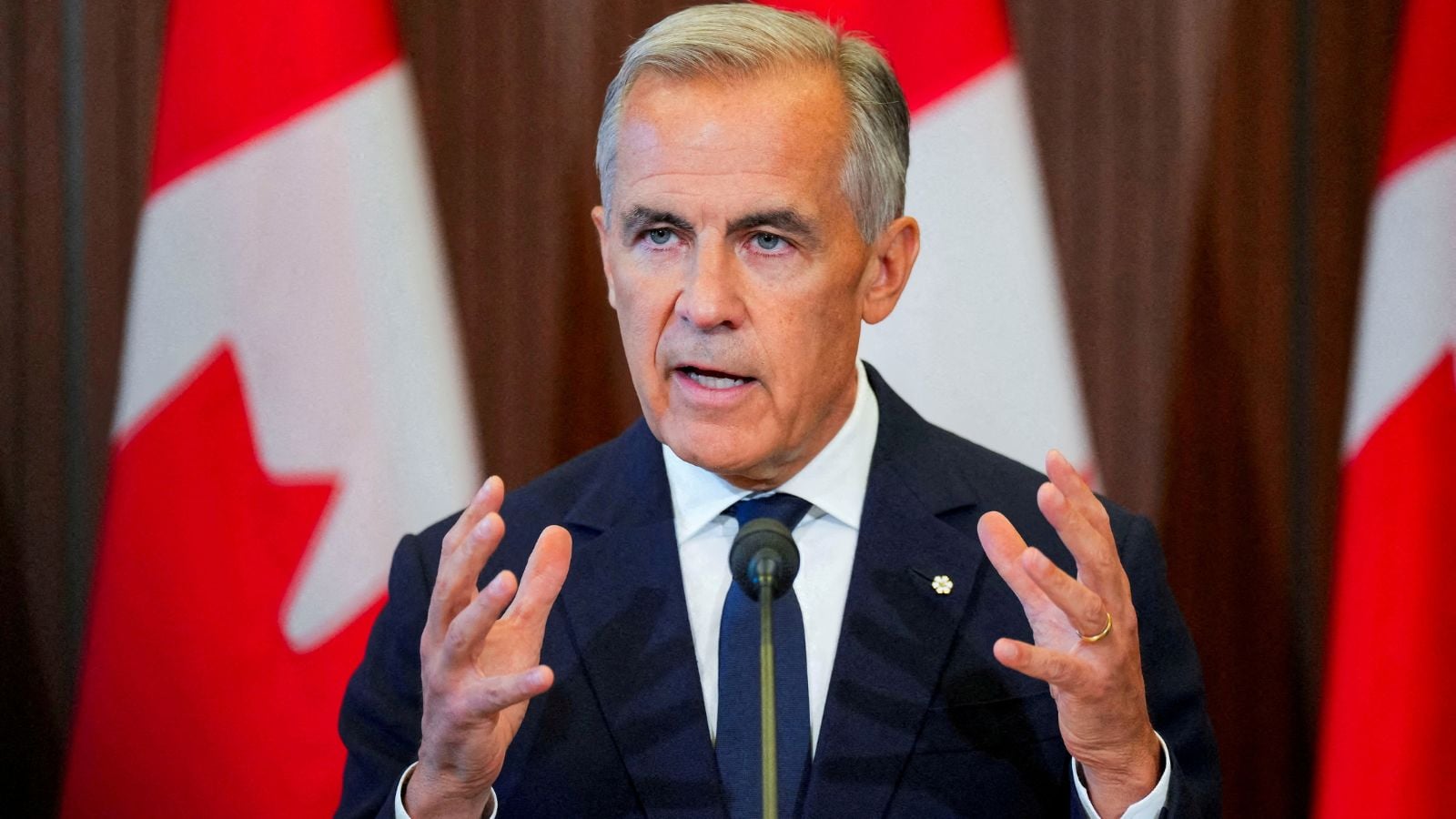
Most headlines treat Prime Minister Mark Carney's warning about Chinese automakers like a cheap negotiating bluff aimed at Washington. They miss the math entirely. When Carney stood in Cambodia ahead of the APEC summit and declared that Canada could partner with Chinese, European, or Japanese carmakers if U.S. trade talks fail, he wasn't just bluffing. He was describing an economic survival plan already in motion.
Right now, Canada's auto sector sits in the crosshairs of a massive tariff cliff. Following the collapse of bilateral trade talks in August, President Donald Trump announced that U.S. tariffs on Canadian-built cars, trucks, auto parts, and steel will jump to 50% on January 1, 2027. If that tax hits, the integrated North American supply chain that has existed since the 1965 Auto Pact dies overnight. You can't run assembly plants in Ontario when parts cross the Detroit River six times before final assembly and get taxed at every border crossing.
Carney has already started building an off-ramp. While Washington and Detroit panic over the rhetoric, Ottawa has spent the past ten months quietly laying the groundwork for Chinese electric vehicle (EV) companies to enter the Canadian market.
Why Washington and Detroit Are Actually Panicking
For six decades, the Detroit Three—Ford, General Motors, and Stellantis—treated Southern Ontario as a seamless extension of Michigan. That integration gave American brands guaranteed market access and a skilled workforce just across the border.
Trump's 50% tariff threat breaks that arrangement. Speaking to reporters in Manila and Phnom Penh in mid-November 2026, Carney drew a hard line. He stated flatly that Ottawa won't sign any U.S. trade agreement that leaves Canada without a viable domestic auto industry. When pressed on whether courting Beijing was mere leverage, Carney brushed off the framing. "It's not leverage," he said. "But action, reaction."
The reaction across the border was immediate and furious. Trump trade adviser Peter Navarro took to X to blast the prime minister, calling the move "offensive in the extreme" and warning that China would "eat Canada alive". Meanwhile, auto industry leaders in Michigan started lobbying both governments to settle their dispute. They know something Washington politicians prefer to ignore. Once Chinese automakers establish a manufacturing foothold in Ontario, they won't just take Canadian market share from American brands—they'll sit right on America's doorstep with modern EV supply chains.
The Deal Canada Already Struck With Beijing
Many observers talk about a Canada-China auto partnership as a hypothetical future threat. In reality, the doors opened back in January 2026.
During his first visit to Beijing—the first by a Canadian prime minister in over eight years—Carney dismantled Canada's 100% surtax on Chinese-made electric vehicles. In its place, Ottawa established an annual import quota:
- Tariff rate: Cut from 100% down to 6.1%.
- Initial volume: Up to 49,000 Chinese-built EVs allowed into Canada per year.
- Built-in growth: The quota expands by 6.5% annually, reaching roughly 70,000 vehicles over five years.
- Affordability mandate: Starting in 2027, 10% of that quota is reserved strictly for EVs with an import price of $35,000 or less, scaling up to 50% by 2030.
In return, Beijing rolled back punishing tariffs on Canadian canola, and when Carney met Chinese President Xi Jinping again in Shenzhen in November 2026, China added tariff relief on roughly $400 million worth of Canadian pork and seafood through 2028.
According to Global Affairs Canada, 16,291 China-built EVs had already entered the country by late November 2026 under this quota, with roughly half priced under the $35,000 threshold. Interestingly, Tesla has been one of the biggest early beneficiaries by shipping Shanghai-built models north, proving that global supply chains adapt way faster than trade hawks expect.
The Catch With Chinese Auto Investment in Canada
Here's where things get messy. Allowing finished EVs into Canadian ports is one thing. Building Chinese cars on Canadian soil is an entirely different political fight.
Kody Blois, parliamentary secretary to the prime minister, confirmed in late November that Ottawa sees a clear pathway for direct industrial investment from Chinese automakers over the next year. Any factory deal must take the form of a joint venture with Canadian equity. More importantly, Ottawa has strict rules against "screwdriver plants"—facilities that simply bolt together pre-manufactured foreign parts.
Industry Minister Mélanie Joly has repeatedly rejected the idea of importing knock-down kits. Canada's auto sector employs roughly 200,000 workers in parts manufacturing alone. If a Chinese brand ships 90% completed vehicles in crates just to slap wheels on them in Ontario, those domestic parts suppliers get wiped out.
The Brampton Plant Flashpoint
You can see this tension boiling over in Brampton, Ontario. After Stellantis idled its Brampton assembly plant and moved to sell the facility to Canadian defense manufacturer Roshel—while negotiating to lease back 25% of the space to assemble affordable EVs—alarm bells went off across the province.
Ontario Premier Doug Ford wrote a blunt letter to Carney demanding that Ottawa bar Chinese-made EV kits from ever being assembled at the Brampton site. Unifor National President Lana Payne backed him up, warning that semi-knocked-down kit assembly threatens hundreds of Canadian parts companies and 100,000 unionized jobs.
Carney's team insists they won't allow kit-car loopholes. Whether Ottawa can actually convince a Chinese giant like BYD or Geely to build a full-scale, localized North American supply chain from scratch—without guaranteed access to the U.S. market—remains the billion-dollar gamble.
Can Canada Actually Survive Without the U.S. Auto Market
Let's be honest about the numbers. Canada builds roughly 1.3 to 1.5 million vehicles a year, and well over 80% of them get exported straight to the United States. Domestic Canadian buyers only purchase around 1.8 million new vehicles total each year across dozens of global brands.
No Chinese automaker can justify spending $2 billion on a full-scale Ontario stamping, battery, and assembly plant just to sell 50,000 cars a year to Canadians. The math doesn't work unless one of two things happens:
- Export hubs: Chinese automakers use Canadian plants with local equity partners to export tariff-free EVs to Europe, Latin America, or other markets where Canadian trade deals apply.
- Long-term U.S. positioning: Beijing bets that U.S. protectionism eventually softens, giving Chinese-Canadian joint ventures a head start inside North America.
Even if Carney pivots toward European or Japanese automakers—two options he explicitly grouped alongside China during his November remarks—those companies face the exact same export math. Toyota and Honda already build hundreds of thousands of vehicles in Ontario, and their business models rely heavily on shipping crossovers south of the border.
What Car Buyers and Industry Watchers Should Do Right Now
Trade wars create massive price distortions, and the next few months leading up to the January 1, 2027 tariff deadline will be chaotic. If you're shopping for a vehicle in Canada or tracking how this reshapes North American manufacturing, focus on three concrete realities:
- Check the VIN, not the badge: Ottawa still maintains retaliatory counter-tariffs on U.S.-assembled vehicles. Two identical SUVs on a Canadian dealer lot can carry wildly different tariff exposure depending on whether the vehicle identification number starts with a
1,4, or5(built in the U.S.) versus a2(built in Canada) or3(built in Mexico). Always verify final assembly location before negotiating price. - Watch the 2027 quota reset: The expanded 2027 import allocation—which mandates that 10% of incoming Chinese-built EVs carry an import price under $35,000—opens in January. If you're eyeing an affordable electric commuter, waiting until Q1 2027 will give you access to the first wave of budget-priced models hitting Canadian ports.
- Track joint-venture announcements over tariff threats: Ignore daily social media sparring between Ottawa and Washington. Watch whether Ottawa enforces its domestic-content rules on Stellantis's Brampton lease and whether any Chinese battery or vehicle maker announces a formal Canadian equity partnership before spring 2027. That signature will tell you whether North American auto integration is truly finished.