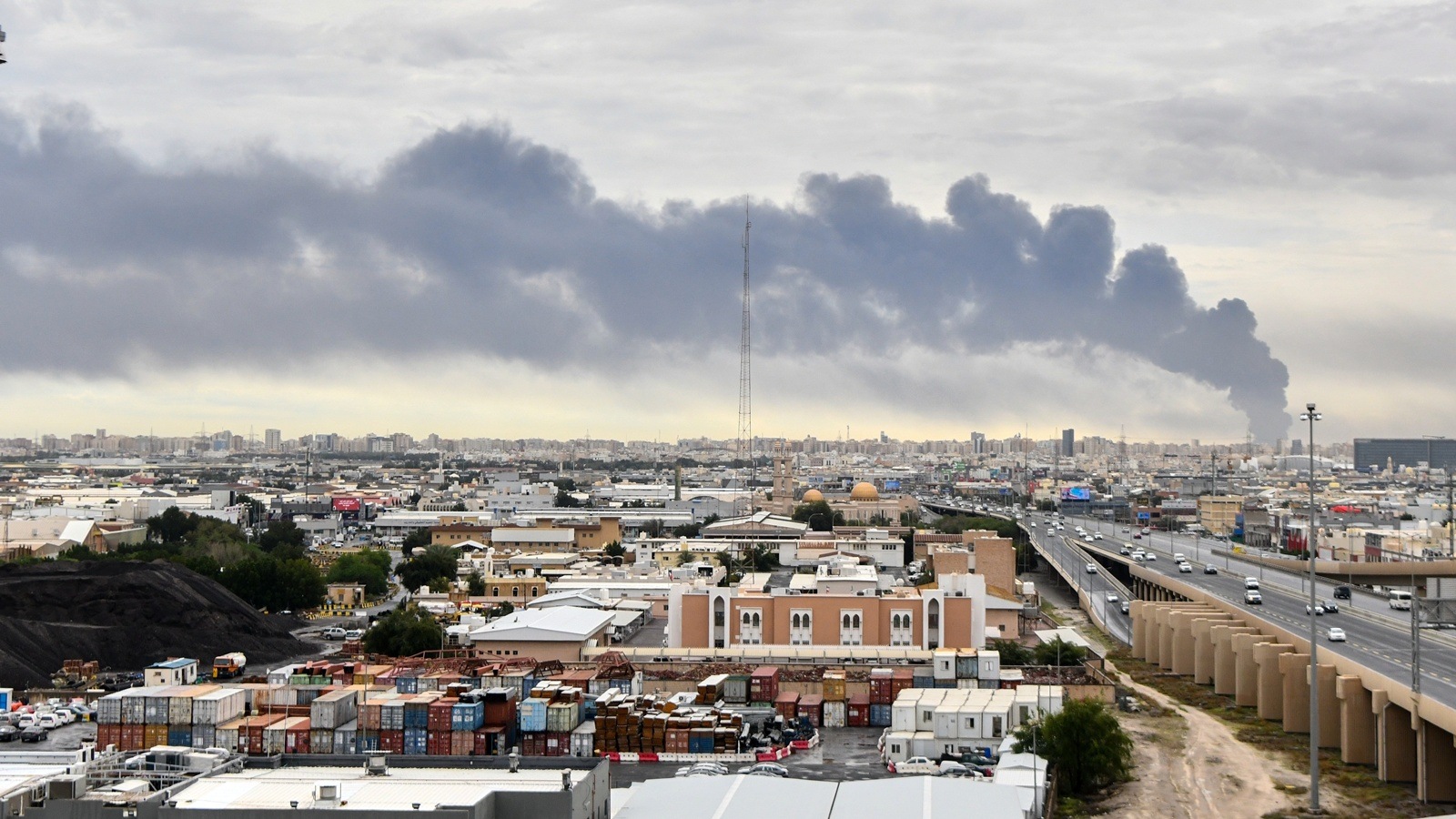
The Pentagon thought Operation Epic Fury had broken the back of Iran's military apparatus. Official testimony painted a picture of a shattered state, with claims that allied air campaigns had obliterated 90 percent of the Islamic Republic's defense industrial base, locking Tehran out of the weapons manufacturing business for years to come.
But the math on the ground does not match the rhetoric in Washington. Classified U.S. intelligence assessments reveal that Iran is rebuilding its military industrial complex at a pace that has completely caught Western analysts off guard. Leveraging a precarious six-week ceasefire mediated by Pakistan, Tehran has already restarted its domestic drone production lines and restored operational access to the vast majority of its coastal missile launch infrastructure.
The strategic reality is stark. Air campaigns can crush concrete and bury launch tubes, but they struggle to erase decentralized technical expertise, deep underground facilities, and highly resilient supply chains backed by foreign adversaries.
The Illusion of Total Destruction
The public messaging from military leadership has diverged sharply from internal intelligence briefings. Just days ago, central command leadership assured lawmakers that Iran’s offensive capabilities were crippled. The reality shifting beneath the diplomatic surface tells a different story.
Internal intelligence estimates indicate that the damage inflicted during the winter bombardment was far less permanent than initially advertised. Analysts have bumped their estimates of surviving Iranian missile assets upward. Intelligence officials now calculate that roughly two-thirds of Iran's mobile missile launchers survived the air campaign completely intact.
Estimated Iranian Military Hardware Post-Strike
+-----------------------------------+--------------------+
| Asset Class                       | Estimated Survival |
+-----------------------------------+--------------------+
| Mobile Missile Launchers          | ~66% Intact        |
| Domestic Drone Inventory          | ~50% Intact        |
| Coastal Defense Cruise Missiles   | Majority Operational|
+-----------------------------------+--------------------+
The discrepancy stems from a fundamental misunderstanding of Iranian defensive engineering. Decades of living under the threat of Western intervention forced the Islamic Revolutionary Guard Corps (IRGC) to develop a highly fragmented, hardened manufacturing footprint.
When allied bombs struck, they frequently caved in the entrances to underground facilities or buried mobile launchers under tons of rubble. They did not always destroy the hardware itself. The moment the April ceasefire took effect, Iranian engineering units rolled out heavy earth-moving equipment, digging out buried assets that Western satellites had prematurely marked as destroyed.
Reigniting the Drone Assembly Lines
Drones are the asymmetric equalizer of modern warfare. They are cheap to manufacture, easy to hide, and devastatingly effective at overwhelming complex air defense grids.
Intelligence briefs indicate that Tehran could completely reconstitute its full drone attack capabilities within six months. The production of loitering munitions has already resumed at several decentralized workshops across the country. This rapid restart exposes the flaws of relying solely on kinetic strikes to halt an industrialized nation’s military output.
Iran does not rely on massive, centralized factories to build its unmanned aerial vehicles. The assembly process is modular. A wing section is molded in a nondescript commercial plastics facility; the guidance software is loaded in an underground bunker; the engine is imported through a labyrinth of shell companies.
By the time the pieces arrive at a final assembly point, the footprint is so small that it can operate out of a standard commercial warehouse or a reinforced tunnel network.
"The Iranians have exceeded all timelines the intelligence community had for reconstitution," noted one U.S. official familiar with the updated briefings.
The Sino-Russian Lifeline
Tehran is not achieving this rapid industrial resurrection in isolation. The resilience of its weapons program is directly tied to the diplomatic and logistical backing of Moscow and Beijing.
Despite a strict naval and aerial blockade maintained by the United States across critical transit routes, illicit material continues to trickle into Iranian hands.
- Chinese Component Flow: Throughout the height of the conflict, Chinese entities continued to supply microelectronics, wiring harnesses, and dual-use machining components vital for ballistic missile guidance systems. While the ongoing naval blockade has restricted bulk maritime shipping, small-scale smuggling and overland routes via Central Asia remain notoriously difficult to seal completely.
- Russian Technical Exchange: The relationship between Moscow and Tehran has evolved from a transactional purchase of hardware into a deep, bilateral defense alliance. In exchange for Iranian drone designs utilized on European battlefields, Russia has provided advanced technical assistance, engineering data, and structural components that have accelerated the repair of damaged Iranian missile production infrastructure.
This geopolitical axis transforms a localized containment strategy into a global game of whack-a-mole. Every factory destroyed by an allied strike can be rapidly refitted with equipment and components sourced from markets that Western sanctions simply cannot reach.
The Strait of Hormuz Chokepoint
The immediate consequence of this rapid military recovery is felt most acutely along the world's most critical maritime chokepoint. While public focus centered on the damage done to inland factories, the IRGC systematically protected its coastal assets.
Intelligence reports confirm that Iran has successfully restored operational access to 30 of its 33 major missile sites positioned along the Strait of Hormuz. These sites house extensive stockpiles of coastal defense cruise missiles that remained largely untouched during the spring air campaign, primarily because allied planners prioritized targeting inland ballistic missile manufacturing and command nodes.
This leaves the White House in a difficult diplomatic position. President Donald Trump has indicated a willingness to extend the current truce indefinitely while keeping the economic pressure dialed up through an active maritime blockade on Iranian ports.
However, a blockade is only as strong as the military leverage backing it. With Iran's coastal missile batteries rapidly coming back online and drone assembly plants humming with activity, the tactical risk to allied naval vessels operating in the Persian Gulf increases exponentially with each passing week of the pause.
The Uranium Leverage
The rapid rebuilding of conventional military assets is occurring alongside a significant hardening of Iran's strategic nuclear posture. As negotiations simmer in Islamabad, the underlying leverage is shifting.
Supreme Leader Ali Khamenei recently issued a direct decree prohibiting the transfer of near-weapons-grade enriched uranium outside the country's borders. This directive directly undermines a core Western demand for any permanent peace agreement. From the perspective of the clerical regime, keeping the enriched material on Iranian soil is the only absolute insurance policy against a renewed campaign to completely topple the government.
This creates a dangerous feedback loop. The faster Iran rebuilds its conventional drone and missile deterrent, the more confident it becomes in resisting diplomatic demands to dismantle its nuclear infrastructure. Conversely, the more the West realizes its air strikes failed to achieve long-term degradation, the more tempting a return to open hostilities becomes before the window of military superiority closes entirely.
Air superiority can delay an adversary, but it cannot force a sophisticated military apparatus to forget how to build weapons. As long as the blueprints, the engineers, and the foreign supply lines remain intact, any pause in conflict is not a step toward peace. It is simply an opportunity to reload.