Geopolitics is a seductive drug for developing nations. The "Pax Silica" narrative suggests that the United States, desperate to de-risk from China, will hand the Philippines a golden ticket to become the next semiconductor titan. It’s a beautiful story. It’s also a fantasy based on a fundamental misunderstanding of how the silicon supply chain actually functions.
The Philippine government and optimistic analysts are currently obsessed with the idea that the country can leapfrog from basic Assembly, Testing, and Packaging (ATP) to high-end wafer fabrication. They see the $1 billion CHIPS Act "partnerships" as a precursor to a domestic Intel or TSMC-level foundry.
They are wrong.
The Philippines isn't being groomed for "powerhouse" status; it’s being reinforced as a low-margin utility closet for the West’s strategic interests. If the country continues to pour its limited capital into chasing the "Pax Silica" dream, it will miss the actual technological revolution happening right under its nose.
The Assembly Trap is Not a Launchpad
Most people look at the Philippines’ export data and see that semiconductors make up nearly 45% of total exports. They think, "We're halfway there!"
No, you’re at the bottom of the value curve.
In the semiconductor world, there is a massive chasm between ATP and front-end fabrication. ATP is labor-intensive, low-margin, and increasingly commoditized. Fabrication is capital-intensive, IP-heavy, and requires a level of infrastructure reliability that the Philippines currently cannot provide.
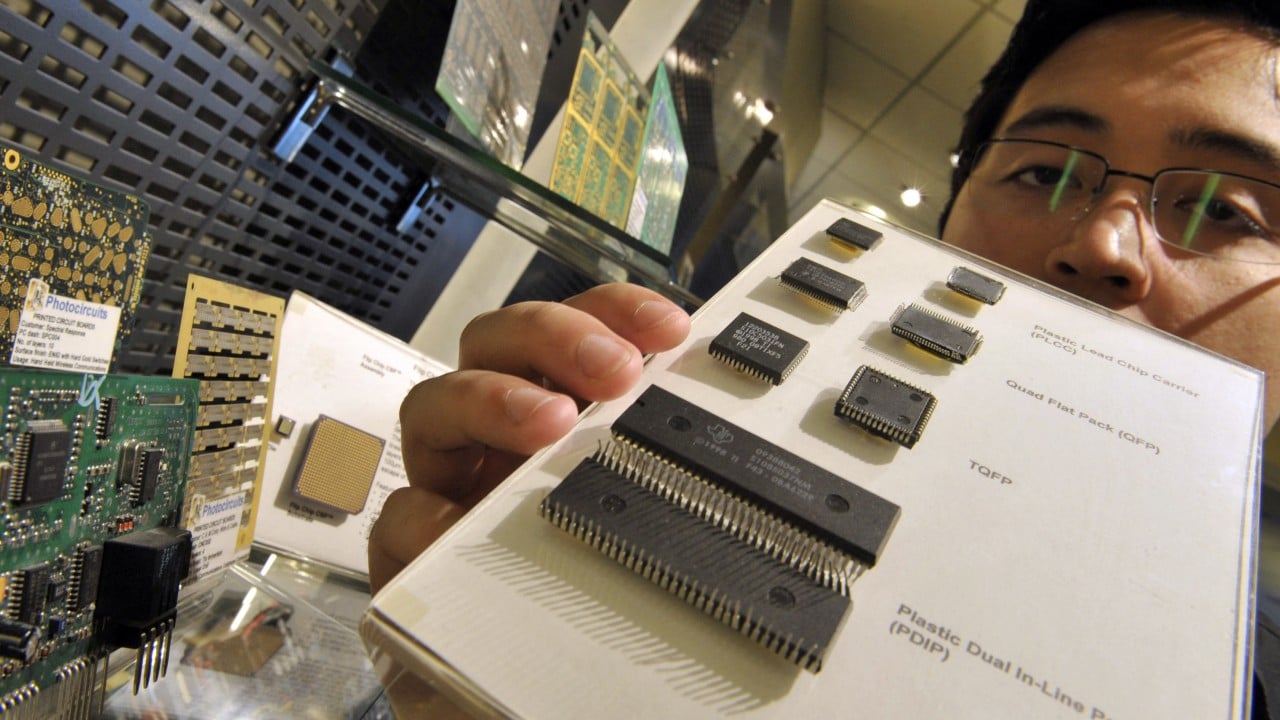
When a chip is "made" in the Philippines, it arrives as a finished wafer from Taiwan or the US. Filipino workers cut it, package it in plastic or ceramic, and test it. You are the high-tech equivalent of a gift-wrapper. While there is dignity in the work, there is no "innovation" in the wrapping. The IP—the actual "brains" of the chip—is created elsewhere.
Citing ATP success as evidence of fabrication potential is like saying a master sushi chef is qualified to design a nuclear submarine because they both use knives.
The Power Problem Nobody Wants to Discuss
You cannot run a 5nm or 7nm fabrication plant (fab) with a power grid that flickers whenever there’s a tropical depression.
A modern fab requires an uninterrupted, ultra-stable power supply. A voltage sag lasting milliseconds can ruin a $50 million batch of wafers. Currently, the Philippines has some of the highest electricity rates in Southeast Asia, coupled with a grid that is notoriously prone to outages and "red alerts."
To build a "Pax Silica" hub, the government would need to subsidize power at a scale that would bankrupt the national treasury, or prioritize a handful of foreign-owned factories while the rest of the country experiences rolling blackouts. Is the Philippine taxpayer ready to fund the electricity bill of a multi-billion dollar American multinational just for the "prestige" of having a fab on soil?
Then there’s the water. A single large fab can consume 10 million gallons of ultra-pure water a day. In a country struggling with water security and aging infrastructure in its urban centers, the environmental and social cost of a "chip powerhouse" would be catastrophic.
The Skilled Labor Myth
"We have a young, English-speaking workforce."
This is the mantra of every Philippine investment pitch. It’s great for call centers. It’s fine for basic assembly. It is completely irrelevant for front-end semiconductor engineering.
The talent required for fabrication isn't just "skilled labor." It’s a hyper-specialized pool of PhDs in materials science, chemical engineering, and lithography. Currently, the Philippines suffers from a massive brain drain where its brightest technical minds leave for Singapore, Taiwan, or the US the moment they graduate.
To bridge this gap, the country would need to import thousands of foreign experts. This creates an enclave economy where the high-value jobs are held by expats, while locals remain relegated to the "utility" roles mentioned earlier. We aren't building a domestic powerhouse; we’re building a gated community for foreign IP.
Why 'Pax Silica' is a Geopolitical Bait-and-Switch
The US "partnership" isn't about making the Philippines a leader. It’s about "friend-shoring"—a polite term for finding a place to put the messy, low-margin parts of the supply chain that are currently too close to China.
Washington doesn't want the Philippines to compete with Intel or Micron. They want the Philippines to be a reliable, submissive node in a US-controlled network. If the Philippines develops its own significant IP or starts courting Chinese chip designers to use its hypothetical fabs, watch how quickly that "partnership" sours.
True "Pax Silica" isn't a shared peace; it’s a US-dictated order. The Philippines is being asked to provide the land and the cheap labor to secure American supply chains, while taking on all the environmental and economic risks.
Stop Chasing Silicon, Start Building the 'Software Layer'
If I were advising the Philippine Department of Trade and Industry, I’d tell them to take every cent intended for "chip powerhouse" subsidies and pivot.
Stop trying to compete with TSMC. You will lose. You are forty years behind Taiwan and you don't have $100 billion in annual R&D to catch up.
Instead, look at the design and software side of the equation.
The real value in the next decade isn't in who makes the chip, but in who designs the architecture for specific AI applications. Chip design (fabless) doesn't require massive power plants or billions of gallons of water. It requires high-speed internet, powerful computers, and a few hundred geniuses in a room.
The Philippines should be the world's hub for IC Design and Verification. We have the English proficiency to collaborate with global design teams and a culture that excels in creative problem-solving. By focusing on the "soft" side of silicon, the Philippines could capture high-margin revenue without the crushing overhead of physical manufacturing.
The Cost of the Wrong Dream
Every peso spent trying to lure a fabrication plant is a peso not spent on:
- Decentralizing the power grid.
- Modernizing agricultural technology to ensure food security.
- Training a generation of AI researchers and software architects.
The "Pax Silica" dream is a distraction. It’s a way for politicians to look "futuristic" while doubling down on a 1980s industrial model. We are chasing the smoke of an old fire.
The world doesn't need another mid-tier chip fab. The world needs a country that can bridge the gap between hardware and the exploding world of decentralized AI.
The Brutal Reality of the 'China Plus One' Strategy
Investors love talking about "China Plus One." The idea is that companies need a backup to China. The Philippines thinks it's the "One."
It’s not. Vietnam is the "One." Thailand is the "One."
Vietnam has already moved faster, integrated more deeply with Samsung and Intel, and has a more aggressive industrial policy. If the Philippines tries to play the same game as Vietnam—competing on raw manufacturing capacity and government incentives—it will be outspent and outworked.
The Philippines must be "Different," not "Plus One."
Stop Asking if We Can Be a Powerhouse
The question isn't whether the Philippines can be a chip powerhouse. The question is why anyone would want to be one in the current climate.
The semiconductor industry is notoriously cyclical. It’s prone to massive gluts and crushing shortages. By tethering the national economy to the volatile whims of the global chip market, the Philippines is signing up for a rollercoaster ride it can't afford.
We are being sold a vision of "Silicon Philippines" by people who don't understand that the era of the giant, centralized fab might be nearing its twilight as 3D printing and decentralized manufacturing evolve.
The "Pax Silica" hub is a ghost ship. It looks impressive from a distance, but there’s nobody at the wheel and the engine room is underwater.
Build the architects. Build the designers. Build the software that makes the chips useful. But for the love of the national treasury, stop trying to bake the wafers.
You’re not a powerhouse. You’re a pawn. The only way to win is to stop playing their game and start your own.