You don't need a degree in defense economics to spot a glaring math problem. When a military coalition fires hundreds of multi-million-dollar air defense interceptors in a matter of days, but factories only build a handful daily, a crisis is guaranteed.
That structural mismatch sits at the heart of the global shortage of Patriot missile systems. Everyone talks about the hardware, but nobody wants to discuss the agonizingly slow industrial clock driving the shortage.
Let's break down what the Patriot system actually does, why the world is running out of them, and why fixing the pipeline is harder than writing a multi-billion-dollar government check.
What Actually Is the Patriot Missile System?
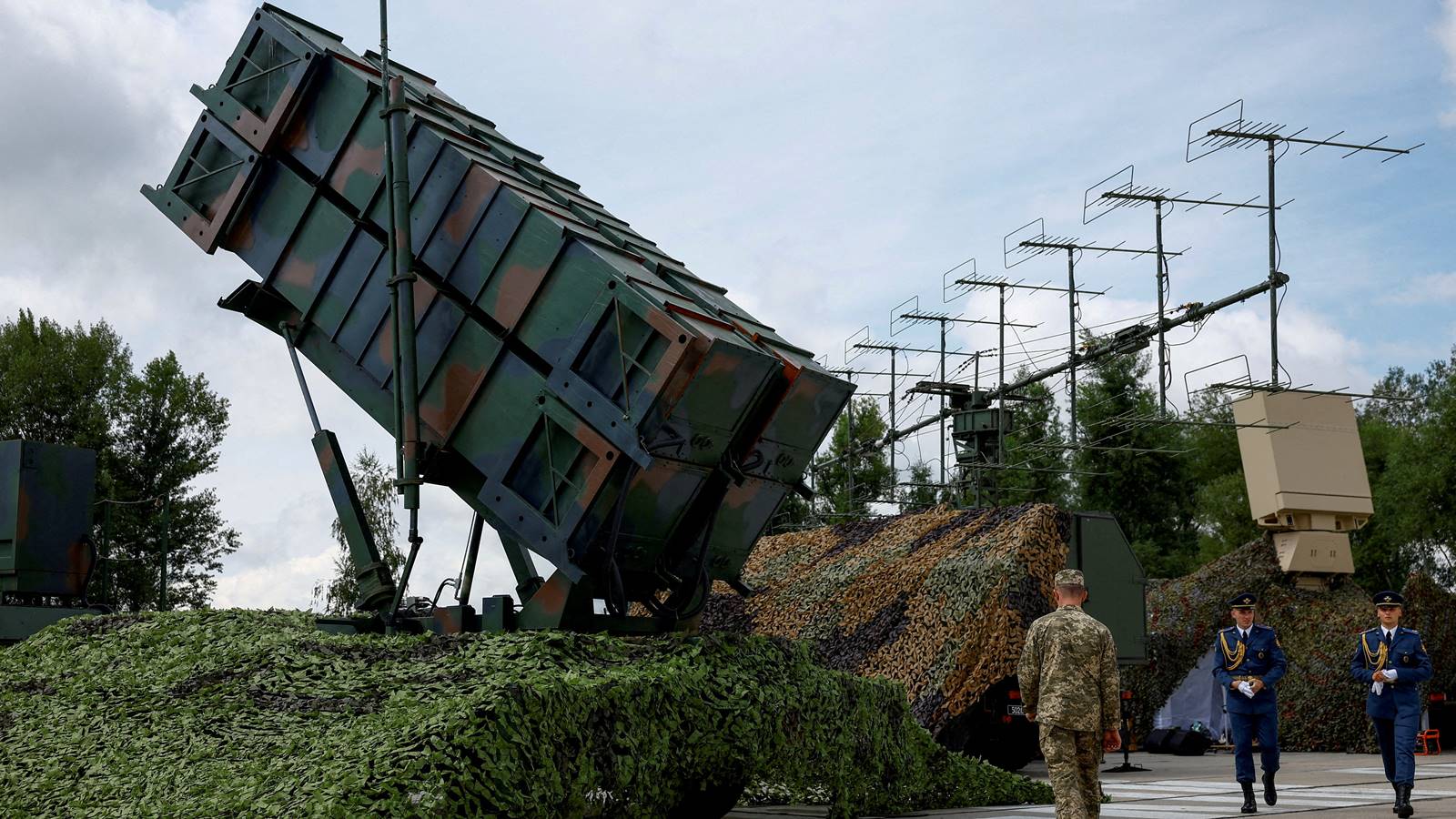
The M901 Patriot is a mobile, all-weather air defense system built to intercept tactical ballistic missiles, cruise missiles, and advanced aircraft. Developed by Raytheon, it relies on a powerful phased-array radar, a command control station, and up to eight launcher stations packed with interceptor missiles.
It's not a single weapon. It's a sprawling, highly integrated network.
The real magic—and the real bottleneck—lives inside the interceptors themselves, specifically the PAC-3 Missile Segment Enhancement (MSE) variants. These interceptors don't just explode near a target. They use direct body-to-body impact, known colloquially as "hit-to-kill" technology, packing kinetic force precise enough to obliterate incoming ballistic warheads mid-air.
That precision requires hyper-specialized electronics, custom rocket motors, and strict component tolerances. You cannot pull parts off a commercial assembly line to build one.
The Math Problem Driving Global Shortages
Global stockpiles didn't drain overnight, but recent conflicts turned a slow leak into a gusher. Recent high-intensity engagements, including intense regional warfare in the Middle East and ongoing defense needs in Ukraine, exposed a brutal consumption-to-production ratio.
During the opening weeks of heavy missile exchanges, coalition forces burned through an estimated 1,700 Patriot interceptors in roughly five weeks. Meanwhile, prime contractors like Lockheed Martin were producing around 600 to 620 missiles annually.
That is roughly 1.7 missiles per day to feed a global network of allies. When you burn through years of production in a single month of conflict, stockpiles vanish. It's that simple.
Why Factories Can't Just Speed Up Overnight
Politicians love announcing massive defense contracts, but factories operate on physics, not press releases.
Building a PAC-3 MSE interceptor takes time. The lead time for a completed missile runs about 24 months, while the solid rocket motors manufactured by suppliers like L3Harris's Aerojet Rocketdyne require up to 30 months of production and curing time.
Worse yet, the defense ecosystem suffers from severe single-point bottlenecks:
- The Seeker Choke Point: Boeing produces the active radar seeker for every single PAC-3 MSE from a single facility in Huntsville, Alabama. If that factory hits a snag, final assembly lines across the country stall out.
- Supplier Qualification: Sub-tier suppliers face rigid qualification hurdles. You can't swap out a microchip or a valve without years of safety and performance testing.
- The Iron Triangle: Industry analysts call this the iron triangle of defense manufacturing—where time, capacity, and cost are locked in constant tension.
Without steady, predictable multi-year purchase orders, private companies refuse to spend hundreds of millions of dollars building new factories that might sit idle if political priorities shift.
The Strategic Dilemma for Global Allies
This deficit creates a dangerous ripple effect across international alliances. Ukraine relies heavily on Patriot batteries donated by Western partners to shield its cities from incoming ballistic threats. However, as U.S. and allied reserves dropped to fractions of minimum required thresholds, deliveries slowed down drastically.
When inventory runs thin, difficult choices must be made. Washington has to balance keeping its own strategic reserves intact against satisfying foreign military sales (FMS) backlogs. European buyers waiting on contracted systems face multi-year delays because the manufacturing pipeline is completely maxed out.
Compounding the problem is an issue of tactical efficiency. Firing a multi-million-dollar Patriot interceptor to destroy a cheap, one-way attack drone is a tactical trap. Militaries are being forced to rethink doctrine, realizing they need cheaper, layered defense networks—like electronic jamming, mobile gun systems, and smaller interceptors—to preserve their premium Patriot magazines for actual high-end ballistic threats.
The Road Ahead for Replenishment
Recognizing the gravity of the crunch, the Pentagon signed massive framework agreements—including multi-billion-dollar deals with Lockheed Martin aimed at scaling production up toward 2,000 interceptors a year by 2030.
Yet, bridging the gap takes years. Interceptors funded under recent expansion contracts won't clear assembly lines until late 2028 at the earliest. Until those production curves catch up with reality, global supplies will remain tight, forcing military planners to carefully ration every single missile left in the inventory.