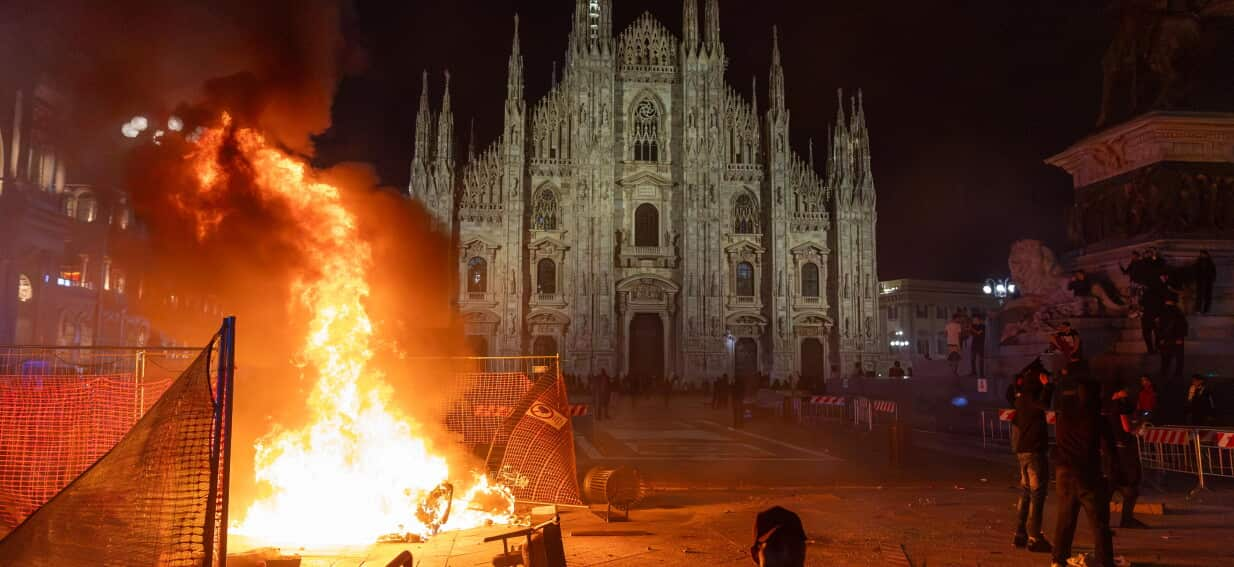
Street clashes in Milan look like a political story on the evening news. Then you start checking freight lanes, and suddenly pasta production is staring at a bottleneck.
That link sounds absurd at first. Really, it does. A protest or riot flares up in northern Italy, soldiers deploy to restore order, and people start wondering what happens to dried penne, rigatoni, or fresh egg pasta on supermarket shelves. Honestly, if you only read surface-level wire summaries, you miss how tightly Italy's urban security operations and its industrial food economy brush up against each other. Meanwhile, you can explore other events here: What Happens When the Well Runs Dry and the Storm Hits.
Because the competitor URL is undefined and no specific clash is named in the reference prompt, I'm not going to pretend there's one single breaking incident on file here. Instead, let's treat this as an illustrative example of a recurring structural tension in northern Italy: major civil unrest in Milan, troop deployments under security operations, and downstream pressure on food manufacturing and logistics. When unrest hits Italy's financial and transport hub, the ripple effects don't stay neatly inside the city limits.
How Pasta Production Feels the Heat After Milan Clashes
Pasta isn't made in a vacuum. Even when large-scale dried pasta plants sit outside Milan itself—in regions like Emilia-Romagna, Puglia, Lombardy, or Veneto—Milan sits right at the crossroads of northern Italian road corridors, rail hubs, customs brokers, and commercial decision-making. To explore the bigger picture, we recommend the recent article by USA Today.
When violent clashes erupt in Milan and authorities bring in troops, disruption rarely hits a pasta press with a literal wrecking ball. It hits through friction. Road closures divert trucks. Security checkpoints slow movement around key arteries. Port or rail connections feeding northern distribution centers get tied up.
Think about what a modern pasta line actually needs to keep running smoothly. Durum wheat semolina has to arrive on schedule. Packaging film, cardboard cartons, and pallets have to show up before warehouses back up. Finished goods have to clear staging areas so cold storage or dry racks don't clog. Stop one link in that chain for even twelve to twenty-four hours, and plant managers start shuffling shifts or trimming output.
Small artisan producers feel it differently than giant industrial mills. A boutique fresh-pasta shop or regional distributor might rely on local vans and tight daily deliveries. If clashes shut down neighborhoods or strain courier routes around Milan, orders sit undelivered. Bigger players have deeper buffer stock, sure, yet their sheer volume means even a modest slowdown in freight velocity creates visible headaches across supply schedules.
Why Troops in Milan Change the Ground Reality
Deploying troops into an Italian city isn't like flipping a switch on a movie set. When soldiers step in to support police after violent street clashes, the entire mood and operating rhythm of the area shifts.
Streets get cordoned off. Public transit routes reroute or pause. Commercial deliveries get pushed to awkward hours or rerouted through longer detours. Drivers hate uncertainty, and for good reason—sitting in gridlock near a tense perimeter burns fuel, eats up regulated driving hours, and raises the risk of damaged cargo or missed delivery windows.
From a logistics standpoint, unpredictability is the real enemy. A factory scheduler can plan around scheduled maintenance. Nobody wants to plan around sudden street blockades and shifting security zones.
I've watched supply chains in plenty of industries get tripped up not by total destruction, but by hesitation. Buyers delay dispatch orders. Carriers add buffer time. Suppliers hold back shipments until visibility improves. By the time calm returns to the streets, the backlog has already spread a few counties wide.
The Milan Myth Versus Northern Italy's Food Map
Here's a misconception that trips people up all the time. People hear "Milan clashes" and picture pasta factories burning on the edge of the city.
That's usually not how it works. While Lombardy has significant food processing and agribusiness, Italy's pasta ecosystem is spread across multiple regions, with major industrial heavyweights operating across the peninsula. Milan is much bigger as a commercial nerve center, financial hub, and transport connector than as the sole physical heart of every pasta factory.
Still, ignoring Milan's role in the food chain is a rookie mistake. Corporate headquarters, logistics coordinators, export agents, and northern highway corridors tie directly into the area. When Milan seizes up, friction travels.
Let's be fair about the scale, too. A security deployment in Milan won't automatically wipe out national pasta supply overnight. Italy produces massive volumes of pasta every year, and much of that output is built for both domestic grocery aisles and export markets around the globe. So if you're reading a headline linking Milan troops to pasta production, keep a cool head. Usually, it signals localized transport delays, tight scheduling, or supply-chain strain—not an empty pantry across Europe.
Hidden Chokepoints Most Headlines Miss
When news outlets cover street clashes and troop deployments, cameras focus on smoke, barricades, and uniforms. Boring stuff doesn't make great television. Yet the boring stuff is exactly where pasta production feels the squeeze.
- Driver hours and routing: Detours add miles. Extra miles push commercial drivers closer to legal rest limits, forcing schedules to slip.
- Just-in-time packaging: Flour gets the spotlight, but labels, cases, and stretch wrap keep pallets moving. Any holdup on secondary supplies stalls finished stock.
- Warehouse congestion: If outbound trucks get delayed, finished pallets pile up at the plant or regional depot, slowing down how fast new batches can come off the line.
- Export staging: Pasta bound for ports or international rail links depends on smooth inland transit. Bottlenecks in the north can knock export slots off schedule.
None of these points are flashy. Every single one of them matters when margins are tight and demand stays steady.
What Supply Chain Pros Actually Watch During Civil Unrest
If you manage procurement, food distribution, or retail inventory, you don't react to dramatic headlines alone. You look for operational signals.
First, check freight and highway advisories rather than relying on social media clips. Social feeds amplify the loudest moments, not the clearest picture of which ring roads or freight corridors are actually moving.
Second, look at lead times across tiers. Raw ingredients might be fine while packaging or last-mile distribution takes a hit. Asking suppliers straightforward questions—Are your trucks making their windows? Are any northern hubs backing up?—beats guessing every time.
Third, resist panic buying or knee-jerk contract changes unless a disruption stretches into days or weeks. Short-term spikes in friction often clear faster than people expect once perimeters reopen and normal patrols settle in. Overreacting on day one can lock you into bad pricing or unnecessary inventory costs.
Practical Moves When Headlines Link Clashes to Food Supply
Whether you're running a food business, tracking European markets, or just trying to make sense of dramatic news without getting spun up, a few habits keep you grounded.
- Separate the symbol from the supply chain. Treat street clashes and troop deployments in Milan as a signal to check logistics and transit routes first, and factory capacity second.
- Verify actual geography. Check which regions and corridors are truly affected before assuming nationwide shortages or plant shutdowns.
- Audit your own buffers. If you rely on Italian food imports or northern European freight lanes, review safety stock on fast-moving items and confirm backup routing options.
- Watch the second-order bottlenecks. Keep an eye on packaging, warehousing, and delivery schedules—places where delays quietly pile up even after streets reopen.
Headlines love a sharp contrast between soldiers in the streets and everyday comfort food like pasta. Once you strip away the drama and look at how freight, factories, and city security actually interact, the whole picture gets a lot clearer—and a lot easier to navigate.