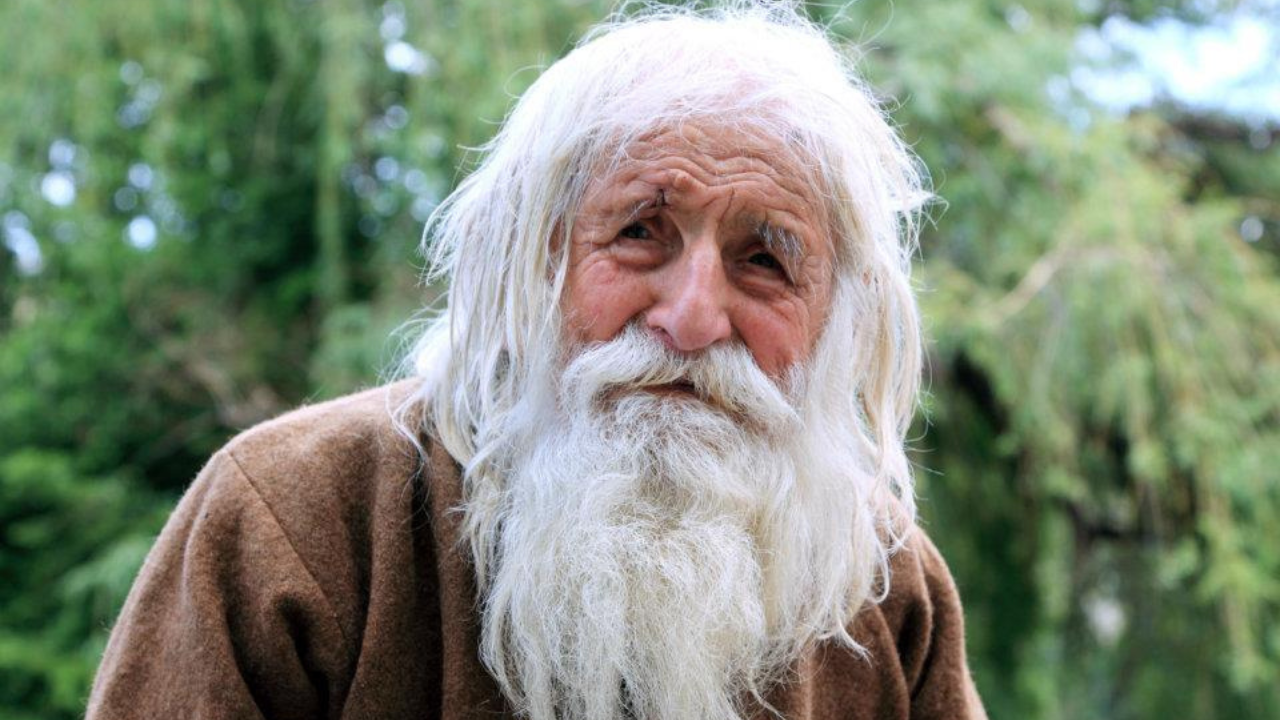
Every afternoon for decades, an old man in a coarse woolen coat stood outside the Cathedral of Saint Alexander Nevsky in Sofia, holding a plastic cup. He did not yell. He did not force his way into the paths of the tourists or the politicians who frequented Bulgaria's capital. He just bowed. To the thousands of people who dropped stotinki—the fractional coins of the Bulgarian lev—into his hand, he was Dobri Dobrev, a eccentric local fixture. To the global internet culture that eventually discovered him, he became "Grandpa Dobri," the centenarian beggar who lived on a 100-euro monthly pension but secretly gave away a small fortune to orphanages and crumbling monasteries.
The baseline facts are well-documented. Before his death in 2018 at the age of 103, Dobrev directed roughly 40,000 leva (about $24,000) to the very cathedral he stood outside of, making him its largest private donor in modern history. Total estimates of his lifetime giving across various religious and social institutions hover around $46,000.
But the viral narrative stopped there, content with a warm, surface-level myth of a secular saint. It ignored the mechanical reality of how an agrarian society fractured under communism, how the Eastern Orthodox Church struggled to rebuild its infrastructure after state-enforced atheism, and how public welfare failures in post-Soviet Europe turned a beggar's cup into a vital financial lifeline for institutions that should have been funded by the state or wealthy elites. Dobri Dobrev was not just a symbol of personal piety. He was a human mirror reflecting the institutional gaps of a nation in transition.
The Economics of a Plastic Cup
To understand the sheer volume of Dobrev’s donations, one must look at the math of the street economy. Gathering $46,000 in a country where the average monthly salary hovered around $400 for much of Dobrev's active years requires more than casual charity. It demands a systematic, industrial commitment to presence.
Dobrev walked over 10 kilometers a day from his village of Bailovo to Sofia well into his nineties, later relying on local buses when his legs failed him. He operated on a strict psychological framework. Unlike aggressive urban panhandlers, his absolute renunciation of the world—marked by his homemade clothes and raw leather shoes—acted as a powerful visual disruptor. In a capital city rapidly modernizing and chasing Western consumerism, Dobrev looked like a refugee from the 19th century.
This appearance was his leverage. He converted modern guilt into capital.
Every coin deposited was an micro-transaction of conscience for the emerging Bulgarian middle class. Yet, the mechanism of his distribution was entirely decentralized. Dobrev did not establish a trust. He did not utilize non-profit legal frameworks. He literally carried bags of coins and low-denomination bills to bank branches, converting the loose change of the street into official bank transfers directed toward specific church accounts and regional orphanages, such as the one in Kalofer.
The Institutional Void
The question that high-end journalism must ask is why the largest cathedral in the Balkans needed a beggar to fix its roof.
The answer lies in the structural collapse of institutional trust in post-communist Bulgaria. Following the fall of the Zhivkov regime in 1989, the Bulgarian Orthodox Church underwent a bitter, decade-long schism. Two rival synods fought over property, legitimacy, and state recognition. While high-ranking clergy were exposed as former agents of the communist secret police (the Darzhavna Sigurnost), the physical structures of the church—the village parishes and historic monasteries—rotted from neglect.
Wealthy oligarchs who profited from the chaotic privatization of state industries frequently gave money to churches to laundering their public reputations. But these donations came with strings, often tied to political influence or prominent plaques bearing the names of questionable businessmen.
Dobrev represented the exact antithesis of this transactional philanthropy. The church accepted his money because it was clean.
[Total Documented Donations: ~80,000 BGN / $46,000 USD]
  │
  ├──► St. Alexander Nevsky Cathedral (Roof repairs, structural upkeep)
  │
  ├──► Kalofer Orphanage (Direct utility bills, winter heating)
  │
  └──► Rural Monasteries (Restoration of Soviet-era damage)
The tragedy of the situation is that his sacrifice normalized the state's abdication of its social responsibilities. When private individuals must beg to keep orphans warm in the winter, the social contract has fundamentally failed. Dobrev's financial output filled a tiny portion of that void, but his popularity served as a convenient smokescreen for politicians and church leaders. It was far easier to celebrate a saintly beggar than to reform a broken social welfare system or transparently manage church assets.
The Myth of the Pure Ascetic
We must also dismantle the sanitized, postcard version of Dobrev's life to understand his true motivation. The common narrative frames him as an inherently peaceful holy man from birth. The reality is more complex, rooted in the trauma of the Second World War.
During the allied bombings of Sofia, a shell exploded near Dobrev, leaving him with near-total hearing loss. This physical isolation shaped the rest of his life. It severed his connection to the immediate, noisy concerns of his contemporaries and turned his focus entirely inward. His decision to abandon his family's comforts and give away his inheritance occurred later in life, driven by a profound, unspecified personal crisis that aligned with his growing devotion to ascetic literature.
He was not a cheerful giver. He was a penitent.
Witnesses who spoke with him outside the cathedral noted that his conversations were rarely about joy or community; they were urgent warnings about sin, the devil, and the imminent decay of human morality. He lived in a tiny, spartan extension of a church in Bailovo, sleeping on the floor and eating bread and tomatoes not out of a romantic love for poverty, but because he viewed physical comfort as a form of spiritual compromise.
By romanticizing his poverty, the global audience missed the point of his existence. He did not want people to marvel at his ability to survive on nothing; he wanted his lifestyle to be an active indictment of their accumulation of wealth.
The Digital Exploitation of Saintliness
In the mid-2010s, Dobrev became an uncompensated asset for the internet's attention economy. Memes featuring his weathered face and long white beard generated millions of clicks on platforms like Facebook and Reddit. He was packaged as the antidote to modern greed.
This digital canonization process reveals a deep hypocrisy. The very systems that optimize for maximum consumption and financial extraction used Dobrev as a feel-good content commodity. Pages that shared his image saw spikes in engagement, which were then monetized through advertising. Meanwhile, the actual financial realities of the institutions he supported remained precarious.
The internet loved the idea of Grandpa Dobri because it required nothing from the viewer. It was an aesthetic experience of morality. Users could hit a button to like a post about a man who gave away everything while changing nothing about their own financial habits or their local communities.
The Transfer of Legacy
When Dobrev died in the Elin Pelin monastery in February 2018, a predictable scramble for his legacy began. The church buried him in the courtyard of the Bailovo church where he lived, turning his gravesite into an immediate destination for religious pilgrimage.
There were calls to fast-track his canonization, to make him an official saint of the Orthodox Church.
Yet, the formal structure of sainthood in the Eastern Church requires a deliberate process of verification, looking for miracles and theological consistency. The bureaucracy of the church, which had benefited so immensely from his quiet presence at the cathedral steps, suddenly found itself dealing with a figure who defied easy categorization. Dobrev was a layman who operated completely outside ecclesiastical hierarchy. He never took monastic vows. He held no rank. His authority came entirely from the street.
The real test of his impact is not found in church decrees or internet memes, but in the physical survival of the roofs he mended and the children who aged out of the orphanages he funded. His money was spent on cement, wood, bread, and fuel. It was tangible wealth extracted from the pockets of a cynical public through sheer persistence and an refusal to participate in the modern world.
He proved that even in a highly transactional society, a single individual can exploit the guilt of the system to fund its victims. He left behind a repaired cathedral dome and a nation that still hasn't figured out how to care for its poor without relying on a centenarian beggar to do the work.