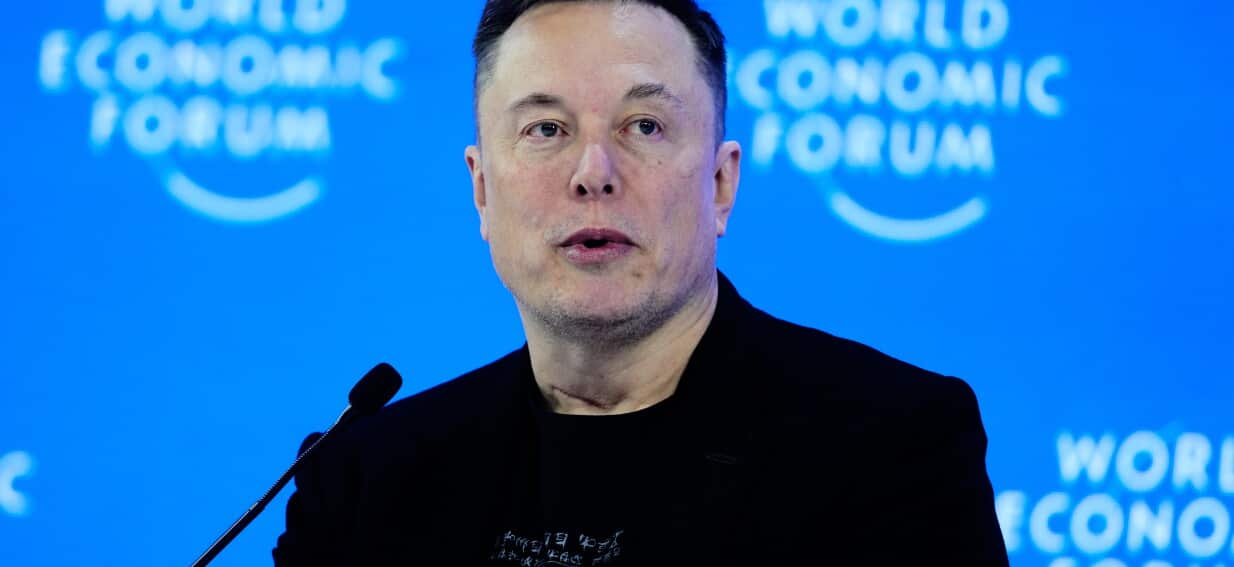
Wall Street spent decades treating the commercial space race as an eccentric billionaire's playground, but the market entry of SpaceX has shattered that illusion with a 23% opening-day surge. This explosive public debut did more than just validate the company's reusable rocket architecture; it officially pushed Elon Musk’s personal net worth past the trillion-dollar mark. Yet, the breathless headlines tracking this financial milestone are missing the deeper structural reality of what just occurred. The sudden creation of the world’s first paper trillionaire is not merely a story of individual wealth generation, but a calculated bet on orbital monopoly and the weaponization of capital markets.
To understand why institutional money flooded the order books on day one, we have to look past the spectacular imagery of Starship launches. The market is not pricing SpaceX based on the speculative future colonization of Mars. Instead, Wall Street is valuing a dual-engine economic utility company that has quietly secured a stranglehold on two critical global sectors: satellite telecommunications and national security launch infrastructure. Meanwhile, you can read related events here: What Most People Get Wrong About the Paramount Warner Bros Merger.
The Starlink Cash Engine and the End of Telecom as We Know It
The primary driver of this valuation surge is Starlink, the low Earth orbit satellite constellation that standard investment firms struggled to value in the private markets. For years, traditional telecom giants treated satellite internet as a niche product reserved for rural outposts and maritime vessels. They miscalculated the speed at which orbital infrastructure could achieve scale.
By deploying thousands of mass-produced satellites using its own internal, low-cost launch capabilities, SpaceX bypassed the massive capital expenditure friction that typically cripples telecom startups. Traditional geostationary satellites sit 35,000 kilometers above the Earth, suffering from crippling latency issues. Starlink’s fleet operates at roughly 550 kilometers, offering speeds and latency that rival terrestrial fiber-optic cables. To understand the full picture, we recommend the detailed analysis by The Economist.
Institutional investors finally saw the internal metrics during the pre-listing roadshow. The math is brutal for ground-based competitors. A regional telecom provider must dig trenches, secure municipal permits, and lay physical copper or fiber across thousands of miles to acquire a few hundred thousand customers. SpaceX can activate an entire continent's worth of subscribers by simply adjusting the orientation of phased-array antennas in orbit.
The public offering provided the massive liquidity inject required to accelerate the deployment of the next generation of these satellites. These larger, more capable platforms directly target the high-margin enterprise data and mobile backhaul markets, threatening the core revenue streams of legacy telecommunications providers worldwide.
The Defense Monopolization Trap
While commercial internet subscribers provide a predictable, recurring subscription revenue stream, the true floor of the SpaceX valuation is anchored by the United States Department of Defense. This relationship has evolved from a simple vendor agreement into a deep structural dependency that civilian regulators are powerless to untangle.
For a long stretch of aerospace history, the United States relied on the United Launch Alliance, a joint venture of Lockheed Martin and Boeing, which operated on a comfortable, cost-plus contracting model. These legacy defense contractors had little incentive to innovate because the government guaranteed a profit margin regardless of cost overruns. SpaceX dismantled this cozy arrangement by offering fixed-price contracts at a fraction of the cost.
Now, the Pentagon faces a unique vulnerability: monopoly risk.
+-------------------------------------------------------------+
|               U.S. National Security Launch                 |
+-------------------------------------------------------------+
|                                                             |
|   [ Legacy Contractors ]            [ SpaceX / Starshield ]  |
|   - Cost-plus contracts             - Fixed-price contracts  |
|   - Low launch frequency            - High flight cadence    |
|   - Multi-year backlogs             - Reusable architecture  |
|                                                             |
+-------------------------------------------------------------+
|  Result: Extreme structural dependency on a single provider |
+-------------------------------------------------------------+
The military requires constant, reliable access to space to deploy spy satellites, communication nodes, and early-warning systems. Because legacy providers have fallen years behind in developing their own reusable launch vehicles, SpaceX is often the only entity with the flight cadence available to meet national security timelines.
The newly minted Starshield division capitalizes on this dependency. By offering dedicated, government-owned satellite networks built on the proven Starlink bus, the company has secured long-term, classified revenue streams that are entirely immune to economic recessions or consumer market fluctuations. Wall Street recognized that buying this stock was effectively buying an equity stake in American defense infrastructure.
The Myth of the Trillionaire Liquidity
The media focus on the trillion-dollar net worth milestone obscures how wealth functions at this stratospheric level. Elon Musk is not sitting on a vault containing a trillion dollars in cash. This wealth is almost entirely illiquid, tied up in volatile equity that cannot be easily sold without triggering a massive market panic.
If a founder attempts to liquidate even a small percentage of a position this large, it signals a lack of confidence to the broader market, potentially causing the stock price to crater. Instead of selling, ultra-wealthy executives use these massive stock portfolios as collateral to secure low-interest loans from major investment banks. This practice allows them to fund lifestyles and new business ventures without triggering capital gains taxes or depressing the value of their primary holdings.
Therefore, the trillionaire status is a direct reflection of market sentiment rather than accessible purchasing power. If the market takes a downturn, or if a major orbital anomaly disrupts operations, hundreds of billions of dollars of this paper wealth can vanish in a single trading session.
The Capital Expenditure Wall and the Reusability Trap
Despite the euphoric market reception, the financial model supporting SpaceX contains a hidden, systemic risk that few analysts are willing to discuss openly during a market rally. The company's entire economic thesis relies on the continuous, uninterrupted reuse of its rocket boosters.
The capital expenditure required to maintain this infrastructure is immense. To sustain its valuation, SpaceX must maintain an unprecedented launch cadence. Every day a rocket sits in a hangar undergoing refurbishment is a day it is not generating revenue.
A hypothetical scenario illustrates this risk perfectly. Suppose a subtle manufacturing defect or material fatigue issue causes a series of consecutive booster failures. Under the private model, the company could absorb those losses away from the public eye. Now, as a publicly traded entity, a string of launch failures would trigger immediate regulatory investigations by the Federal Aviation Administration, grounding the fleet for months.
During such a grounding, the fixed costs of maintaining launch facilities, engineering teams, and satellite production lines would continue to burn through cash at an alarming rate. The company would be forced to return to the public markets for dilutive capital raises, rapidly eroding the valuation that Wall Street just assigned to it. The public markets give capital generously during a boom, but they extract a brutal toll when the narrative cracks.
Regulatory Warfare and Orbit Crowding
The final, and perhaps most complex, challenge facing the newly public giant is the growing international backlash against orbit crowding. Space is vast, but the specific operational bands of low Earth orbit are finite.
International competitors and sovereign states are growing increasingly uneasy with a single American corporation controlling the vast majority of active satellites in orbit. The European Union is moving forward with its own sovereign satellite constellation, IRIS², specifically designed to reduce dependency on American infrastructure. Similarly, China is rapidly developing its own mega-constellations to stake a claim to vital orbital slots before they are completely occupied.
Astronomers are also mounting organized resistance, claiming that the sheer volume of reflective satellites is permanently degrading ground-based scientific observation. As these legal and geopolitical challenges mount, SpaceX will find itself entangled in international regulatory battles that cannot be solved by engineering prowess alone. The company will have to spend significant resources on lobbying and legal defense, a stark contrast to the pure research and development focus of its early years.
The 23% Wall Street jump proved that public markets are desperate for high-growth industrial assets, but it also transformed a nimble aerospace disruptor into a heavily scrutinized public utility. The institutional investors who pushed the stock to these heights will not be content with spectacular test flights; they will demand steady, predictable quarterly earnings growth. Managing that transition from a high-risk engineering crusade to a bureaucratic corporate machine will be the true test of this trillion-dollar enterprise.