In a narrow valley carved through red sandstone cliffs, the Grand Duchy of Luxembourg sits quietly in the heart of Western Europe. To a casual traveler walking along the Chemin de la Corniche, the city feels less like an international engine of global capital and more like a fairytale redoubt. Cobblestone lanes wind past ancient fortifications. The river Alzette trickles below.
Yet beneath this tranquil surface lies a staggering concentration of financial velocity.
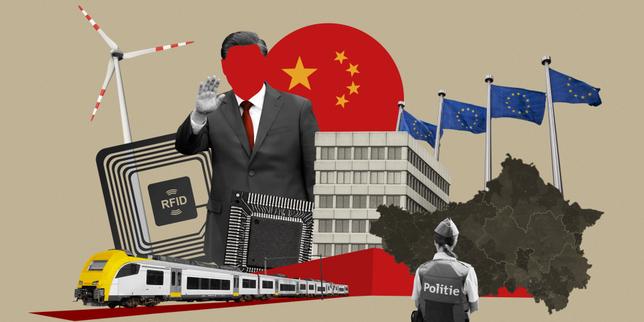
A tiny nation of roughly six hundred thousand people hosts tens of trillions of euros in banking assets, holding structures, and investment funds. Among those mountains of wealth sits a specific channel that, for years, operated away from public view—a quiet pipeline linking state-backed capital from Beijing directly into the beating heart of the European single market.
When the OpenLux investigations pulled back the curtain on the grand duchy's registry of beneficial owners, they exposed more than just shell entities and tax optimization tricks. They revealed a masterclass in strategic statecraft.
The Silent Architect
Consider a hypothetical corporate manager named Thomas.
Thomas works on the fourth floor of a glass-and-steel building in Luxembourg's Kirchberg district. His job does not involve physical products. He handles no steel, harvests no grain, and oversees no factories. Instead, his daily work consists of signature pages, corporate resolutions, and international wire confirmations.
One Tuesday morning, Thomas receives a dossier forwarded from an intermediary in Frankfurt. The ultimate parent entity is a massive Chinese state-owned enterprise based in Beijing. The goal is straightforward: purchase a significant stake in a major Southern European power grid.
If the Chinese enterprise attempted a direct acquisition from Beijing, it would trigger instant geopolitical alarm bells. National security reviews would grind the process to a halt. Foreign direct investment screening would light up across European capitals.
This is where Thomas’s desk becomes indispensable.
Through a series of nested holding companies established under Luxembourgish law, the identity of the acquiring entity shifts. What leaves Beijing as a state-driven strategic initiative arrives in Southern Europe as a European Union corporate vehicle.
The transformation is legal, elegant, and almost completely invisible to the untrained eye.
Why a Tiny Duchy Became a Financial Magnet
To understand how Luxembourg assumed this position, one must look at the structural mechanics of European law.
The European Union’s founding promise is the free movement of goods, services, people, and capital. Once an investment fund or holding company is established within any member state, it enjoys full access to the entire bloc. It can buy real estate in Berlin, acquire utility companies in Milan, or fund tech startups in Paris without facing domestic tariffs or discriminatory regulatory barriers.
Luxembourg recognized this structural reality earlier and more clearly than almost anyone else.
In the late twentieth century, as traditional industrial manufacturing declined, the grand duchy pivoted toward high-end financial architecture. It built a specialized ecosystem of corporate lawyers, tax advisers, compliance specialists, and multilingual accountants.
It offered four distinct advantages that few jurisdictions could match:
- Regulatory Speed: Financial regulators in Luxembourg adapted swiftly to complex international investment structures, approving novel fund vehicles in weeks rather than months.
- Tax Treaties: An extensive network of bilateral tax treaties drastically reduced cross-border withholding taxes.
- Confidentiality by Design: Until recent regulatory overhauls forced greater disclosure, the true owners behind corporate entities could remain obscured behind nominee directors and opaque holding tiers.
- Political Stability: A stable government, neutral international standing, and strong credit rating provided an unbeatable anchor for long-term capital storage.
For state-backed entities looking to deploy tens of billions of euros quietly across European infrastructure, Luxembourg was not merely an option. It was the premier destination.
The OpenLux Fracture
For decades, the global financial system relied on a quiet arrangement: as long as proper paperwork was filed, nobody asked too many questions about who sat at the very top of the ownership pyramid.
Then came the OpenLux investigation.
In early 2021, a consortium of investigative journalists analyzed millions of public registration documents, corporate filings, and financial statements from the Luxembourgish business register. The findings rocked European regulatory circles.
The data revealed a web of more than one hundred thousand entities. Hundreds of billions of euros were traced back to high-net-worth individuals, multinational conglomerates, and sovereign state entities.
Among the disclosures were detailed maps showing how Chinese capital had quietly flowed into European logistics hubs, commercial real estate, green energy projects, and sensitive technological supply chains.
The mechanism was simple. A Chinese state-owned enterprise would set up a Luxembourgish Société de Participations Financières (SOPARFI). That entity would then issue internal loans or equity investments to acquire assets across France, Germany, Italy, or Spain.
The true origin of the money was obscured beneath layers of administrative paper.
The Human Reality Behind the Abstraction
It is easy to get lost in the dry jargon of international finance. Terms like "beneficial ownership," "cross-border equity flows," and "treaty shopping" sound abstract, almost sterile.
The real-world consequences, however, are concrete.
When a Chinese state-backed fund uses a Luxembourg vehicle to purchase a dominant stake in a Mediterranean container port, the transaction alters local economies. It dictates which shipping lines receive priority, which unionized dockworkers keep their contracts, and how strategic infrastructure responds during geopolitical crises.
When state capital buys thousands of residential apartments in major European cities through offshore entities, local renters feel the pressure immediately. Housing prices escalate as real estate transforms from a human necessity into a high-yield asset class managed by distant boards.
The human element is not found in the boardrooms of Luxembourg City. It is found on the docks, in the rental markets, and within the municipal planning offices of cities thousands of miles away.
A Dilemma for Europe
European policymakers now face a profound structural dilemma.
On one hand, the European continent desperately needs capital. Infrastructure requires modernization. The transition toward renewable energy demands hundreds of billions in private and sovereign investment. Foreign direct investment from rising economic powers, including China, brings liquidity and construction.
On the other hand, the open architecture of the European market makes it exceptionally vulnerable to strategic economic statecraft.
When capital flows freely without clear attribution, economic integration becomes a vector for geopolitical influence. A nation state can secure controlling interests in critical telecommunications networks, power grids, and transportation corridors without firing a single shot or engaging in direct diplomatic conflict.
Brussels has attempted to tighten the screws. New foreign direct investment screening mechanisms have been introduced. Directives demanding public registers of beneficial ownership were passed across the bloc.
Yet enforcement remains fragmented.
Each member state retains its own corporate laws, its own enforcement priorities, and its own economic incentives. As long as individual nations profit from serving as capital gateways, closing every loophole remains an uphill battle.
The Shadow on the Sandstone
Back in Luxembourg, the sun sets over the Alzette valley. The glass towers of Kirchberg reflect the amber light, calm and imposing.
Inside those office towers, teams of attorneys continue to draft corporate charters, review compliance protocols, and restructure international funds. The laws may change, disclosure rules may tighten, and public scrutiny may increase, but the fundamental demand for discreet, efficient capital movement remains as powerful as ever.
The paper fortress stands intact.
Money will always seek the path of least resistance. And as long as global powers seek access to Western markets without the friction of public scrutiny, quiet financial crossroads will continue to shape the destiny of nations.