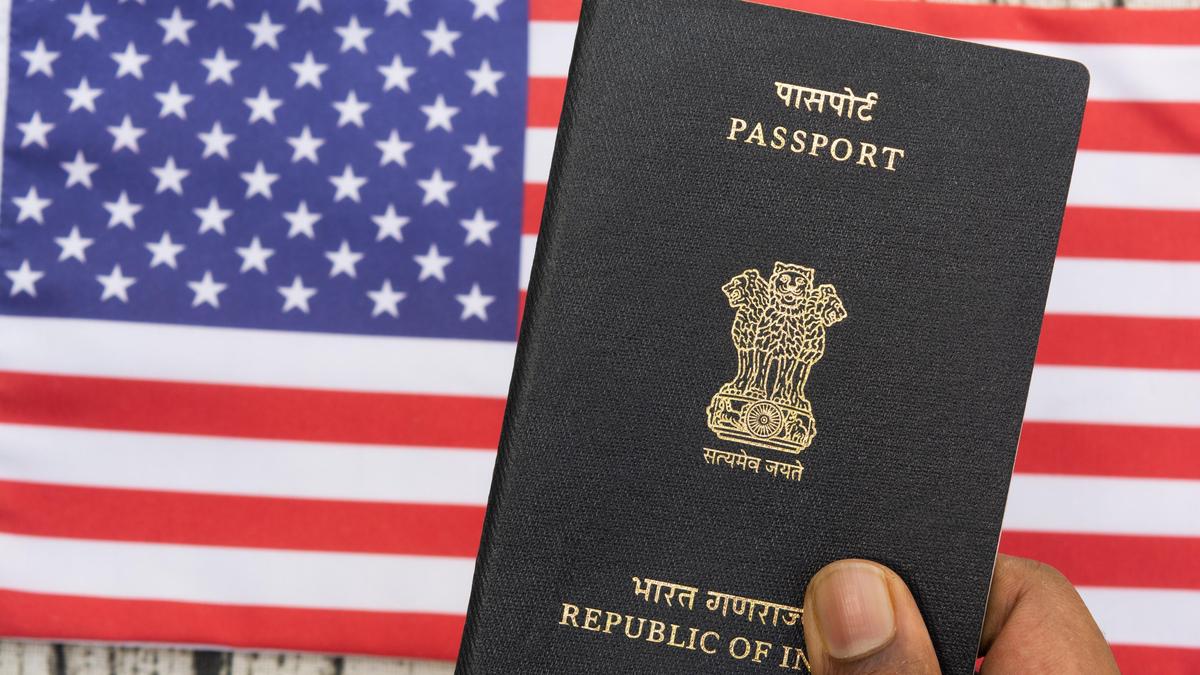
The mainstream financial press loves a good panic narrative. Lately, they have found their favorite target: Indian international students in the United States, supposedly terrified by visa uncertainty and a tightening tech job market, desperately scraping together every spare dollar to fast-track their education loan repayments.
The narrative is simple, clean, and completely wrong. In related updates, read about: The Brutal Math Behind the SpaceX Public Offering.
The lazy consensus tells you that debt is an emotional burden. It tells you that if your H-1B visa chances look shaky or the tech sector is undergoing structural layoffs, you should aggressively dump your liquidity into paying off your non-collateralized or rupee-denominated debt.
This is terrible financial advice. In fact, rushing to prepay your student loan in a volatile economic environment is the fastest way to strip yourself of leverage when you need it most. Investopedia has provided coverage on this important issue in extensive detail.
The Liquidity Trap: Cash is Your Only Real Shield
When you aggressively prepay a loan, that money vanishes into a bank's ledger. You cannot call up State Bank of India or Prodigy Finance three months later because you lost your grace period and say, "Hey, I need that $20,000 back to cover my rent while I look for a job."
I have seen brilliant engineers burn through their entire US cash reserves to bring their loan principal down, only to face an unexpected job gap. They ended up maxing out high-interest credit cards or flying back to India prematurely, not because they lacked total net worth, but because they lacked liquidity.
Let us break down the basic mechanics of opportunity cost.
If you hold a loan with an 11% interest rate in Indian Rupees (INR), paying it off early yields a guaranteed 11% return. On paper, that sounds decent. But look at what you are sacrificing. You are sacrificing US dollar (USD) liquidity.
Imagine a scenario where a graduate holds $30,000 in cash in a high-yield US savings account or a conservative money market fund yielding 4.5% to 5%. The mainstream view screams that you are losing money on the interest rate differential. The math seems simple: 11% cost minus 5% yield equals a 6% loss.
But this completely ignores currency depreciation. Historically, the INR has depreciated against the USD by an average of roughly 3% to 5% annually over the long term. When you earn in dollars and owe in rupees, the macroeconomic trend works in your favor.
$$Real\ Cost\ of\ Debt = Nominal\ INR\ Interest\ Rate - Currency\ Depreciation\ Rate$$
When you factor in the strengthening dollar, that terrifying 11% rupee loan effectively transforms into a much more manageable 6% to 8% real-term liability. By keeping your money in USD, you retain a hard-currency hedge that can protect you against sudden immigration or employment shocks.
Dismantling the H-1B Boogeyman
The driving force behind the prepayment panic is visa anxiety. Everyone is terrified of the H-1B lottery cap or the 60-day grace period following a layoff.
Let us address the brutal reality of the 60-day clock. If you get laid off on an H-1B visa, your absolute priority is buying time. Time to find a new employer, time to transfer to a B-1/B-2 visitor visa, or time to enroll in a day-CPT program to maintain legal status. All of these options require liquid capital.
If you spent the last 18 months throwing every extra dollar at your bank to "fast-track" your loan repayment, you are left with a beautiful credit score and zero runway. You are forced to leave the country because you cannot afford to live while hunting for a job.
What happens if you actually have to return to India?
The panicked narrative assumes that returning to India with a US student loan is an automatic financial death sentence. It is not. Most education loans taken by international students are unsecured, or backed by domestic co-signers. If you return to India, your cost of living drops significantly. Yes, your earning potential drops in absolute terms if you take a local salary, but your ability to restructure that debt increases.
Banks do not want you to default. If you approach a lender with a genuine change in geographic circumstances, they are far more likely to extend your moratorium period or lower your monthly EMIs than to aggressively pursue legal action across borders. Your leverage lies in holding the cash, not giving it back to them early.
The Hidden Cost of Refinancing Traps
Many students think they are outsmarting the system by constantly refinancing their loans between US and Indian lenders. They chase a 1% lower interest rate without calculating the closing fees, processing charges, and the loss of specific protections.
For example, many US-based lenders offer specific hardship forbearance options that pause payments if you lose your job. Indian domestic banks rarely offer this; they want their EMI every month regardless of your employment status. When you refinance from a US lender back to an Indian lender just to capitalize on a slight rate dip, you might be trading away vital structural safety nets for minor financial gains.
Furthermore, aggressive repayment kills the tax advantages. Under Section 80E of the Indian Income Tax Act, the interest paid on an education loan is deductible from your taxable income for up to eight consecutive years. If your parents or co-signers are in a high tax bracket in India, rushing to eliminate the loan actually increases their overall tax liability, eroding a portion of the interest savings you thought you were securing.
The Strategic Capital Allocation Framework
Instead of panic-paying your lenders, look at your capital through a strict corporate treasury lens. A corporate treasurer does not pay off low-cost, long-term debt just because the CEO feels anxious. They allocate capital where it generates the highest risk-adjusted utility.
Phase 1: The Emergency Runway
Before putting a single extra cent toward your principal, build a six-month survival fund. This fund must be held in USD, in a highly liquid account. It must cover your rent, health insurance, food, and a buffer for legal expenses or an emergency flight home.
Phase 2: The Currency Arbitrage
If you have cash beyond your six-month runway, compare the post-tax yield of investing that money in US equities or high-yield instruments against the real cost of your debt after adjusting for INR depreciation. If the US market is performing well, or if currency trends favor a strengthening dollar, your net wealth grows faster by holding USD assets than by shrinking an INR liability.
Phase 3: The Targeted Lump-Sum
If you still insist on paying off your loan early for peace of mind, do it via targeted, strategic lump-sum payments rather than incremental monthly increases. Accumulate the capital in a US high-yield savings account. Let it earn interest for you. If your visa situation stabilizes—say, your H-1B is approved or you secure a stable green card pathway—then you can deploy that accumulated cash to wipe out the loan in one decisive move. Until that stability arrives, hoarding cash is your strategy.
Stop Letting Fear Dictate Your Balance Sheet
The impulse to pay off debt as fast as possible is rooted in a psychological desire for control during a period of systemic uncertainty. Lenders know this. They capitalize on your anxiety, encouraging early repayments because it de-risks their portfolio, not yours.
When you fast-track your student loan repayment during an economic downturn, you are effectively transferring risk from the bank’s balance sheet to your own personal wallet. You are giving up flexibility, giving up a currency hedge, and giving up the vital cash cushion that could mean the difference between surviving a layoff or being forced to abandon your career goals.
Debt is an instrument, not a moral failing. Treat it like one. Keep your cash, exploit the currency dynamics, and stop letting panic dictate your financial engineering.


