The sky is falling on the West Coast again. If you believe the recent wave of breathless environmental reporting, a catastrophic invasion of non-native species is about to wipe out ecosystems from Baja to British Columbia. Doom-mongering experts are calling for massive state interventions, closed borders to agricultural trade, and billions of dollars in taxpayer-funded eradication programs.
They are wrong. They are fighting a war against ecological reality that was lost ten thousand years ago.
The lazy consensus among conservation bureaucrats is that ecosystems are static museums. They operate under the delusion that we can freeze a landscape in a specific historical window—usually right before European settlement—and keep it there forever. This isn't science. It is nostalgia masquerading as biology.
The real threat to the West Coast isn't the introduction of adaptive non-native species. It is the economically ruinous and ecologically futile obsession with total eradication. We need to stop managing for an imaginary past and start managing for an inevitable future.
The Myth of the Pristine Ecosystem
Every alarmist article on invasive species starts with the same flawed premise: that "native" equals good and "introduced" equals bad. This binary thinking ignores how evolution actually works.
Ecosystems are not fragile glass ornaments. They are dynamic, chaotic systems in a constant state of flux. Species have been moving, invading, and displacing each other since the Paleozoic era. The current baseline used by West Coast land managers is completely arbitrary.
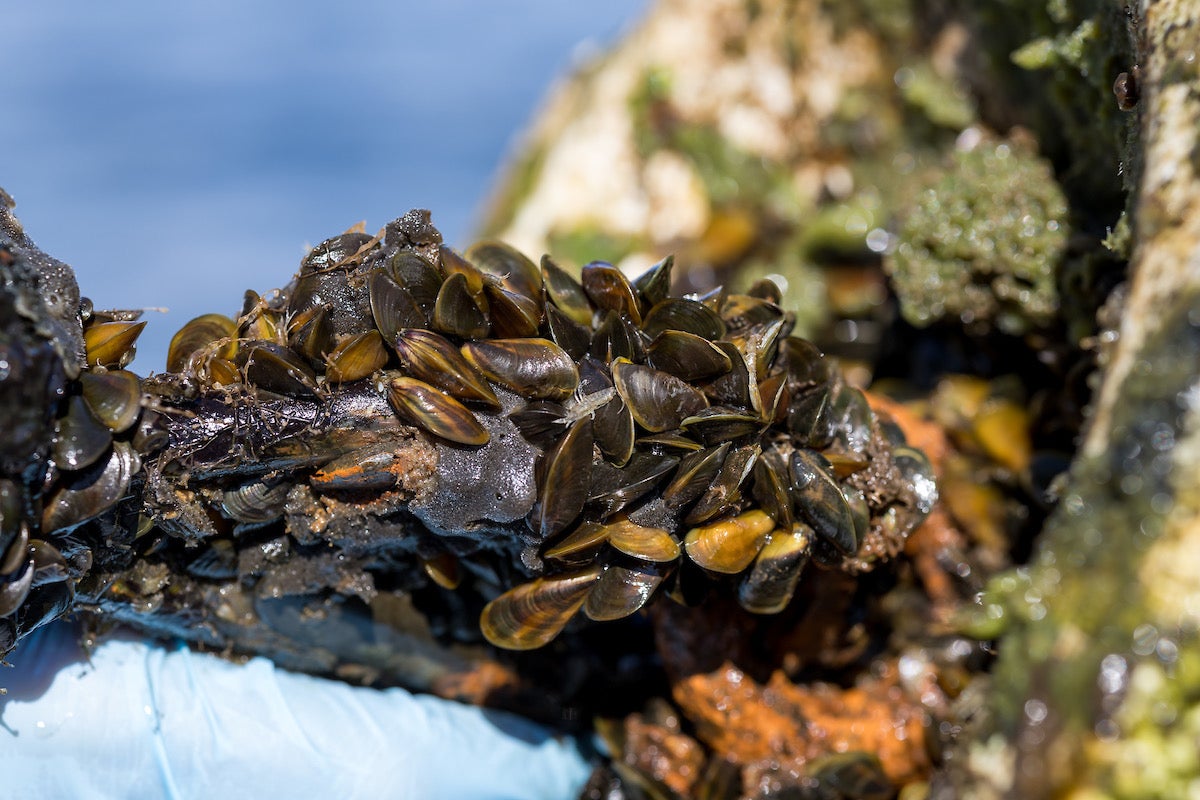
Consider the heavy hitters of environmental panic: the European green crab, the quagga mussel, and various non-native thistles. Millions of dollars are dumped annually into poisoning waterways and ripping out vegetation to protect "native" habitats. Yet, data from long-term ecological studies, including work by resource economists, consistently shows that total eradication is achieved in fewer than 1% of established cases once a species takes hold across a major geographic region.
I have spent years analyzing resource allocation in environmental management. I have watched state agencies blow through entire annual budgets trying to scrape a specific weed off a hillside, only for the seeds of that exact weed to blow back in from a neighboring county three months later. It is Sisyphus with a government grant.
The Economic Reality of Novel Ecosystems
Ecologists like Erle Ellis have pioneered the concept of "anthropogenic biomes" or novel ecosystems. These are environments entirely altered by human activity, containing new combinations of species that function perfectly well together, even if they never coexisted in the past.
When an introduced species enters a degraded environment—like a river heavily dammed by human engineering or soil stripped by industrial agriculture—it often fills a functional vacancy that native species can no longer tolerate.
- The Shade Fallacy: Activists spend millions removing non-native eucalyptus or salt cedar trees because they "consume too much water." What happens next? The local bird populations, which had adapted to nesting in those trees over the last century, collapse because the native willows cannot survive in the altered, hyper-salinated soil.
- The Filtration Paradox: In heavily polluted waterways, introduced bivalves often do the heavy lifting of water filtration that native species, weakened by chemical runoff, can no longer manage. Scraping them out to save a dying native competitor frequently results in a collapse of water quality.
By refusing to acknowledge these novel ecosystems, we are throwing good money after bad. We are destroying novel habitats that work, purely because they do not fit a textbook definition written in 1950.
Dismantling the "People Also Ask" Panic
If you look at what people are searching for regarding West Coast biosecurity, the questions are driven by pure fear-mongering. Let's look at the reality behind the top concerns.
"Will invasive species completely destroy West Coast agriculture?"
No. This is a favorite talking point for agricultural monopolies looking for protectionist tariffs disguised as biosecurity measures. While specific pests cause localized management costs, modern agriculture is already an entirely artificial construct. The crops grown along the West Coast—from almonds to wine grapes—are almost entirely non-native. We are using non-native honeybees to pollinate non-native crops in artificially irrigated deserts. To panic over a new insect while operating a multi-billion-dollar matrix of introduced species is peak hypocrisy. Industry copes through breeding, targeted biological controls, and shifting crop varieties. It always has.
"Can we get rid of invasive species if we act fast enough?"
Unless you catch an introduction within the first few acres of colonization, the answer is a definitive no. The geography of the West Coast—with its massive mountain ranges, dense old-growth forests, and sprawling urban centers—makes comprehensive monitoring impossible. Believing we can sanitize thousands of miles of coastline and forest is a fairy tale.
"Don't non-native species reduce biodiversity?"
In the short term, yes, localized displacement occurs. In the long term, the data tells a different story. Mark Davis, a professor of biology and author of Invasion Biology, has repeatedly demonstrated that on a global scale, human-mediated species introductions have actually increased regional biodiversity in many areas. More species have been added to regional pools than have gone extinct globally because of invasions. The ecosystem changes; it does not die.
The True Cost of the Eradication Obsession
The downside to a pragmatic approach is obvious: some native species will go extinct in the wild. That is a bitter pill for traditional conservationists to swallow. If your goal is the preservation of a specific genetic lineage of trout or a highly specialized wildflower, our strategy feels like a betrayal.
But let's look at the alternative. The cost of pursuing zero-tolerance eradication policies is astronomical, and the methods are often horrific for the environment.
+------------------------+--------------------------+----------------------------+
| Management Strategy    | Financial Cost           | Ecological Side Effects    |
+------------------------+--------------------------+----------------------------+
| Zero-Tolerance Blur    | Hyper-expensive, endless | Massive chemical runoff,   |
| Eradication            | taxpayer funding needed  | collateral native kills    |
+------------------------+--------------------------+----------------------------+
| Pragmatic Adaptation & | Low to moderate, targeted| Shifts baseline ecosystem, |
| Functional Management  | localized protection     | accepts species turnover   |
+------------------------+--------------------------+----------------------------+
To eliminate introduced fish, agencies regularly pour rotenone—a broad-spectrum piscicide—into whole river systems. They kill every single gill-breathing organism in the water, from native insects to amphibians, just to reset the clock and reintroduce a native trout that might not even survive the next climate-driven heatwave. This isn't stewardship. It is eco-vandalism justified by a pedigree.
Stop Eradicating. Start Managing for Function.
We need to flip the entire framework of conservation biology on the West Coast. The current question is: "How do we get rid of this invader?"
The correct question is: "What function is this new species performing, and can we live with it?"
If a non-native plant stabilizes a wildfire-prone hillside better than a struggling native shrub, you leave it alone. If an introduced crab thrives in a warming harbor where native crabs are dying due to ocean acidification, you adapt commercial fishing regulations to harvest the new crab instead of spending millions trying to poison it.
Accepting reality means recognizing that nature is fluid. The West Coast of tomorrow is going to look radically different from the West Coast of two centuries ago, regardless of how many chemicals we spray or how many border checkpoints we build.
Stop funding the endless war against ecological inevitability. Defund the eradication bureaucracies, accept the new species mix, and redirect those billions of dollars toward mitigating actual, systemic human damage like industrial pollution and chaotic urban sprawl. Nature is moving on. It is time for the experts to do the same.