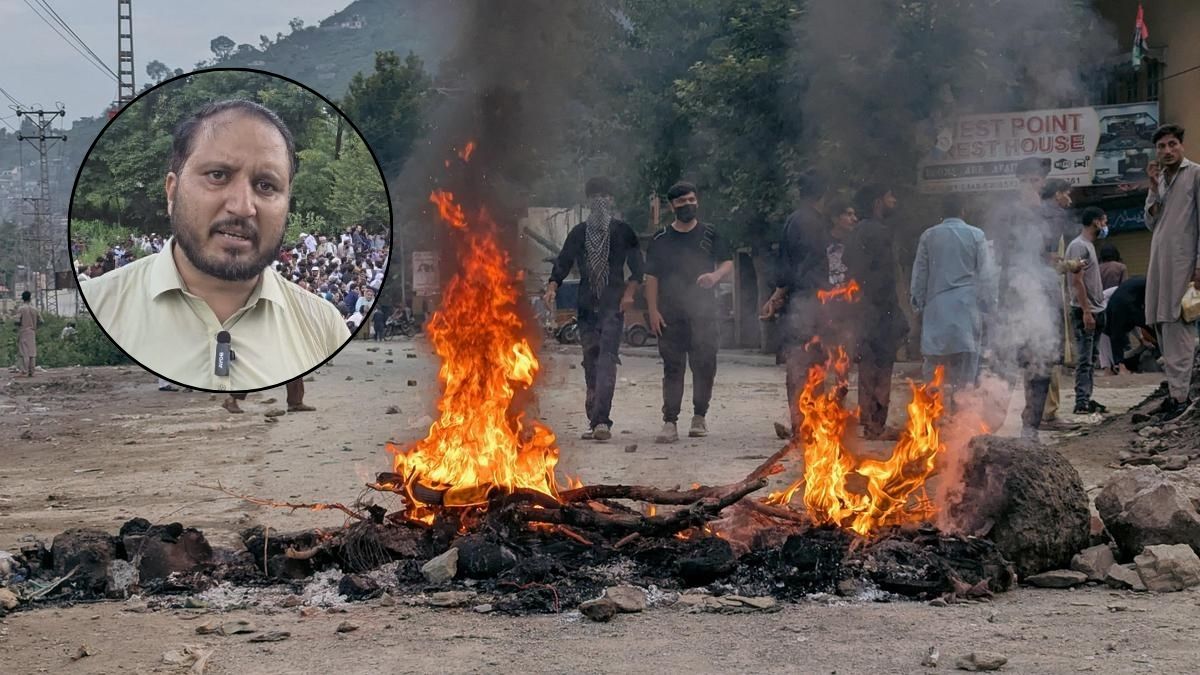
When reporting the news becomes a criminal offense, a nation tells the world it has nothing left to hide behind except fear. Imagine waking up to find your name plastered on a state terrorism watchlist, not because you plotted violence or handled explosives, but because you spent ten years documenting protests and interviewing ordinary citizens. That is the stark reality facing Danish Irshad, a journalist and researcher whose recent designation by Pakistani authorities highlights a terrifying escalation in the ongoing crisis in Pakistan-administered Kashmir, often called PoK.
Without a trial, without a court order, and without a single shred of due process, Irshad was slotted onto the Fourth Schedule of Pakistan's Anti-Terrorism Act. His bank accounts are frozen, his travel is restricted, and his life is upended. Why? Because he dared to report on civil unrest and give voice to families whose loved ones were caught in the crosshairs of state crackdowns.
The Mechanics of Silencing Dissent
The Fourth Schedule is supposed to be an administrative tool for tracking violent extremists and members of proscribed militant organizations. Instead, it has morphed into a convenient administrative weapon to punish writers, researchers, and political dissidents who refuse to parrot the official line.
Irshad is a familiar name to anyone following the complex socio-political dynamics of the region. Operating out of Rawalpindi, he spent nearly a decade covering the deep-seated grievances in Pakistan-administered Kashmir and Gilgit-Baltistan. He wrote columns for publications like the Kashmir Times and authored detailed accounts of the region's post-1947 history.
Trouble boiled over when Irshad began digging into the heavy-handed state response against the Jammu Kashmir Joint Awami Action Committee (JAAC). The JAAC spearheaded months of massive public agitation over inflated utility bills, heavy taxation, and administrative neglect. When the government banned the committee in June, the crackdown widened. Irshad did what any ethical reporter would do: he interviewed grieving families whose children were allegedly killed by security forces during the protests.
That reporting crossed an invisible line. Rather than answering tough questions about human rights abuses, the establishment chose to reclassify journalism as terrorism.
The Chilling Effect on Press Freedom
When a state labels a reporter a terrorist without a trial, the message to every other media worker is loud and clear. Self-censorship becomes a survival tactic. Independent journalism in conflict-adjacent territories already operates under extreme pressure, but converting reporters into legal targets destroys whatever credibility the justice system claims to uphold.
Journalists across Pakistan and international press bodies have condemned the move. Prominent local reporters have pointed out that dissent is a civic right, not a crime warranting state-sponsored financial strangulation. Yet, the government continues to use sweeping legal frameworks, such as amended electronic crime acts and anti-terrorism ordinances, to muzzle digital spaces and crush dissenting street movements.
Placing a researcher on a terror watchlist because his articles make the administration look bad doesn't erase the underlying crisis in PoK. It only amplifies it. It shows a fragile administrative apparatus reacting with brute force because it can no longer win the battle of narratives through standard governance.
Transparency cannot survive when authorities treat a notepad and a microphone as dangerous weapons. The attempt to isolate critical voices through administrative blacklists leaves citizens in the dark and isolates the state further from reality. Real security comes from addressing the legitimate grievances of protesting populations, not from hunting down the messengers who report on them.