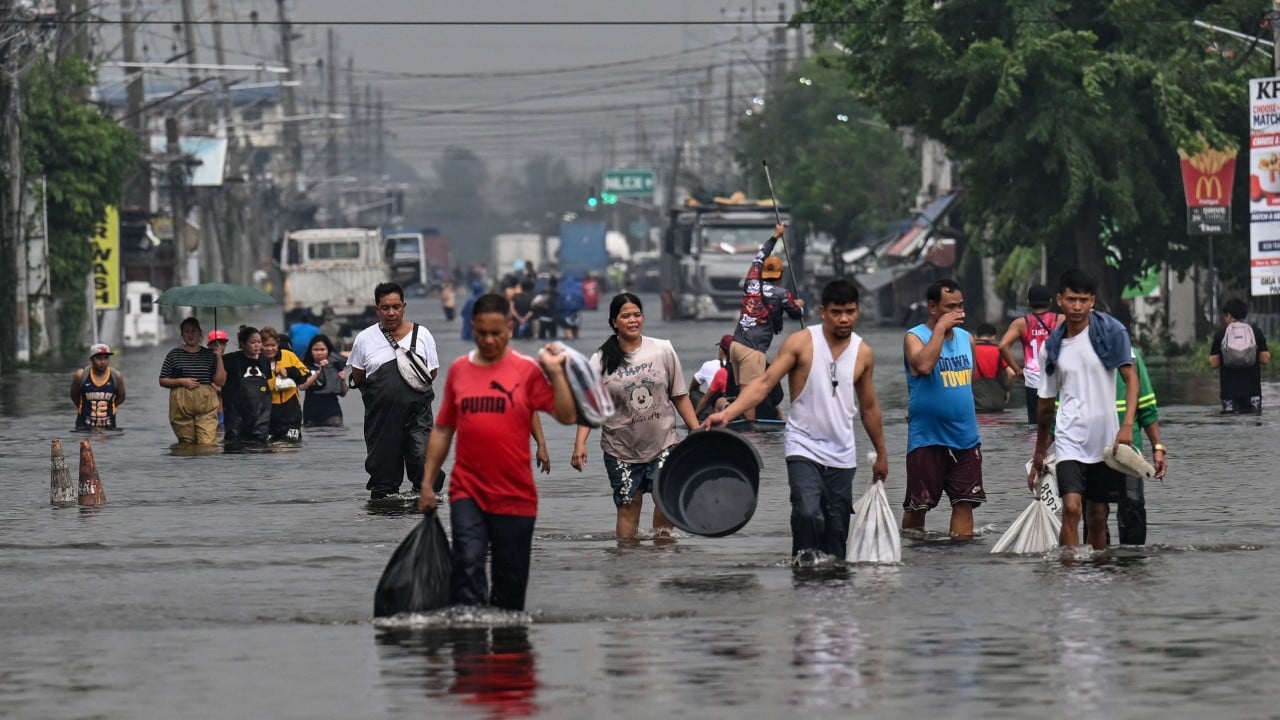
When President Ferdinand Marcos Jr. took the stage at an upscale Makati enclave to belt out a Beatles classic for his wife’s post-birthday celebration, millions of Filipinos were staring at rising monsoon waters inside their living rooms. The viral footage ignited an immediate firestorm across social media platforms, casting a harsh spotlight on an administration struggling to project empathy while vast swathes of Luzon remained submerged. Critics labeled the performance deeply out of touch, but the episode represents something far more systemic than a mere PR miscalculation. It exposes the structural detachment that occurs when political survival relies on insulation rather than accountability.
The timeline offered by Malacañang Palace insists that the gathering occurred on August 26 during a relative lull in the weather, rather than at the absolute peak of the tropical storm onslaught. Palace spokespersons argued that a few hours spent celebrating family does not equal an abandonment of executive duty. Technically, the defense holds water. Geographically and administratively, the machinery of state does not freeze because a chief executive picks up a microphone. Yet public trust is not a legal contract managed by technicalities. It is a fragile emotional currency built on shared suffering. When communities are wading through waist-high murky runoff, watching the nation's highest official crooning love songs creates an unbridgeable chasm in the collective psyche. You might also find this related coverage insightful: Inside the Geopolitical Panic Framing Everyday American Life Around China.
This friction between institutional defense and public fury highlights a recurring vulnerability within the current administration. Communication breakdowns under Marcos do not stem from a lack of advisers, but from an inherited political posture that treats public relations as an exercise in damage containment rather than genuine connection. Weeks prior to the singing controversy, First Lady Liza Araneta-Marcos drew similar online condemnation after posting a garden selfie announcing a birthday sabbatical just as seasonal monsoons began displacing families. Two distinct incidents within a single month point to a insulated inner circle that views public optics through a filter of defensive annoyance rather than receptive listening.
To understand why these missteps repeatedly detonate, one must look closely at the mechanics of contemporary Philippine disaster response. Billions of pesos pass through flood-control programs annually, yet every heavy downpour exposes the exact same systemic failures in drainage, infrastructure integrity, and regional planning. When structural remediation projects fail to prevent routine inundation, citizens look to symbolic leadership for reassurance. If the physical infrastructure collapses, the symbolic architecture must hold firm. When both fail simultaneously, public anger shifts from frustration over weather to rage against systemic corruption and elite indifference. As discussed in detailed reports by The New York Times, the implications are notable.
The political opposition, heavily featuring factions loyal to rival camps like the Dutertes, weaponized the viral clips with surgical precision. Former officials lost no time drawing sharp contrasts between the scene inside the South Forbes subdivision and the misery unfolding in Pampanga and Bulacan. This manufactured outrage serves a dual purpose. It diverts public scrutiny away from parallel controversies while capitalizing on legitimate grassroots exhaustion. The citizenry is caught in a grinding crossfire between competing political elites, each weaponizing climate disasters for future electoral positioning.
Behind the viral outrage lies a grueling reality for millions of Filipinos living along hazard-prone coastal and riverine corridors. Climate volatility has intensified dramatically over the past decade, transforming seasonal monsoons into catastrophic multi-hazard events. Families are displaced not once a year, but multiple times per season. Municipal budgets are chronically depleted, leaving local government units ill-equipped to manage emergency relief without immediate national intervention. When national leadership appears distracted by private festivities, it signals to local communities that they are entirely on their own.
Malacañang's aggressive pushback against the critics misses the deeper sociological point. Defending the timing of a private party with bureaucratic timestamps does little to soothe a populace nursing deep economic anxieties. Inflation remains stubborn, purchasing power is eroded by global pressures, and infrastructure projects move at a glacial pace. In an environment this pressurized, aesthetics carry immense political weight. A leader cannot afford the luxury of perceived nonchalance when the backdrop of the nation is mud and rising water.
Ultimately, the viral serenade in Makati will fade from active news feeds as the floodwaters recede and the next political scandal takes center stage. But the underlying disconnect will remain untouched. Until the machinery of governance aligns its internal priorities with the raw, unfiltered struggles of its constituents, every flash of elite celebration will continue to function as a match thrown directly into a tinderbox of public resentment.