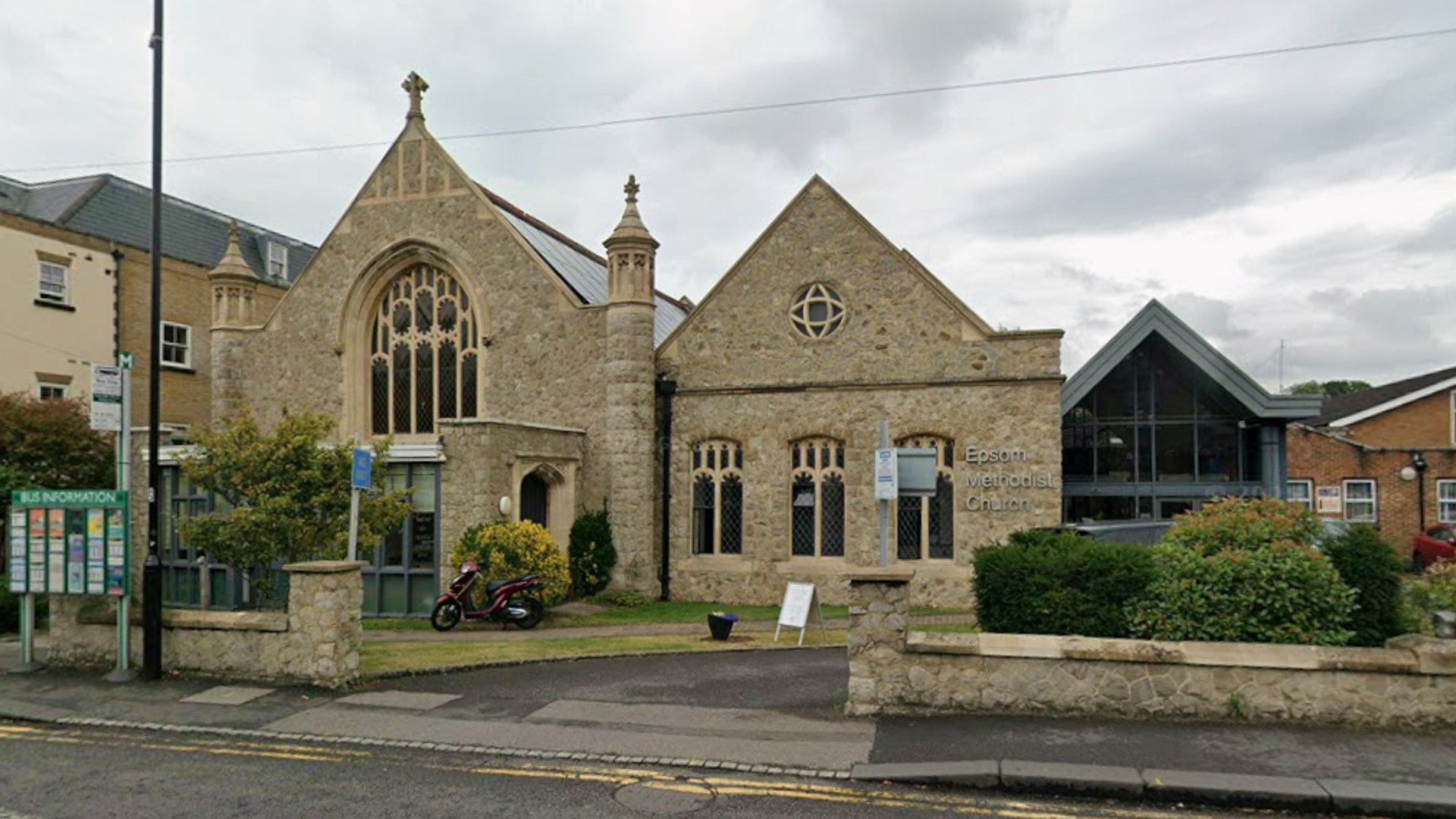
The intersection of public safety and judicial integrity creates a persistent friction point when high-profile criminal investigations meet organized civil protest. In the case of the Epsom sexual assault investigation, the Surrey Police are navigating a trilemma: the necessity of maintaining investigative momentum, the statutory requirement to protect suspect anonymity pre-charge, and the operational management of public order. The tension here is not merely social; it is a structural conflict between the public’s demand for transparency and the legal system's requirement for due process.
The Anonymity Framework under UK Law
Public demands for the identification of the suspects in the Epsom case collide directly with the Contempt of Court Act 1981 and the College of Policing’s guidelines on naming suspects. The restriction on releasing names prior to a formal charge is not a discretionary choice by local authorities but a risk-mitigation strategy designed to prevent the collapse of a future trial.
Identification at the pre-charge stage introduces three primary risks to the prosecution’s viability:
- Identification Evidence Contamination: If a suspect’s image or name is circulated in the media or on social platforms, any subsequent formal identification procedure (such as a video parade) is legally compromised. Defense counsel can argue that witnesses were influenced by external media rather than their own recollection, leading to the exclusion of critical evidence.
- Prejudicial Publicity: The "strict liability rule" under the Contempt of Court Act applies once proceedings are "active." While an arrest makes a case active, the period before a jury is sworn in is hyper-sensitive. Widespread public naming creates a documented trail of prejudice that can be used to argue that a fair trial is impossible in the jurisdiction.
- Human Rights Act Balancing: Under Article 8 of the European Convention on Human Rights, individuals have a right to privacy. The UK Supreme Court ruling in ZXC v Bloomberg established a legitimate expectation of privacy for persons under investigation before they are charged, unless there is an overriding public interest—a threshold rarely met by general public curiosity or protest demands.
The Mechanics of Public Order Management
The police warning issued to protesters regarding "vigilante-style" behavior or disruptive gatherings is an application of the Public Order Act 1986. Law enforcement must balance Section 11 (advance notice of marches) and Section 14 (imposing conditions on assemblies) against the fundamental right to protest.
When protesters demand the disclosure of suspect identities, they create a secondary operational burden for the investigative team. The "Diversion of Resources" function dictates that for every officer deployed to manage a demonstration in Epsom, one fewer officer or staff member is available for forensic data processing, witness interviewing, or CCTV analysis.
Structural Bottlenecks in the Investigation
The pace of a rape investigation is dictated by the "Evidentiary Chain of Custody." In the Epsom case, the delay between arrest and charge—which fuels public frustration—is often a result of these specific technical bottlenecks:
- Forensic Toxicology and DNA: Backlogs in accredited laboratory services often mean that biological evidence takes weeks to process. Until a "match" or a definitive forensic link is established, the Crown Prosecution Service (CPS) threshold for a "Full Code Test" (realistic prospect of conviction) is rarely met.
- Digital Forensics: The extraction and analysis of mobile phone data from both victims and suspects involve bypassing encryption and filtering thousands of communications. This process is governed by the Police, Crime, Sentencing and Courts Act 2022, requiring strict relevance to the line of inquiry.
- CPS Liaison: In the UK, police do not charge suspects in serious cases like rape; the CPS does. The "Charging Paradox" occurs when the police have sufficient suspicion for an arrest but insufficient evidence for a CPS-approved charge, leading to suspects being released on bail or under investigation.
The Social Media Feedback Loop and Misinformation
The friction in Epsom is amplified by the "Information Vacuum" theory. When official channels remain silent to protect the legal integrity of a case, the resulting vacuum is filled by speculative content on social media. This creates a feedback loop where:
- Speculation leads to the misidentification of innocent parties.
- Misidentification triggers localized protest or "vigilante" action.
- Police are forced to issue denials or warnings, which protesters interpret as "protecting" the guilty.
- Public trust in the institution erodes, further fueling the protest cycle.
Surrey Police’s communication strategy is currently defensive rather than proactive. By emphasizing what they cannot do (name suspects), they inadvertently highlight the perceived inactivity of the investigation. A more robust strategic approach would involve detailing the stages of the investigation without compromising specifics—shifting the narrative from "secrecy" to "procedural rigor."
Operational Risks of Civilian Intervention
Protest groups or individuals attempting to "investigate" or harass suspected individuals introduce a "Chain of Evidence" risk. If a suspect is harassed or their property is interfered with by civilians, the defense can claim "Abuse of Process." In extreme scenarios, if the conduct of the investigation is seen to be influenced by mob pressure or if the suspect's safety cannot be guaranteed, the court may stay the proceedings entirely.
The warning from the police is a strategic attempt to prevent the "Nullification of Justice." If the public truly seeks a conviction, the most logical action is non-interference. Any action that makes the case "exceptional" or "high-profile" in a way that biases the local jury pool serves the defense’s objective of moving the trial or seeking a dismissal.
Statutory Requirements and the Victim's Position
The anonymity of the victim in a sexual offense case is absolute from the moment an allegation is made, as per the Sexual Offences (Amendments) Act 1992. However, the anonymity of the suspect is a sliding scale. This asymmetry is often the root of the perceived injustice among protesters.
From a strategic standpoint, the police must maintain a "Neutrality Buffer." If they appear to succumb to protest demands, they compromise their standing as impartial investigators. This is particularly critical in cases involving multiple suspects, where the testimony of one against the other may be a primary investigative lead. Publicly naming them prematurely can lead to "Suspect Collusion," where the individuals align their stories based on the information circulating in the public domain.
Resource Allocation and Public Safety
The cost of policing protests in small jurisdictions like Epsom is non-trivial. It involves:
- Opportunity Cost: The loss of investigative hours.
- Financial Strain: Overtime pay for officers redirected from other divisions.
- Community Tension: The "Broken Windows" effect where high-visibility conflict reduces the general sense of security in the area, regardless of the crime rate.
The strategic imperative for the Surrey Police is to move the case to the "Charged" status as rapidly as the forensic timeline allows. Once a suspect is charged, their name enters the public record via the court list, and the legal prohibition on identification is largely lifted.
The current stalemate is a function of time and forensic processing. The police warning to protesters is not an attempt to stifle speech, but a desperate measure to protect the only outcome the protesters actually want: a trial that cannot be derailed on a technicality.
The immediate requirement for the investigation is the completion of the "Threshold Test." This allows for a suspect to be charged even if all evidence is not yet available, provided there is at least a "reasonable suspicion" and the case is of such seriousness that it is in the public interest to charge immediately. If the forensic evidence remains in a state of "pending analysis," the police are forced to remain in the current holding pattern of bail and public warnings.
The most effective path forward for community leaders and the police is the establishment of a "Transparency Liaison." While specific case details are barred, providing the public with a checklist of completed procedural stages—e.g., "CCTV collection 100% complete," "Forensic samples submitted to lab"—can mitigate the information vacuum without compromising the legal requirements of the Contempt of Court Act. Failure to adapt the communication strategy will result in continued civil friction and a potential risk to the prosecution's eventual success.
The strategic priority remains the preservation of the "Clean Room" environment for the eventual jury. Every post, tweet, and protest sign that identifies a suspect is a brick in the wall the defense will build to prevent a conviction. The police are not protecting the suspects; they are protecting the prosecution's ability to exist.
Managing the Epsom situation requires a shift from reactive policing to "Expectation Management." The public must be educated on the reality that in the modern judicial system, silence is often the primary indicator of a diligent, high-stakes forensic process. The investigation’s integrity is currently the only currency that matters; spending it to appease public outcry would be a terminal strategic error.