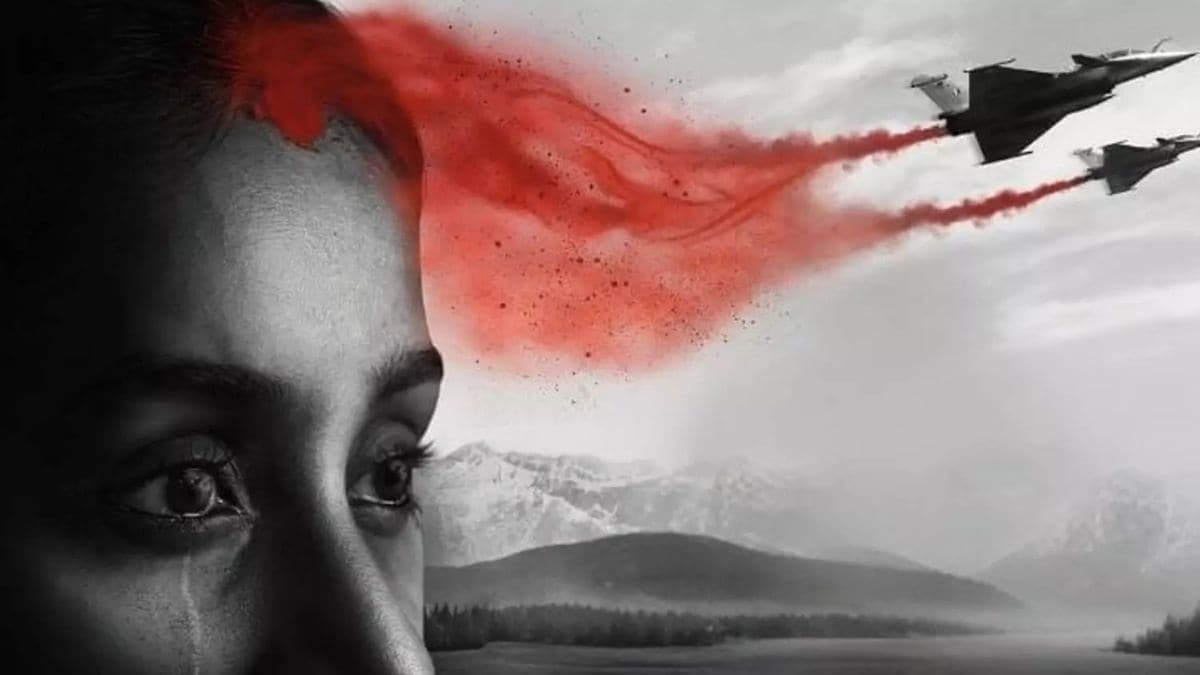
The release of the Discovery docuseries Declassified: Operation Sindoor has ignited a familiar firestorm between New Delhi and Islamabad. By framing the 88-hour conflict of May 2025 through the lens of Indian military and intelligence leadership, the production does more than revisit a border crisis; it acts as a fresh strike in an ongoing information war. The Pakistani military establishment, through its Inter-Services Public Relations wing, has predictably dismissed the series as a theatrical production. However, beneath the accusations of dramatization lies a deeper reality regarding how modern states manage the memory of kinetic engagement.
History is rarely settled on the battlefield alone. In the modern era, the aftermath of any military confrontation is defined by the ability of a nation to codify its version of events for the global audience. Operation Sindoor, launched in direct response to the tragic April 2025 terror attack in Pahalgam, was characterized by precision strikes against non-state actor infrastructure. For India, this operation represented a shift in defensive doctrine. It was not merely a reaction but a statement of capability and intent. When National Security Advisor Ajit Doval appears on screen to detail the gravity of the decision-making process, he is not just speaking to viewers of a streaming service. He is reinforcing a standard of state response that prioritizes operational sovereignty over diplomatic caution.
The protestations from Islamabad regarding the "one-sided" nature of the documentary are expected, given the alternative narratives pushed by Pakistani media during the heat of the conflict in May 2025. During those 88 hours, the information environment was saturated with unverified claims—ranging from phantom drone interceptions to allegations of strikes on deep-sea port infrastructure. The Indian Ministry of Information and Broadcasting, at the time, pointed to these reports as a deliberate attempt to cloud the reality of the strikes on identified terror camps.
What the documentary highlights, intentionally or not, is that the objective of such media projects is to solidify a specific historical record. When a state releases classified accounts of operational planning, it effectively claims ownership of the truth. By centering the story on the "Greenlight" and the subsequent "Attack and Counterstrike," the series strips away the fog of conflict that defined the initial news cycle and replaces it with a singular, authorized narrative.
This is not a new tactic. In international relations, the visual representation of conflict serves as a secondary front. When Indian leadership discusses the Pahalgam attack and the subsequent retaliatory strikes, they are re-litigating a period of heightened vulnerability. Pakistan’s pushback serves the mirror purpose: it maintains the domestic and international perception of a state that is not only a victim of unprovoked aggression but also capable of holding its own in a high-stakes military standoff.
The divide here is irreconcilable because both parties are operating on fundamentally different premises. India frames Operation Sindoor as a necessary act of surgical enforcement against terror networks, viewing the ceasefire as a result of successful deterrence. Islamabad, meanwhile, views the conflict through a lens of territorial integrity and the violation of its borders. Neither side is interested in a shared history of the 88-hour conflict. Instead, both are building archives.
Industry analysts have observed that the inclusion of first-hand accounts from high-ranking officials in documentary media is becoming a strategic requirement for global powers. It allows a government to bypass traditional diplomatic channels and speak directly to a global populace that is increasingly cynical about official press releases. This documentary provides an unfiltered, if curated, perspective on the internal workings of India’s security apparatus during a time of existential tension.
For the civilian observer, the series offers a rare glimpse into the mechanics of escalation between nuclear-armed neighbors. Yet, one must recognize that such accounts are crafted with a purpose. The "theatrical" element noted by critics is not a failure of the documentary format; it is a feature. Military history, when presented for public consumption, must be compelling to be effective. It must transform abstract strategic moves into tangible, human-centric decisions. By showcasing the frustration of military commanders and the resolve of political leadership, the production successfully bridges the gap between raw data and national identity.
Ultimately, the friction caused by the docuseries proves that the conflict of 2025 never truly ended. It merely shifted from the skies over the Line of Control to the servers of global media platforms. As long as nations treat the memory of their conflicts as a battleground, the story of Operation Sindoor will remain contested. The true measure of its success will not be found in the ratings, but in whose account of the 88-hour standoff becomes the standard reference point for future generations. For now, the narrative remains as divided as the border itself.
The struggle to define the past is the most effective way to dictate the terms of the future. By moving the discourse into the realm of documentary, the architects of this operation have ensured that their interpretation of events will be the one that reaches the widest audience. Whether this succeeds in establishing a lasting precedent for deterrence remains to be seen, but the intent is clear. Every frame of that footage is an assertion of authority. Every rebuttal is an attempt to reclaim the ground lost in the information theater. The war for the record continues unabated.