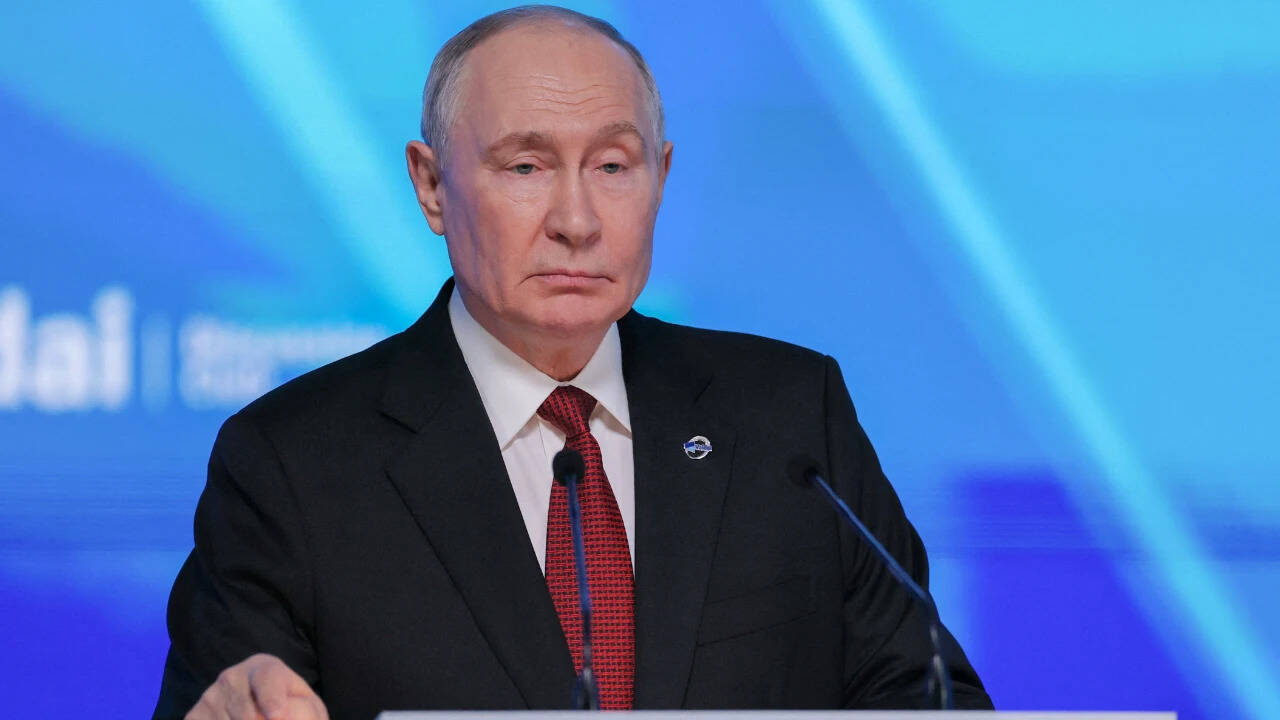
Russian President Vladimir Putin recently warned that Western military escalation risks pushing global security toward a fatal point of no return, specifically cautioning against actions that could lower the nuclear threshold. This rhetoric arrives during a period of intense geopolitical friction over long-range missile authorizations and conventional supply chains feeding the conflict in Eastern Europe. Yet beneath the diplomatic bluster lies a calculated military doctrine developed over decades. To understand why these warnings recur with such alarming regularity, one must examine the mechanics of Russian strategic signaling and the historical precedents governing nuclear escalation.
Strategic communication from Moscow relies heavily on calibrated ambiguity. When Russian leadership discusses nuclear weapons, the messaging is rarely intended as an immediate operational command. Instead, it functions as a diplomatic circuit breaker. For years, Western analysts have studied the escalate-to-deescalate concept, a framework suggesting that Moscow might use a limited nuclear strike to halt an unfavorable conventional war. While debated intensely within defense circles, this doctrine serves primarily to deter direct military intervention by nuclear-armed adversaries. The recurring references to strategic arsenals are designed to inject maximum friction into Western coalition decision-making, forcing leaders in Washington, London, and Berlin to weigh the catastrophic costs of escalation against their alliance commitments. For an alternative look, check out: this related article.
The immediate catalyst for the latest round of warnings involves discussions over permitting long-range Western weaponry to strike targets deep inside internationally recognized Russian territory. From Moscow’s perspective, crossing this threshold transforms suppliers into direct belligerents. Military planners understand that conventional strikes on strategic command nodes or logistics hubs alter the operational calculus. Russian military doctrine explicitly outlines that the use of nuclear weapons is permissible not only in response to a nuclear attack, but also when the very existence of the state is threatened by conventional means. By framing Western missile provisions as an existential threat, state rhetoric attempts to bind the battlefield reality to the highest tier of deterrence theory.
Historical precedent offers sobering context for this dynamic. During the Cold War, both superpowers maintained doctrines of mutually assured destruction that relied on clear red lines and predictable communication channels. Today, those guardrails have eroded significantly. Arms control treaties like the Intermediate-Range Nuclear Forces Treaty and the Strategic Arms Reduction Treaty have either collapsed or been suspended, leaving fewer verification mechanisms in place. Without these technical safety valves, political rhetoric carries a heavier burden. Every speech, press conference, and doctrinal update becomes a substitute for formal arms negotiation, increasing the risk of miscalculation. Further analysis regarding this has been shared by NBC News.
The economic and geopolitical environment further complicates this standoff. Sanctions have isolated Russia from Western financial networks, pushing Moscow into deeper economic and diplomatic alignment with Beijing and other non-Western partners. This realignment reduces the deterrent effect of Western economic pressure, leaving military signaling as one of the primary tools available to Russian leadership. When economic levers fail to alter an opponent's behavior, the utility of diplomatic warnings increases. This structural reality explains why warnings regarding nuclear risks remain a constant feature of contemporary foreign policy, regardless of immediate battlefield shifts.
For defense analysts and policymakers, decoding these statements requires separating tactical posturing from genuine capability shifts. While intelligence agencies continuously monitor readiness levels for changes in deployment patterns or command structures, the day-to-day posture of strategic forces remains largely stable. However, stability in deployment does not equate to safety in governance. As trust between major powers hits historic lows, the margin for diplomatic error narrows. The ongoing standoff over military assistance guarantees that the shadow of nuclear deterrence will continue to loom over every diplomatic exchange, serving as a grim reminder of the structural fragility underpinning modern international security.