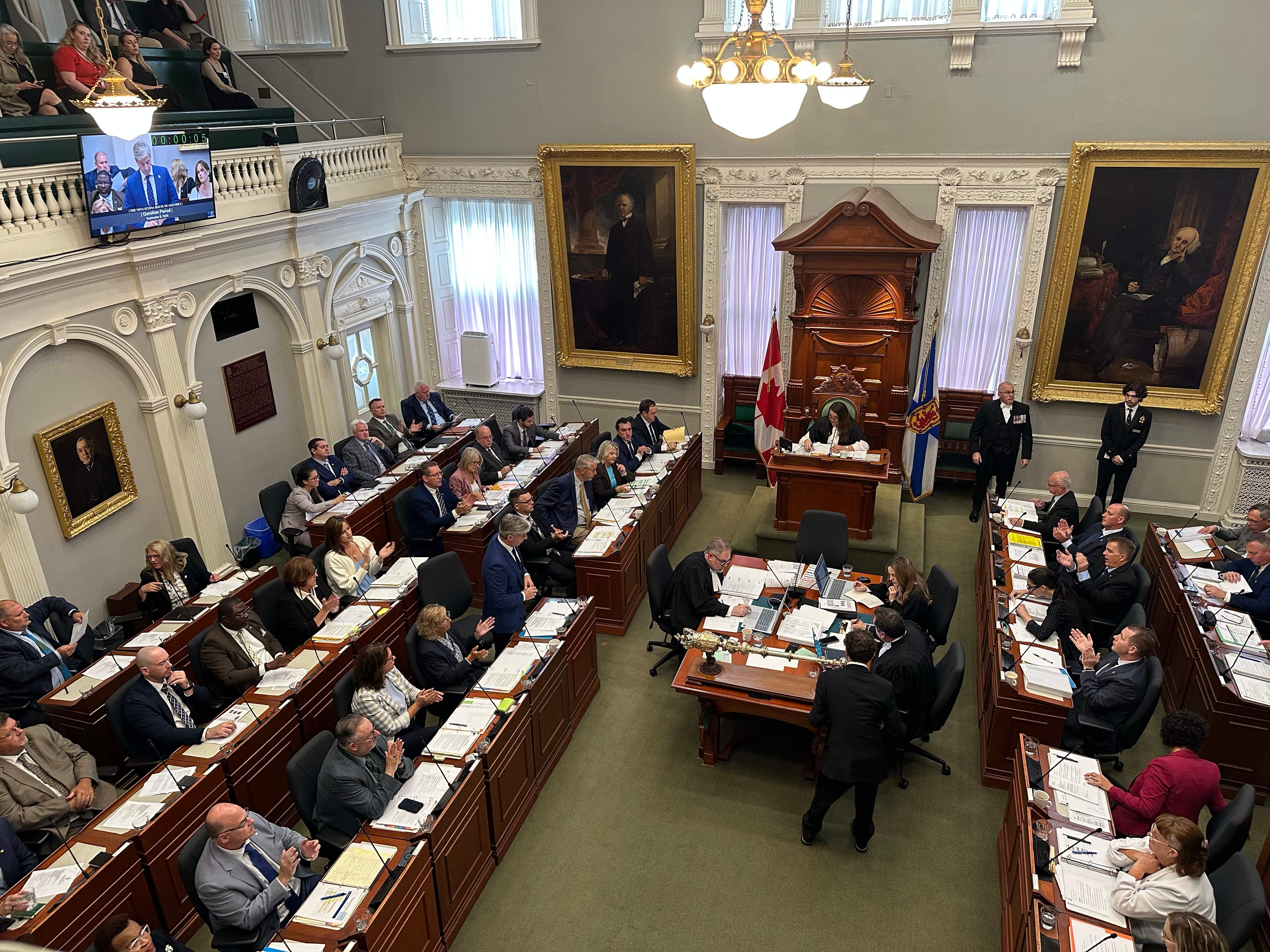
When politicians walk back into Province House in Halifax, they aren't just bringing standard legislative paperwork. They're carrying the heavy weight of an escalating cross-border trade war. As MLAs return for the fall sitting, the dominant focus isn't local municipal housekeeping. It's the immediate economic fallout from sweeping American trade penalties and Canada's retaliatory counter-tariffs hitting billions of dollars in goods.
If you think this is just background noise happening in Ottawa or Washington, you're missing the point. Small and medium businesses across Atlantic Canada are already dealing with scrambled supply chains, shifting customer bases, and frantic pricing adjustments. The legislative floor in Nova Scotia has instantly turned into a high-stakes arena where every party is scrambling to prove they have a workable playbook to save local jobs. For an alternative view, read: this related article.
The Reality on the Ground for Local Businesses
Retaliatory Canadian counter-tariffs officially kicked in, targeting roughly $27.6 billion worth of American imports including dairy products, plywood, and everyday consumer goods. That sounds like a macro-level trade policy on paper, but on the ground in Nova Scotia, it means immediate margin compression.
Premier Tim Houston’s administration insists they are listening carefully to businesses mapping out supply chain disruptions. Yet, the friction is palpable. Finance Minister John Lohr points out that the province hasn't tapped into its $50 million contingency fund earmarked for tariff relief, preferring a wait-and-see approach. Related reporting on this trend has been published by Forbes.
Opposition leaders aren't buying the cautious stance. Interim Liberal Leader Iain Rankin argues that waiting around is a mistake. He wants an all-hands-on-deck task force running comprehensive scenario planning across every sector. Meanwhile, NDP Leader Claudia Chender points out that while the province is tabling new legislation to lower the weekly overtime threshold from 48 hours to 44 hours, it still leaves Nova Scotia trailing behind eight other jurisdictions while workers face extreme cost-of-living pressures.
Outside Province House Versus Inside the Chambers
The tension inside the legislature matches the noise right outside its doors. Protesters have gathered in droves, turning the plaza into a makeshift public forum. Demonstrators aren't just venting generic frustrations. They are pushing back against unilateral policy decisions, including the controversial repeal of the province's uranium mining ban.
When citizens amass a historic petition with over 10,000 signatures—after previously being barred from the building for singing protest songs—it signals a deep disconnect between executive decisions and public sentiment. People feel rushed, ignored, and anxious about an economy buffeted by international trade wars. When local writers, environmental advocates, and working-class citizens form a united front outside, politicians inside can't simply legislate in a vacuum.
What Happens When Global Trade Wars Hit Local Pockets
You can't talk about provincial competitiveness without looking at how external trade friction disrupts internal growth. When federal agencies pump millions into regional programs—like the recent Atlantic Canada Opportunities Agency investments supporting advanced manufacturing upgrades in Dartmouth—it's a band-aid on a structural wound.
Businesses don't want handouts. They want predictability. They want to know if their lumber, seafood, or manufactured parts will face border delays or punitive levies next week. When trade talks collapse and leaders trade public threats, regional economies bear the brunt.
Here is what you should watch as this legislative session unfolds:
- Contingency Fund Deployment: Watch whether the province actually opens up its $50 million relief chest or if it forces businesses to rely strictly on federal programs.
- Worker Protection Debates: Pay attention to how far the government goes with labor law adjustments as unions push for parity with other provinces.
- Supply Chain Pivots: Notice which local enterprises successfully diversify away from American dependency and find new domestic or international buyers.
The return of the Nova Scotia legislature isn't business as usual. It's a direct test of how a small-province economy absorbs global economic shocks while managing a restless local populace. Stop expecting easy answers or neat political compromises. This trade fight is just getting started, and Province House is ground zero for the fallout.


.jpg?width=1200&auto=webp&trim=0%2C0%2C0%2C0)