Hong Kong is terrified of building a mega-city that people actually want to live in.
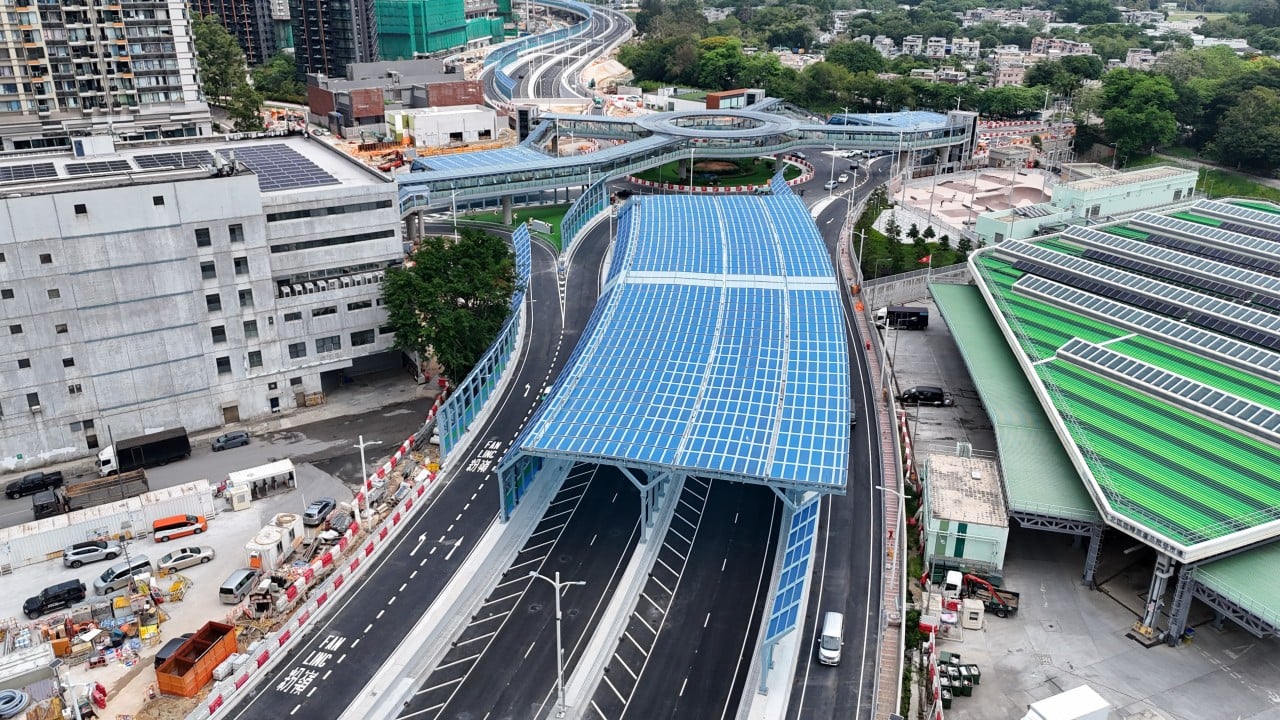
For the past few years, the mainstream media and local urban planning committees have been hand-wringing over a single, exhausting question: Can the Northern Metropolis balance economic progress with quality of life? Analysts obsess over preservation, green spaces, and low-density housing as if they are building a retirement village rather than an economic engine designed to house 2.5 million people and anchor the Greater Bay Area.
This entire debate is built on a fundamental misunderstanding of how global economic hubs actually function.
The premise that you can birth a tech-driven powerhouse while maintaining a pristine, suburban quality of life is a fantasy. It is a lazy consensus that ignores the history of urban economics. If the Northern Metropolis tries to be everything to everyone—a tech hub, an ecological sanctuary, a sleepy suburb, and a cultural oasis—it will fail at all of them.
To win against Shenzhen, Singapore, and Silicon Valley, the Northern Metropolis needs to stop trying to be comfortable. It needs to optimize for friction, density, and sheer economic output.
The Density Fallacy: Why Living Space Is the Wrong Metric
Open any standard critique of the Northern Metropolis project and you will find the same complaint: Hong Kong is too cramped, and this new mega-project is a golden opportunity to give citizens breathing room. Planners promise sprawling parks, wide avenues, and a departure from the hyper-dense "concrete jungle" of Hong Kong Island.
This is a catastrophic mistake.
Agglomeration economies thrive on density, not distance. When you push buildings apart to insert "buffer zones" and manicured wetlands, you kill the very proximity that drives innovation. I have seen municipal governments in mainland China and Southeast Asia pour billions into sprawling "tech parks" that ended up looking like beautiful, ghost-town campuses where nothing gets created because engineers have to take a fifteen-minute shuttle ride just to grab coffee with a venture capitalist.
Edward Glaeser, a Harvard economist and the author of Triumph of the City, has proven repeatedly that the defining characteristic of a successful city is the absence of physical space between people. Density creates serendipitous interactions. It lowers transaction costs.
When you deliberately lower density under the guise of "quality of life," you are artificially inflating the cost of doing business. You are lengthening commute times. You are creating a car-dependent suburban hellscape disguised as an eco-paradise.
The Real Cost of "Green Living"
- Increased Infrastructure Drag: Spreading utilities, water, and fiber-optic cables over a larger geographic footprint drastically increases municipal maintenance costs.
- The Transit Paradox: Mass transit systems require high-density nodes to be financially viable. Low-density planning ensures the MTR will either lose money or require massive taxpayer subsidies.
- Talent Dilution: High-value workers do not move to tech hubs for trees; they move for density of opportunity.
The San Francisco Warning
Look at San Francisco. Decades ago, the city decided that preserving its aesthetic, limiting building heights, and protecting the "quality of life" of its residents was more important than aggressive development.
The result? A catastrophic housing crisis, astronomical living costs, and a fractured ecosystem where tech workers live in a bubble and commute hours south to Silicon Valley on private buses. San Francisco chose comfort over capacity, and it crippled its functional urban fabric.
Now look at Shenzhen, right across the Sham Chun River. It did not become a global hardware capital by worrying about urban quietude. It grew from a fishing village to a metropolis of 17 million people by aggressively prioritizing industrial scale, speed, and density.
Hong Kong planners think they can compete with Shenzhen by offering a "nicer" place to live. They are wrong. Tech talent doesn't want a quiet park; they want a 24-hour ecosystem where they can prototype a medical device at 2:00 AM and pitch a term sheet at 8:00 AM.
Dismantling the "People Also Ask" Delusions
The public debate around this project is riddled with flawed assumptions. Let's address the most common ones with cold reality.
"Won't the Northern Metropolis destroy Hong Kong's unique ecology?"
Yes, parts of it will change, and we should stop pretending otherwise. The obsession with preserving every square meter of fishponds and wetland in Yuen Long and North District is a luxury Hong Kong cannot afford if it wants to survive economically.
Am I saying we should pave over every bird sanctuary? No. But we must admit the trade-off. You cannot build a modern IT and manufacturing hub that accommodates millions of residents without altering the physical environment. Pretending you can achieve "zero environmental impact" results in endless bureaucratic delays, bloated environmental assessment fees, and projects that are obsolete by the time the first stone is laid.
"How will this project improve housing affordability for the average citizen?"
It won't, if we keep building it the way the public wants. The current demand is for larger, lower-density flats. If the government yields to this pressure, the total housing yield drops. Basic supply and demand dictates that if you build fewer units over a larger area to keep things spacious, prices stay high.
The only way to crash the housing market and make the Northern Metropolis affordable is to build vertically and relentlessly. We need ultra-high-density micro-districts connected by high-speed rail, not sprawling suburban townhouses.
The Talent Trap: Gen Z Engineers Don't Want Suburbs
There is a myth that the top tier of global tech talent—the engineers, data scientists, and quantitative analysts—are looking for a peaceful, balanced lifestyle.
This is an outdated, corporate view of talent acquisition. The individuals who build hyper-growth companies are driven by access to capital, proximity to manufacturing chains, and a concentration of peers. They are attracted to intensity, not serenity.
Imagine a scenario where a top-tier machine learning engineer is deciding between Singapore and the Northern Metropolis. Singapore offers an orderly, clean, low-stress environment. If Hong Kong tries to play the same game, it loses because Singapore has a multi-decade head start on the "Garden City" brand.
Hong Kong's competitive advantage has always been its raw, unfiltered kinetic energy. It is a city that never sleeps, where deals happen at breakneck speed because everyone is stacked on top of each other. Trying to turn the Northern Metropolis into a sanitized, quiet suburb completely erases Hong Kong's core cultural asset.
The Downside Nobody Wants to Admit
Adopting this hardline, pro-growth, high-density approach comes with real consequences. It means the Northern Metropolis will be loud. It will be crowded. The skyline will look like a hyper-futuristic wall of steel and glass, not a scenic postcard. Traffic will be intense. The pace of life will be exhausting.
If you move there, your quality of life—defined by quiet afternoons and open spaces—will be lower than if you lived in a sleepy town in the New Territories.
But your economic mobility will be unmatched. Your access to global networks will be instant. That is the transactional reality of a true global alpha city. You trade personal comfort for systemic opportunity.
Stop Balancing. Start Choosing.
Every minute spent trying to "balance" economic development with environmental and residential comfort is a minute wasted. This project is not a lifestyle choice; it is an economic survival strategy for a city that has spent the last decade watching its regional neighbors chip away at its dominance.
Stop asking how to make the Northern Metropolis livable. Start asking how to make it unstoppable.
Build high. Build fast. Pack the people in, link the laboratories directly to the Shenzhen factories, and let the chaos of high-density capitalism do its work. If you want a quiet life, move somewhere else.