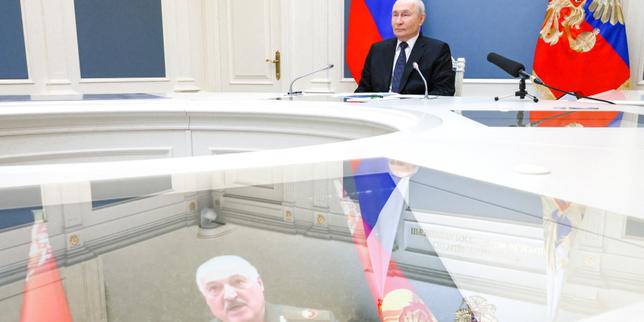
The mobilization of military resources along Ukraine’s northern border reveals an asymmetrical tactical paradox: Russia is achieving strategic denial without committing a single ground maneuver brigade. Kiev’s deployment of a massive, unprecedented defensive force across five northern regions—including Chernihiv, Kyiv, and Rivne—represents a significant structural reallocation of human and material capital. This defensive pivoting is a direct response to coordinated Russian-Belarusian military posturing, including joint tactical nuclear exercises involving over 64,000 personnel.
By analyzing this escalation through the lens of asymmetric attrition and resource optimization, it becomes clear that Moscow’s primary objective is not a immediate cross-border invasion, but rather the enforcement of a permanent resource drain on the Ukrainian Armed Forces.
+------------------------------------------------------------------------+
|                      THE NORTHERN FLANK DILEMMA                        |
+------------------------------------------------------------------------+
|                                                                        |
|  [ Russian-Belarusian Drills ]  ===>  Triggers Strategic Fixation     |
|  • 64,000+ Personnel                  (High-readiness troops pinned)   |
|  • Joint Nuclear Exercises                                             |
|                                                     ||                 |
|                                                     \/                 |
|  [ Frontline Resource Deficit ] <===  Alters Force Multiplier Ratio    |
|  • Deprived Eastern Front             (Weakens active defensive line)   |
|  • Reduced Rotation Cadence                                            |
|                                                                        |
+------------------------------------------------------------------------+
The Mechanics of Strategic Fixation
The current security architecture along the 1,084-kilometer Ukrainian-Belarusian border operates on a framework of artificial crisis generation. Ukrainian intelligence reports list five distinct Russian contingency scenarios for a northern push, forcing the Ukrainian General Staff to calculate defenses against maximum-capacity threats. This dynamic is governed by a simple asymmetric cost equation:
$$C_{threat} \ll C_{defense}$$
Where the Kremlin incurs negligible costs ($C_{threat}$) by conducting rotational exercises, moving missile infrastructure, or utilizing Belarusian air corridors for Shahed drone strikes, Ukraine must incur massive operational costs ($C_{defense}$) to maintain a continuous, high-readiness defensive posture.
This asymmetric drain manifests across three specific vectors:
- The Force Multiplier Deficit: Deploying regular army units, the National Guard, and State Border Guard detachments to the north deprives active combat zones in the east and south of critical reinforcement reserves. This alters the local force multiplier ratios, making it easier for Russian forces to achieve tactical breakthroughs on active fronts.
- Logistical Depletion: Maintaining defensive fortifications, mining operations, and electronic warfare screens across five northern oblasts consumes high-value materiel—such as artillery ammunition, engineering equipment, and air defense interceptors—that cannot be deployed elsewhere.
- Rotation Exhaustion: Forcing units to garrison static northern borders reduces the overall rotation pool for frontline troops, accelerating combat fatigue and degrading the long-term readiness of the Ukrainian army.
Belarusian Sovereignty and the Proxy Cost Function
Alexander Lukashenko's public statements claiming Belarus poses "no threat" while remaining ready to defend Russia "by all possible means" illustrate the country’s role as a low-risk geopolitical proxy. From an analytical perspective, Moscow has internalized Belarus into its broader military machine without bearing the logistical, economic, or political burdens of full annexation.
Belarus offers Russia three core strategic utilities:
- Sanctuary Infrastructure: The deployment of Russian tactical nuclear assets and advanced missile platforms inside Belarus extends Russia's strategic depth. It forces Western and Ukrainian planners to treat Belarusian territory as a nuclear-backed sanctuary, complicating potential counter-actions.
- Strategic Ambiguity: By fluctuating the intensity of joint maneuvers, Minsk forces Kiev into a permanent cycle of intelligence re-evaluations. Ukrainian border officials report no active concentrations of offensive formations directly at the border line, yet defensive reinforcements proceed because the risk of structural surprise carries catastrophic costs.
- Low-Risk Escalation Management: Russia uses Belarus to test Western red lines, such as integrating non-nuclear allies into nuclear deployment drills, while minimizing direct diplomatic blowback on Moscow.
Symmetrical Retaliation and Deterrence Failure
Kiev's tactical shift toward "mirror responses" and increased diplomatic pressure highlights a fundamental transition in Ukrainian strategy. For the first four years of the full-scale conflict, Ukraine maintained a highly cautious stance toward Minsk to avoid providing a pretext for direct Belarusian military intervention. That strategic patience has expired.
The implementation of Article 51 of the UN Charter—the inherent right to self-defense—is now being leveraged to justify a more aggressive deterrent posture. This shift is characterized by a dual-track strategy:
The Defensive Kinetic Track
Ukraine has initiated a total engineering overhaul of the northern frontier. This goes beyond standard trench systems, incorporating deep anti-tank ditches, remote-detonated minefields, and automated sensor arrays designed to minimize the human footprint required to hold the line. The goal is to lower the long-term troop requirement ($C_{defense}$) through capital-intensive infrastructure investment.
The Asymmetric Diplomatic Track
Ukraine is actively lobbying international partners to expand the geography of long-range sanctions to target Belarusian economic dependencies directly linked to the Russian military-industrial complex. This strategy aims to shift the cost equation back onto Minsk, signaling that serving as a passive staging ground carries real economic consequences.
The limits of this strategy reside in the structural asymmetry of the alliance. Because Lukashenko’s political survival is fundamentally tied to Moscow's backing, Western economic sanctions have diminishing returns. They risk driving Minsk into deeper integration with the Russian economy rather than deterring its complicity.
The Strategic Shift
The primary risk for Ukraine is not a sudden, mechanized thrust toward Kiev from the north; the terrain—defined by the heavily mined and naturally marshy Pripyat region—and current troop balances make a successful surprise invasion highly improbable. Instead, the real danger is a slow erosion of Ukraine's strategic reserves through permanent distraction.
If Kiev continues to respond to every Russian-Belarusian exercise with large-scale troop movements, it hands Moscow control over the deployment cadence of Ukrainian forces. To break this cycle, Ukraine must transition from a reactive troop-heavy defense to an infrastructure-and-intelligence-driven containment strategy along its northern border.
The operational focus must pivot toward maximizing sensor density and long-range strike capabilities while keeping the active infantry footprint in the north at the absolute minimum required for tripwire deterrence. Failing to make this adjustment will allow Russia to continue leveraging the Belarusian border as a cheap, high-yield tool to hollow out Ukraine's frontline defenses.


:max_bytes(150000):strip_icc()/line-app-logo-ccdacd0f7c344b3d9d4847edcb90733d.jpg)