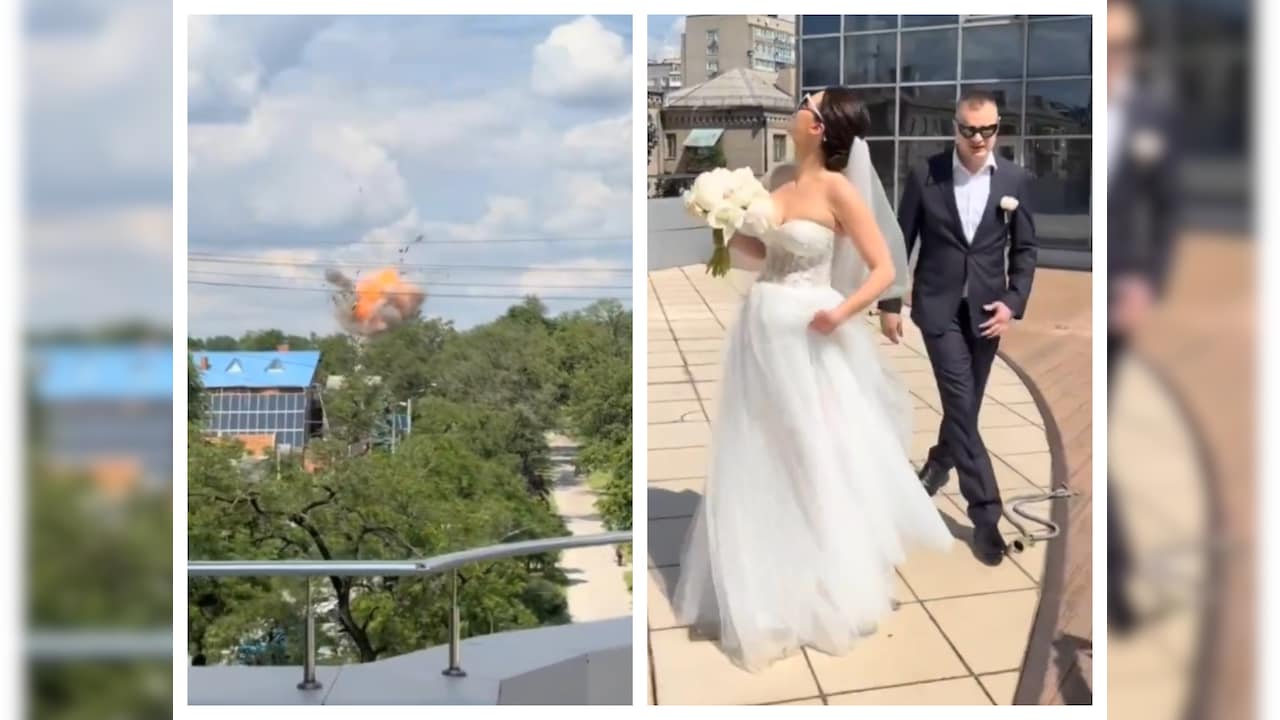
A burning wreckage smolders in the background while a bride and groom pose in pristine white lace and a tailored suit. The internet watches the footage, gasps, and immediately asset-flips the moment into a neat, digestible narrative about the unyielding triumph of the human spirit. "Love conquers all," the headlines scream. "Defiance in the face of terror," the social media commentary echoes.
It is a comforting lie.
What the media frames as inspiring resilience is actually something far more grim: the rapid, psychological desensitization to warfare. When a missile strike or a downed kamikaze drone becomes nothing more than a scenic backdrop for wedding photography, we are not witnessing a victory of normalcy over chaos. We are witnessing the absolute erosion of the boundaries between civilian life and total militarization.
Treating this survival mechanism as an aesthetic trend or a heartwarming human-interest story is a massive mistake. It obscures the structural horror of prolonged conflict and replaces necessary outrage with cheap, emotional sentimentality.
The Romanticization of Chronic Shock
The mainstream media thrives on the "business as usual" trope during wartime. It provides an easy emotional arc for audiences sitting thousands of miles away in safety. When a civilian population continues to drink espresso, hold fashion weeks, or finish wedding shoots while air raid sirens wail, external onlookers applaud their fortitude.
But anyone who has spent time analyzing the psychological architecture of conflict zones knows that this behavior is not a conscious choice to defy an enemy. It is a manifestation of the adaptation level phenomenon.
When extreme stress becomes a permanent feature of your environment, the human brain recalculates its baseline. The unacceptable becomes acceptable. The terrifying becomes mundane.
- The Baseline Shifts: A drone crash, which should trigger a flight-or-fight response, is cataloged as a minor logistical inconvenience.
- The Emotional Toll: This is not a sign of psychological health; it is a defensive numbing mechanism designed to prevent complete emotional collapse.
- The Media Distortion: External commentators mistake this numbing for heroism because it makes for better copy.
By celebrating a couple posing next to the debris of a weapon designed to vaporize human beings, the public converts a systemic failure of global security into a lifestyle choice. It normalizes the idea that civilians should just learn to live alongside high-explosive ordnance.
Dismantling the Resilience Myth
Let's address the flawed premise that dominates the "People Also Ask" sections whenever these stories go viral.
Does continuing normal activities during wartime help defeat the enemy's psychological goals?
The short answer is no. While maintaining a semblance of routine prevents immediate societal panic, it does not alter the strategic math of a kinetic conflict. An adversary deploying loiter munitions is targeting infrastructure, logistics, and long-term economic viability. They do not halt a bombardment because a wedding went ahead on schedule.
In fact, romanticizing these moments creates a dangerous rhetorical loophole. If civilian populations are framed as infinitely resilient, it lowers the perceived urgency for international intervention or humanitarian aid. The narrative shifts from "these people are under catastrophic threat" to "these people are doing just fine on their own."
The Danger of the Wartime Aesthetic
We live in an economy that cannibalizes real-time tragedy for digital engagement. The wedding photo next to a drone crash is the ultimate synthesis of this trend. It blends the highly polished world of lifestyle content with the raw, visceral appeal of combat footage.
This cross-pollination devalues the reality of war. It turns an existential crisis into a backdrop for personal branding.
[Traditional War Reporting] ---> Focuses on casualties, infrastructure, and policy.
[Algorithmic War Reporting]  ---> Focuses on aesthetics, contrast, and viral potential.
When the contrast between everyday romance and violent destruction is flattened into a single Instagram frame, the viewer experiences a form of moral fatigue. The tragedy is defanged. The weapon of war is reduced to a prop, no different from a vintage car or a scenic smoke bomb used by a wedding coordinator.
The Cost of the Counter-Intuitive Approach
The contrarian view here is uncomfortable to admit: sometimes, the correct response to a horrific environment is panic, anger, and disruption—not a smile for the camera.
Insisting on carrying out a wedding photoshoot in an active sector of a security failure is a high-risk gamble masquerading as defiance. It risks the lives of the couple, the photographer, and any bystanders, all to generate an image that serves an algorithmic appetite for irony.
If we want to actually support populations living through conflict, we must stop asking them to perform their trauma for our inspiration. We must stop looking at pictures of couples smiling next to wreckage and seeing a beautiful story.
It is not beautiful. It is an indictment of a world that forces civilians to treat the machinery of their potential death as a minor distraction on their wedding day. Stop looking for silver linings in the debris. The debris is the story.