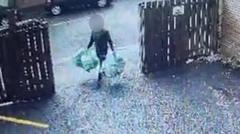
The crisp morning air usually smells of damp earth and coming rain on Blackwood Lane. It is the kind of quiet, narrow country road where neighbors still nod from their tractors and the hedgerows burst with wild blackberries in August. But on a Tuesday morning last November, the view changed.
A monstrous heap of rotting drywall, shredded plastic tarp, torn insulation, and broken ceramic tiles spilled across the green verge. It looked like an explosion in a hardware store. It was ugly. It was jarring. Worse, it felt like a violation.
Fly-tipping—the illegal dumping of waste on public or private land—is often reported in bloodless statistics. Local councils tally up the tons of debris. Bureaucrats calculate the thousands of pounds spent on cleanup efforts. Newspapers print small blurb pieces tucked away on page twelve. But for those who live on the targeted roads, the crime is personal. It is an act of casual contempt that says, Your home is my dumpster.
Most people sigh, complain on a local Facebook group, and wait for the council to clear it away.
Tom Campbell did not.
The Anatomy of an Invasion
To understand why a mild-mannered landscape gardener decided to wage a one-man war against an anonymous dumper, you have to understand the psychology of the modern countryside. Rural spaces are vast, dark, and vulnerable. When night falls, isolated lanes become playgrounds for rogue contractors looking to dodge commercial tipping fees.
It is a calculation of pure greed. A licensed waste disposal site charges by the weight. A dishonest operator charges the homeowner full price to remove the renovation debris, drives ten miles into the darkness, dumps the load in a ditch, and pockets the profit. Pure margin. Zero conscience.
Tom had watched his neighborhood slowly degrade under the weight of this unchecked cynicism. A sofa here. A stack of old tires there. The beautiful lane his grandfather had walked was becoming a corridor of discarded lives.
"You feel completely powerless," Tom says, his hands tightening around a mug of tea. "It happens while you sleep. You wake up, and your environment is ruined, and the people responsible are already miles away, counting their cash. It makes you feel small."
That Tuesday, the scale of the dump was too massive to ignore. It blocked the drainage ditch. If the autumn rains came, the road would flood.
Tom stood in the damp grass, looking at the mountain of trash. Rage is a funny thing. Sometimes it explodes. Sometimes it crystallizes into absolute, cold clarity. He didn't call the council. He didn't post a furious rant online. Instead, he walked back to his house, booted up his laptop, and pulled up the feed from his security cameras.
Sifting the Digital Dust
Hunting a phantom in the dark is tedious work.
The camera overlooking the lane records on a loop. Hours of footage consist of nothing but swaying branches, the occasional ghostly glint of a fox’s eyes, and the headlights of late-night commuters. Tom sat in his kitchen for three hours, fast-forwarding through the silence of the night.
Then, at 2:14 AM, the screen flickered with movement.
A white transit van drifted into the frame. It slowed down. The driver didn’t turn off the headlights, leaving the vehicle idling in a pool of harsh white light. In the grainy night-vision footage, the passenger side door opened. Two figures emerged. They worked with practiced efficiency, throwing heavy bags and loose debris out of the back doors with rhythmic, brutal swings.
Within four minutes, the van sped off, its license plate obscured by a thick layer of intentional mud.
A dead end. Or so it seemed.
Tom refused to let the digital trail go cold. He walked back out to the pile. If the camera couldn’t give him a name, perhaps the trash would. This wasn't an act of forensic genius; it was an act of pure, stubborn defiance. Pulling on a pair of heavy-duty work gloves, Tom began to sift through another man’s garbage.
Discarded waste is intimate. It tells a story of who we are when we think no one is watching. Tom dug through empty takeout containers, sodden newspapers, and scraps of wallpaper. It was unpleasant, smelly, and degrading work.
Then, his fingers hit cardboard.
Deep within a black bin bag, buried beneath shards of plasterboard, was a pristine delivery box from an online clothing retailer. The exterior plastic sleeve was torn, but the paper shipping label inside was perfectly legible. It bore a name. It bore an address.
The destination was a suburban townhouse just four miles away.
The Choice
The standard playbook for a citizen who finds evidence is simple: call the authorities. Deliver the label to the Environmental Agency or the local council enforcement team. Let the wheels of bureaucracy grind.
But those wheels grind incredibly slowly. Often, they don’t grind at all. Proving who actually dumped the waste—as opposed to whose house the waste came from—is a legal minefield. Rogue traders frequently claim they hired a "man with a van" in good faith and had no idea the waste would be fly-tipped. The homeowner gets off with a warning, the rogue driver disappears, and the council tax payers foot the bill for the cleanup anyway.
Tom knew the system was broken. He looked at the address on the label. He looked at the mountain of plasterboard in his ditch.
"I realized that if I handed this over to the council, it would sit in an inbox for six weeks," Tom explains. "The rain would come. The road would flood. The guy who did this would completely forget he ever did it. There would be no lesson. No consequence."
He decided on a different kind of justice. One that was poetic, direct, and entirely undeniable.
Tom called his brother. They hooked a heavy-duty flatbed trailer to the back of Tom’s 4x4. Together, under the grey afternoon sky, they loaded every single piece of the fly-tipped rubbish onto the trailer. They swept up the tiny shards of glass. They scooped up the loose insulation fibers. They left the roadside immaculate.
They drove four miles into the neat, paved streets of the nearby town.
Delivery at the Gate
The address belonged to a semi-detached house with a freshly landscaped front garden. Iron gates stood open. A pristine tarmac driveway led up to a house that was clearly undergoing extensive renovations. The irony was thick enough to choke on. To make their own home beautiful, these people were comfortable making someone else's home a wasteland.
Tom backed the trailer squarely up to the front gate.
He didn't knock on the door. He didn't shout. He didn't seek a confrontation. He and his brother simply unfastened the tailboard, tilted the trailer, and let gravity do the work.
With a thunderous, grinding crash, the mountain of drywall, plastic, and ceramic tiles slid off the flatbed, completely blocking the homeowner's driveway. It formed a perfect, jagged wall of garbage right across the entrance to their property.
Tom stepped off the truck, walked to the front door, and taped the delivery label he had found—the one bearing the homeowner’s own name—right to the top of the pile.
Windows in the neighborhood began to slide open. Curtains twitched. A man in a high-visibility jacket—presumably the contractor hired for the renovation—stepped out of the house, his mouth hanging open in sheer disbelief.
Tom climbed back into the driver’s seat of his 4x4. He looked the contractor dead in the eye, gave a polite, neighborly nod, and drove away.
The Ripple Effect
The story could have ended there, a fleeting moment of petty vengeance on a quiet suburban street. But a neighbor captured the entire return delivery on a smartphone camera. Within twenty-four hours of the video being uploaded online, it had gathered over a million views.
The public reaction was a collective, roaring cheer.
Why did this specific act resonate so deeply across the country? Because it tapped into a profound, universal exhaustion. We live in an era where accountability feels like a relic of the past. Companies dump chemicals into rivers and pay minor fines that represent a fraction of their profits. Individuals anonymous behind screens or tinted car windows break social contracts without a second thought. The average citizen feels constantly squeezed by the bad behavior of others, left to clean up messes they didn't make.
Tom’s actions bypassed the slow, frustrating channels of modern administration. It was a perfect restoration of balance. You dropped this in my yard; I am returning it to yours.
Critics, of course, argued that Tom took a massive risk. Legally, returning fly-tipped waste can technically be classified as fly-tipping itself, regardless of who originally owned the trash. The law does not generally recognize ironies or poetic justice.
Yet, significantly, no charges were ever filed against Tom. The local council issued a statement reminding residents to always report fly-tipping through official channels, but the subtext was clear. Nobody wanted to punish the man who had done the community’s job for them.
As for the homeowner? The mountain of waste disappeared from their driveway by the very next morning, loaded into a properly rented commercial skip.
The View from Blackwood Lane
Six months later, Blackwood Lane is green again. The drainage ditch runs clear with rainwater, and the wild ferns are beginning to reclaim the verge where the drywall once rotted.
Tom still drives past the spot every day on his way to work. He doesn't view himself as a vigilante or a hero. He is just a man who drew a line in the dirt and refused to let it be crossed.
The real victory isn't the viral video or the internet fame. The victory is the silence of the lane at night. Since the morning the trash came home, not a single black bin bag, old mattress, or broken tile has been dropped along Blackwood Lane.
The darkness of the countryside hasn't changed. The lanes are still lonely and unlit. But word travels fast in the shadow economies of rogue trading. The predators of the night now know that somewhere out in the dark, the quiet spaces have eyes, and the earth has a way of spitting back what you try to bury in it.