The first thing you notice isn't the sound of gunfire. It is the smell of burning rubber and the sudden, unnatural silence of the crickets.
In Zapopan, a sprawling suburb of Guadalajara where the wealthy hide behind high stone walls and the middle class sips tequila on breezy patios, Tuesday began like any other humid evening. Then, the city’s pulse stopped. Within minutes, the horizon didn't just darken with the setting sun; it glowed a sickly, chemical orange. Read more on a similar topic: this related article.
The news filtered through WhatsApp groups before it hit the television screens: Nemesio Oseguera Cervantes—the man known to the world and the underworld as "El Mencho"—was dead. He hadn't died of the kidney failure that had long been rumored to be stalking him in his mountain hideouts. He had been taken down in a surgical, high-stakes military raid.
For a fleeting second, there was a collective intake of breath. A monster was gone. But in Mexico, the death of a king is never the end of a tragedy. It is merely the opening credits for a much more violent sequel. Additional journalism by The New York Times delves into similar perspectives on the subject.
The Ghost of the Sierra Madre
To understand why a single death can turn a nation into a tinderbox, you have to understand the shadow El Mencho cast. He wasn't a flashy narco like El Chapo. He didn't give interviews to Hollywood actors or flaunt gold-plated AK-47s on Instagram. He was a ghost, a former police officer who built the Jalisco New Generation Cartel (CJNG) into a paramilitary corporation with the discipline of an army and the ruthlessness of a cult.
When the Mexican army finally pinned him down, they didn't just kill a man. They decapitated a hydra.
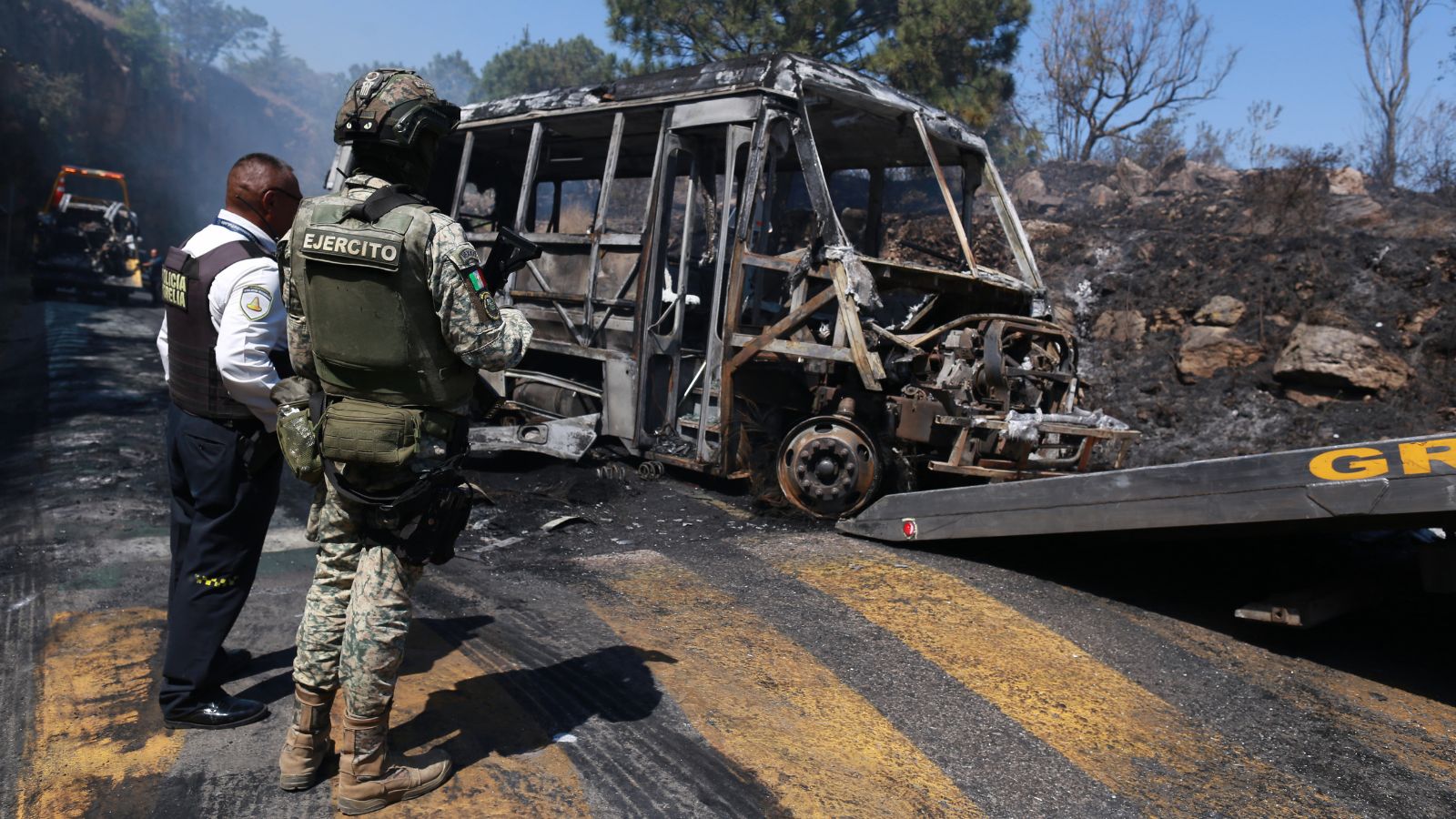
Within an hour of the official confirmation, the "narcobloqueos" began. This is a term that sounds clinical on a news crawl but feels visceral when you are behind the wheel of a car. A narcobloqueo is the art of seizing a city’s arteries. Men with masks and long guns step into the middle of the highway, pull drivers from their buses and delivery trucks, and set the vehicles on fire.
Imagine you are driving home from work, thinking about dinner, when a city bus is flipped and ignited fifty yards in front of your bumper. The heat hits your windshield. The black smoke chokes the air. You aren't just stuck in traffic; you are a hostage to a message. That message is simple: If we cannot have our leader, you cannot have your peace.
The Mechanics of Chaos
Violence of this scale is rarely random. It is a calculated performance.
The CJNG operates on a franchise model. They have cells in nearly every state in Mexico and deep reach into the United States and Europe. When the "Patrón" falls, every lieutenant in every plaza feels the ground shift. They have two choices: prove their loyalty to the fallen brand by burning everything down, or prepare to fight their own brothers for the empty throne.
Consider the logistics of a nationwide eruptive event. To burn thirty vehicles and attack twenty convenience stores simultaneously across four states—Jalisco, Guanajuato, Colima, and Michoacán—requires a level of communication that rivals most legitimate logistics companies.
The "monstruos"—improvised armored trucks plated with steel—rolled out of hidden warehouses. In cities like Irapuato and Celaya, the OXXO convenience stores became targets not because of their inventory, but because they represent the presence of the state and "normal" commerce. By turning a place where you buy milk into a charred skeleton, the cartel proves that the government’s promise of security is a polite fiction.
The Invisible Stakes for the Ordinary
While the headlines focus on the body counts and the military maneuvers, the true cost is paid in the quiet corners of Mexican life.
There is a woman in Tlaquepaque—let’s call her Elena. She runs a small taco stand. When the sirens started and the streets emptied, Elena didn't just lose a night of business. She lost the sense of the "invisible ceiling." In Mexico, there is a tacit agreement in many regions: if you stay out of the business, the business stays away from you. But when a leader like El Mencho is killed, that ceiling collapses.
The power vacuum means that for the next six months, every local gang will be "auditioning" for the new bosses. This means more extortions, more "piso" (protection money), and more "levantones" (disappearances). The violence isn't just between soldiers and sicarios; it is a weight that sits on the chest of every shopkeeper, every student, and every parent.
The government celebrates a "neutralized target." The people prepare for a long winter of fragmented war.
The Myth of the Kingpin Strategy
For decades, the United States and Mexico have relied on the "Kingpin Strategy." The logic is straightforward: kill the head, and the body dies. It works for a corporate takeover, but it has proven disastrous for a decentralized insurgency.
History provides a brutal lesson. When the Guadalajara Cartel was broken up in the 80s, it gave rise to the Sinaloa and Tijuana cartels. When the Zetas lost their leadership, they splintered into dozens of hyper-violent local cells that turned to kidnapping and human trafficking because they no longer had the connections to move tons of cocaine.
By killing El Mencho, the Mexican army has removed a disciplined, if bloodthirsty, CEO. What replaces him won't be a vacuum. It will be a dozen smaller, more desperate, and less predictable versions of him.
The statistics back this up. In the 48 hours following the raid, the national homicide rate spiked by 14%. But numbers don't capture the sound of a mother screaming because her son didn't come home after his shift at the burned-out warehouse. They don't capture the sight of an abandoned highway, littered with the blackened husks of transit buses, looking like a scene from a post-apocalyptic film.
The Resilience of the Sun
Despite the terror, there is a defiance in the Mexican spirit that is hard for an outsider to grasp.
The morning after the worst of the riots, the smoke was still curling from a charred sedan on the Periférico, one of Guadalajara’s main ring roads. Yet, just a few blocks away, a street sweeper was already out. A cafe owner was scrubbing soot off his storefront. People were walking to the metro, their faces set in a mask of grim determination.
This is the tragedy of habituation. You learn to live around the violence. You learn which streets to avoid after 9:00 PM. You learn that a certain type of SUV with tinted windows gets the right of way, every time, no questions asked.
But there is a limit to what a society can absorb. The death of El Mencho is a milestone, yes. It is a tactical victory for a government that desperately needed one. But for the people living in the shadow of the CJNG, it feels less like a victory and more like a change in the weather—a shift from a steady, oppressive heat to a chaotic, unpredictable storm.
The raid was successful. The target is gone. The army has moved on to the next objective.
But in the neighborhoods where the fires burned, the residents are left to pick through the ash. They know that the man is dead, but the machine he built is already searching for a new heart. And a machine that runs on blood and gasoline doesn't stop just because you changed the driver.
The sun rose over Jalisco the next day, struggling to pierce through a lingering haze of smoke and exhaust. On the radio, a government official spoke of "restored order" and "the rule of law." Outside, a young man on a motorbike watched a military convoy pass, his hand hovering near a burner phone in his pocket, waiting for a call from a new boss he hadn't met yet.
The cycle didn't break. It just sped up.
Would you like me to analyze the historical parallels between the CJNG's rise and the fragmentation of the original Guadalajara Cartel?