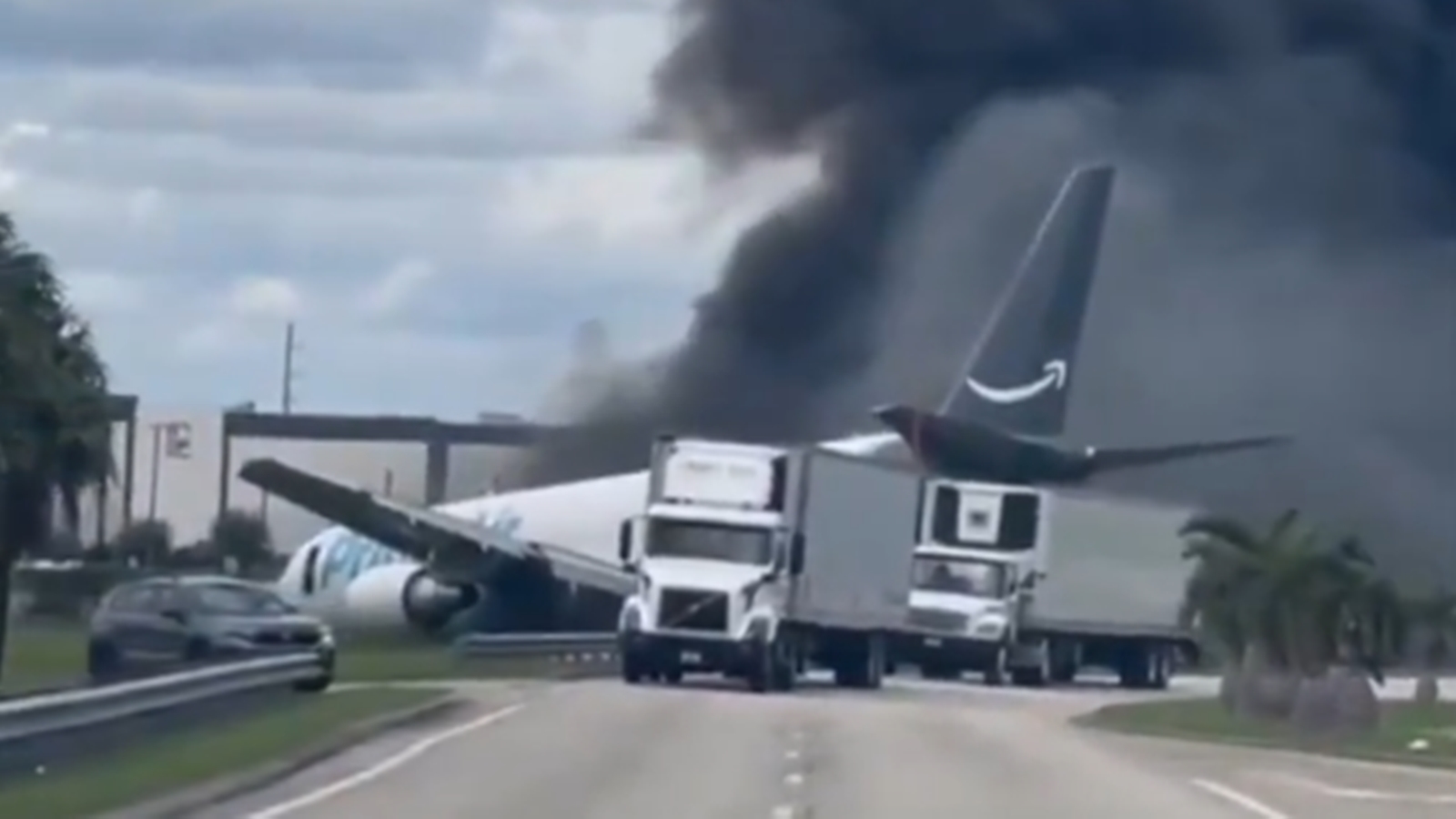
Rain on the tarmac has a specific sound. It is a dull, relentless hiss that softens the jagged edges of a working airfield, turning the harsh glare of floodlights into blurry smears of yellow and blue. At three in the morning, Miami International Airport is rarely quiet, but it can feel vast. Concrete stretches out into the dark like an open ocean. Metal birds sleep in their hangars. Others roar down the gray pathways, chasing deadlines that stretch across continents.
Then comes the fracture.
Picture, if you will—and this is a purely hypothetical reconstruction drawn from the cold physics of that night—a Boeing freighter heavy with cargo. Not passengers. Not vacationers clutching boarding passes or children pressing greasy noses against cabin windows. Just boxes. Pallets. The invisible commerce of a modern world that demands its packages before the sun clears the horizon. The weight is real, though. Steel and freight do not care what day of the week it is. They only obey gravity and momentum.
When that aircraft failed to stop, when the screaming tires found only wet grass and perimeter fencing instead of safe asphalt, the abstract statistics of aviation safety dissolved into pure, unfiltered terror. Five lives. Snuffed out not in the romantic clouds of high-altitude cruising, but on the stubborn, unforgiving earth of Florida.
We talk about logistics as if it were a clean science. We map supply chains with neat arrows on whiteboard presentations. We track parcels on glowing smartphone screens, watching little green dots move across digital maps from Memphis to Miami, secure in the faith that our shoes, our electronics, our midnight orders will arrive precisely when promised. But logistics is made of flesh and bone. It is maintained by mechanics with grease under their fingernails, loaders working third-shift adrenaline spikes, and flight crews who kiss their families goodbye in the dim hours before dawn.
Consider the silence that follows a disaster of this magnitude. Not the absence of sound—emergency sirens soon cut through the humid night, flashing red and white against the fuselage—but the sudden, deafening silence of a routine shattered. One moment, a crew is running through pre-flight checklists, trading tired jokes about bad airport coffee. The next, the world narrows to twisted metal, leaking fuel, and the frantic, hopeless math of first responders trying to claw through wreckage.
We demand speed above all else. That is the hidden engine driving every commercial flight that departs in the dead of night. The digital marketplace trained us to expect the impossible. Order by ten, receive by eight. Behind that simple promise lies a grueling infrastructure of overnight flights, rushed turnarounds, and weary crews pushing against the limits of fatigue. No single cargo manifest is worth a human life, yet the collective pressure of a global economy never sleeps, never blinks, and rarely pauses to look at the human cost hidden in the ledger.
Five people went to work that night. Five people stepped onto a flight deck that had been cleared a hundred times before. They were sons, daughters, partners, friends. They carried memories, inside jokes, anxieties about bills, and plans for the weekend that will now never arrive.
When the sun finally rose over Miami, burning off the residual fog and illuminating the scorched earth near the runway perimeter, the cargo was still there. Packages spilled from the broken hull, indifferent to the tragedy surrounding them. Cardboard boxes waiting for delivery.
That is the haunting paradox of our modern commercial machine. It moves forward with merciless indifference, carrying our demands across oceans and continents, while the people who operate the machinery remain fragile, finite, and profoundly vulnerable.
As investigators now sift through blackened flight data recorders and piece together the final agonizing seconds in that cockpit, the rest of us will wake up, open our phones, and track our next delivery. But the next time that green dot moves across the screen, remember the rain on the Miami tarmac. Remember the weight of the steel, the invisible hands that keep the world turning, and the heavy price paid in the dark when the margins for error finally run out.