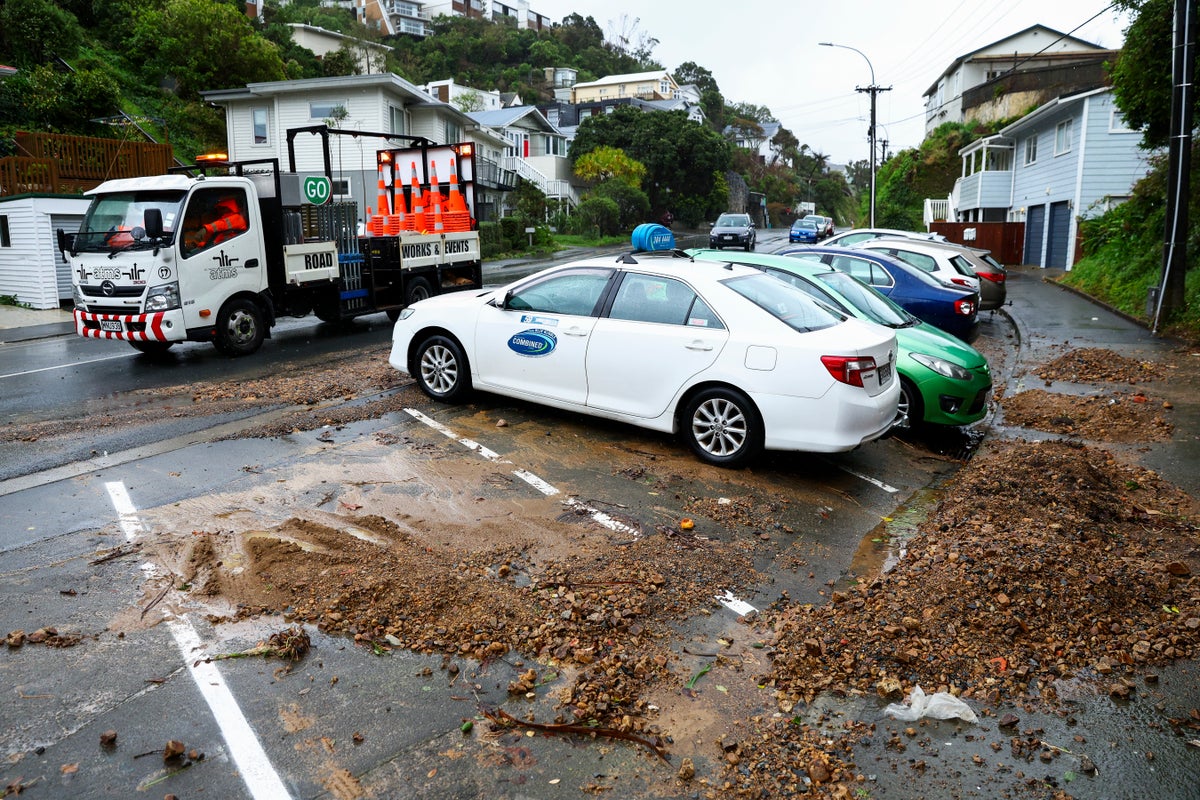
The glass always rattles first. It is not a dramatic sound, not initially. It begins as a low, rhythmic vibration that travels up through the floorboards of the villas clinging to the hills of Wellington. You feel it in your molars before you hear it.
On the eastern bays of New Zealand's capital, where the tarmac of the marine drive sits just inches above the high-tide mark, the ocean is usually a neighbor you tolerate. It smells of salt and rot; it brings the gulls and the biting southerly winds straight from the ice shelves of Antarctica. But on nights like this, the neighbor stops knocking. It kicks the door down.
The official bulletins from the emergency management officials are always sterile. They speak of significant wave heights, of meteorological depressions, and of mandatory evacuation orders for low-lying coastal properties. They use words like "inundation" and "precautionary measures."
But statistics do not capture the sound of a plastic wheelie bin scraping down a dark street, propelled by a wall of black water. They do not capture the specific panic of a mother looking for her cat in the dark while the police sirens wail at the end of the spit.
This is what happens when a city built on the edge of the world forgets that the water always wins.
The Weight of Two Oceans
Wellington sits inside a geological vice. To the west is the Tasman Sea; to the east, the vast, uninterrupted expanse of the Pacific. When a massive low-pressure system parks itself off the coast of the South Island, it acts like a giant pump, forcing millions of tons of water northward.
All that kinetic energy has to go somewhere. It gets funneled directly into Cook Strait, a narrow choke point between the two main islands of New Zealand. Think of it as squeezing a massive water balloon. The pressure builds, the water rises, and the only exit strategy for the sea is to push into the harbor.
When that rising tide collides with a storm surge, the result is what oceanographers call dangerous swells. To the people living in Breaker Bay or along the beachfront of Lyall Bay, it means six-meter walls of water moving at forty miles an hour, aimed directly at their living rooms.
Consider a hypothetical resident named Sarah. She bought her cottage in the nineties, back when the beach was a playground rather than a threat. She knows the exact sequence of a coastal emergency. It begins with the wind shifting to the south, turning the air so cold it hurts to breathe. Then comes the foam. Long before the actual waves cross the road, the sea sends scouts. White, soapy spume accumulates against the seawalls, blowing across the asphalt like radioactive snow.
By three in the afternoon, the council trucks arrive. They bring sandbags, but everyone knows the sandbags are just a psychological placebo. You cannot stop the Pacific Ocean with fifty pounds of dirt wrapped in polypropylene.
By five, the text alerts start buzzing on every phone in the zone.
The message is simple: Leave now.
The Anatomy of an Evacuation
Evacuating a home is an exercise in brutal prioritization. What do you save when the sea is coming?
The insurance documents are always first, stuffed into a waterproof sleeve with passports and birth certificates. Then the laptops. But then your eyes wander across the room, and the logic breaks down. The framed print bought on a honeymoon in Italy. The height markings scratched into the pantry doorframe. The heavy, worthless ceramic bowl made by a child in primary school.
You realize, with a sudden, sickening clarity, that a house is just a box holding a life, and the box is suddenly very fragile.
Outside, the air is thick with the smell of kelp and diesel. The city buses have stopped running. The police have blocked the coastal roads with flares and flashing lights, their orange jackets glowing in the driving rain.
There is a strange, subdued camaraderie among the evacuating neighbors. People who haven't spoken in six months are suddenly helping each other load elderly golden retrievers into the backs of station wagons. No one shouts. The wind is too loud for shouting anyway. You just nod, slam the car door, and join the slow, red snake of taillights crawling up the hills toward the safety of the ridge lines.
From the high vantage points of the city, looking down into the harbor, the view is terrifyingly beautiful. The streetlights along the waterfront flicker and go dark as the saltwater hits the transformers. The surf looks like a white, churning monster devouring the edge of the city. Every few seconds, a wave hits the seawall with enough force to send spray exploding thirty feet into the air, catching the headlights of the abandoned cars below.
The Myth of Permanent Infrastructure
We live with the comforting illusion that concrete is permanent. We pour it, reinforce it with steel rebar, and assume we have drawn a line in the sand that nature must respect.
Wellington is a city built on reclaimed land. Much of the central business district sits on what was once water, filled in after a massive earthquake in 1855 lifted the shoreline out of the sea. The city has always wrestled with its geography, carving roads out of solid rock and building houses on slopes that seem to defy gravity.
But the ocean does not care about engineering prowess. Saltwater is a solvent; it finds every crack, every weakness, every poorly sealed joint in the seawalls. When a wave crashes against a structure, it compressed the air trapped inside the crevices. That compressed air acts like dynamite, blowing the concrete apart from the inside out.
The real danger is not the water itself, but what the water carries. The sea transforms from a liquid into a battering ram loaded with driftwood, rocks, and chunks of asphalt torn from the coastal highways. A single log, lifted by a swell and thrown against a structural support, can do more damage than ten thousand tons of clean water.
By midnight, the harbor is no longer a harbor. It is a washing machine.
The Morning After the Tide
The true cruelty of a storm surge is the silence that follows.
When the sun comes up over the Remutaka ranges, the wind has usually died down to a bitter whistle. The water has receded, leaving behind a gray, glistening wasteland.
The road is gone, replaced by a field of smooth river stones and shattered asphalt. The seawall looks like a row of broken teeth.
Residents walk back down the hills on foot, because the roads are still closed to vehicles. They move slowly, wrapped in oversized coats, clutching thermoses of lukewarm coffee. They look like survivors of a silent bombardment.
Sarah finds her cottage still standing, but the front garden is buried under six inches of gray silt. A piece of driftwood the size of a telephone pole is wedged under her front porch. The salt has already killed the hydrangeas she planted in the spring, their leaves turned a distinctive, burnt black.
She stands on the porch and looks out at the water. The harbor is calm now, a beautiful, deceptive blue, glittering in the winter sunshine as if nothing had happened. The neighbor has gone back into his house.
But everyone knows he will be back. The high-tide marks on the cliffs are a little higher every decade. The storms are a little more frequent. The warnings from the weather bureau are a little more urgent each winter.
You realize that living here is not a permanent arrangement. It is a lease, and the landlord is raising the rent every year. You pay it in anxiety, you pay it in sandbags, and occasionally, on dark nights when the glass begins to rattle, you pay it by walking away.