Ask any die-hard fan from Raleigh to St. Louis about the cold dread of a blackout, and they will tell you it has nothing to do with the weather. It happens on clear Tuesday nights. You settle into the worn cushions of your favorite armchair, pull up the streaming app you pay for every single month, and click on the game. Then, a message pops up like a digital brick wall: This event is not available in your region.
Distance has nothing to do with it. You might live three miles from the arena. You can hear the distant, muffled roar of the horn echoing through the humid southern air when the home team scores. Yet, on your screen, absolute nothingness.
For years, watching your local hockey team felt like navigating a minefield of cable packages, regional sports network fees, and infuriating blackout restrictions designed in an era before streaming even existed. You wanted to support the club. You had the money for a subscription. But the system seemed actively engineered to keep you out.
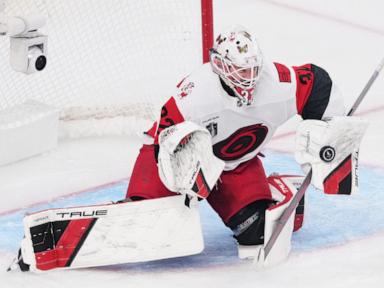
Then came a quiet shift. A quiet alignment of pixels and broadcasting rights that just changed everything for six National Hockey League markets, including the Carolina Hurricanes.
Amazon Prime Video signed a deal to become the local home for over-the-air broadcasts of regional NHL games. Let that sink in. The same platform that delivers your household paper towels and Tuesday-night thrillers is now piping live, local hockey straight to your living room without requiring a bloated cable bundle.
To understand why this matters, you have to remember what it was like to be a fan trapped in the blackout zone. Take Mark, a hypothetical software engineer living just outside Raleigh who has held season tickets for a decade. When Mark travels for work, he can watch his team easily on national streaming platforms. But when he sleeps in his own bed on a Thursday night? He is blocked. To watch the local broadcast legally, he was forced to maintain a traditional television package he never used for anything else. He was paying twice for the privilege of proximity.
Regional sports networks were built on a century-old economic model. They relied on carriage fees—charging every single cable subscriber a few dollars a month, whether they watched sports or not. It was a massive, stable cash cow. But as cord-cutting accelerated, that cow stopped producing. Networks went bankrupt. Blackouts grew more confusing. Fans grew furious.
When a traditional broadcasting structure collapses, it leaves a vacuum. And sports leagues are finding that vacuum terrifying.
Enter the tech giants. Amazon does not care about legacy cable boxes. They care about prime real estate on your home screen. By picking up local broadcast rights for teams like the Hurricanes, they are solving a fundamental friction point of modern fandom: accessibility.
Consider what happens next in a typical household. The kids are asleep. The dishes are done. You open your phone or your smart TV. You click the app you already use. The broadcast is just there. No special login. No auxiliary sports tier. Just local hockey, delivered with the same frictionless ease as ordering a midnight pizza.
This move does something profound for the culture of the sport. Hockey has always fought an uphill battle for mainstream cultural saturation in warmer American climates. You cannot grow a generation of fans if those fans cannot watch the games without an engineering degree in cable subscription tiers. By sliding onto a platform that lives in nearly every American household, the sport lowers the barrier to entry to absolute zero.
Skeptics will point out the corporate consolidation at play here. They will warn about the creeping dominance of massive tech conglomerates controlling every aspect of our media consumption. And they are right to worry. When the infrastructure of local sports shifts from regional networks to a trillion-dollar global retailer, the power dynamic changes entirely. We are trading one set of gatekeepers for another.
Yet, for the fan sitting in Section 112 or on a battered sofa in a North Carolina suburb, the immediate reality is simpler. The game is back on.
The screen no longer goes dark because of a zip code. The horn blows, the camera pans across the ice, and for a few hours, the distance between the fan and the franchise vanishes into thin air.