The screen was black. Not the soft, breathing black of a sleeping phone, but the terminal sort. The absence of light.
Most people think digital theft looks like a movie. They picture a kid in a basement, a neon green terminal flashing in the dark, a frantic clatter of keys while a digital progress bar inches toward one hundred percent. They imagine the victim miles away, blissfully unaware until a polite bank teller points out a missing decimal point.
Reality is quieter. It smells like stale coffee and the steady hum of a desktop tower at three in the morning. It feels like the slow, sickening drop in your stomach when you realize the lock on your front door was made of paper.
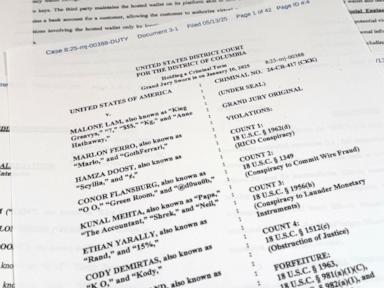
A Washington, D.C., resident learned that lesson in a way that permanently rewrote their understanding of safety. Two hundred and forty million dollars. Say the number out loud. It sounds like a phone number for a fictional government agency or the budget of an independent film. Instead, it was a life. Or rather, a collection of choices, years of grinding effort, and a future carefully stacked into digital wallets, all vanishing into the ether because of a man willing to trade human trust for lines of code.
His name became attached to a plea deal. The courts call it a confession. We call it an accounting.
To understand how a fortune built on cryptographic security can dissolve into nothing, you have to understand how we got here. Bitcoin was promised as the great equalizer. No middlemen. No central banks. Just pure, unadulterated math guarding your assets against the whims of institutional failure. But math has a dark twin. Math does not care who is typing the commands. Math treats a rightful owner and an impostor with identical, chilling neutrality.
If you lose the key to a traditional bank vault, a manager with a clipboard and a notary public can eventually help you sort it out. You prove who you are. You show your face. You sign your name in heavy blue ink. But in the architecture of decentralized currency, there is no manager. There is no customer service hotline to call when your screen goes dark and your balance reads zero. There is only the key. And if someone steals that key, they don't just break into your house; they legally and mathematically become you.
Consider the human cost of that abstraction. When a thief steals cash from a register, the register is empty. When a thief steals two hundred and forty million dollars in digital assets through sophisticated social engineering and SIM-swapping schemes—a hypothetical scenario based on how these massive heists typically unfold in the wild—they aren't just taking numbers. They are stealing sleep. They are stealing the ability to trust the little glass rectangle we all carry in our pockets.
I remember staring at my own hardware wallet for the first time. It is a tiny, unassuming plastic stick that looks like a cheap USB drive from ten years ago. Holding it feels absurd. You think: This piece of plastic holds everything I've ever worked for. That thought is a heavy thing to carry through a crowded grocery store or a quiet morning walk. You look at strangers differently. You wonder if the person in line behind you at the coffee shop knows how fragile your financial skin really is.
That is the invisible tax of the digital age. Paranoia.
The man who orchestrated the D.C. theft did not wear a mask. He didn't carry a crowbar. He used manipulation, patience, and the fundamental vulnerability that underpins every human interaction: our desire to believe that things are secure because they look modern.
We build gleaming glass towers for our data, forgetting that glass shatters if you hit it with the right frequency.
When the guilty plea was entered, the headlines rolled past like distant weather reports. Man Pleads Guilty to Orchestrating Theft. The internet read it, shrugged, and scrolled down to the next distraction. Two hundred and forty million dollars reduced to a three-paragraph blurb between sports scores and weather updates.
We have become numb to scale. Billions are spent, stolen, and traded with such casual frequency that our brains refuse to process the weight. We treat these crimes as abstract weather patterns. A digital storm off the coast of a blockchain we do not understand.
But behind every stolen seed phrase, behind every hijacked phone number, behind every broken cryptographic lock, there is a person sitting in an empty room, staring at a black screen, wondering how they are going to explain this to the people who depend on them.
The courts will hand down a sentence. The lawyers will file their briefs. The blockchain will keep ticking, block by block, ignoring the human wreckage left in its wake. But the screen remains dark. And the lock, once picked, leaves a draft that never quite goes away.