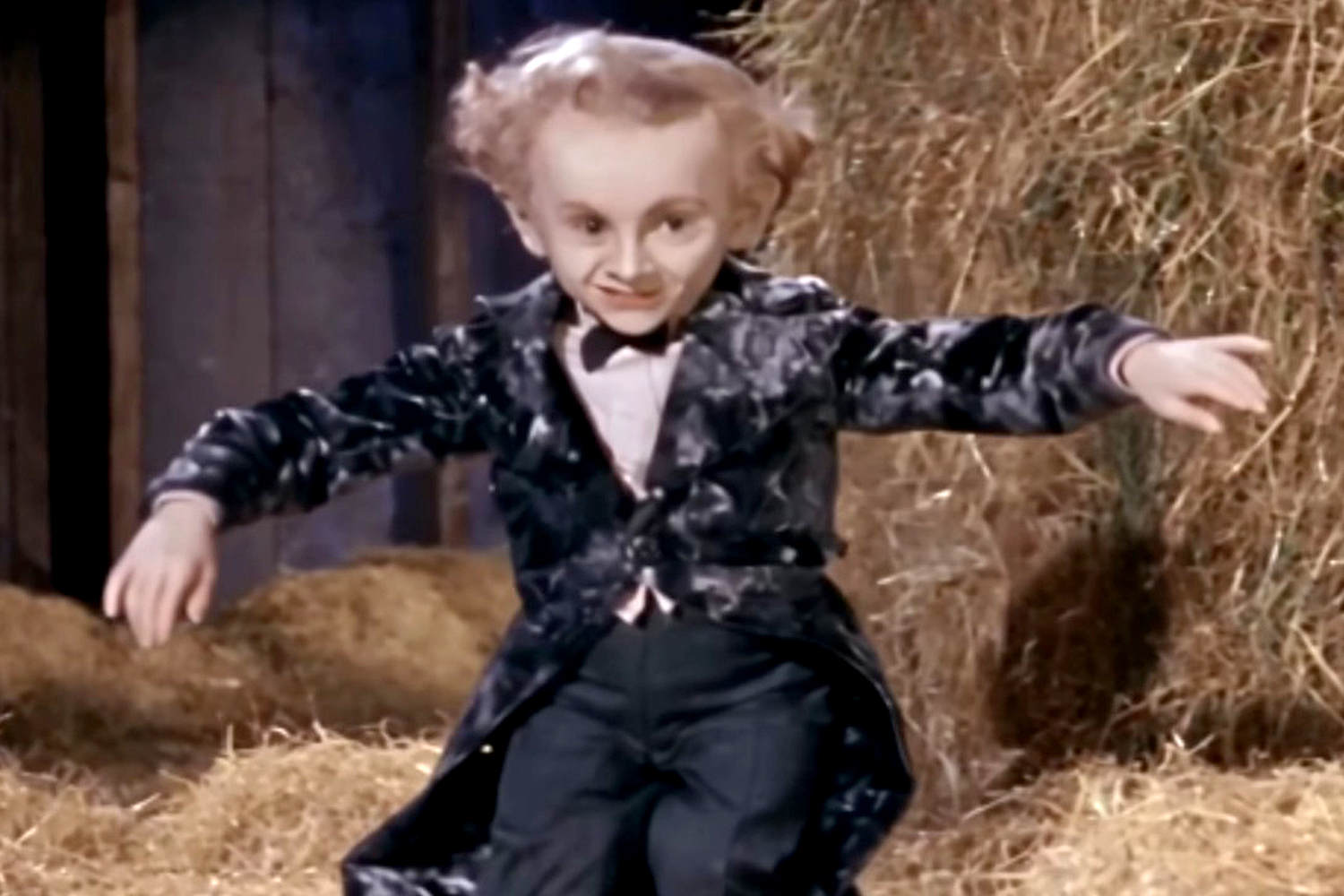
Midnight. The glow of a smartphone screen cuts through a dark bedroom, illuminating tired eyes. Millions of people are scrolling. They are not looking for news. They are looking for an escape. Instead, they find a shadow.
A pale, gaunt face stares back from the timeline. It is grinning—not with human warmth, but with the hollow, mathematical perfection of an artificial intelligence trying very hard to understand human malice. The internet calls it the Rumpelstiltskin meme. Across social media platforms, this generated specter of the old Grimm antagonist is unsettling users, sparking viral panic, and forcing a sudden, uncomfortable reckoning with what happens when machines learn how to evoke childhood dread. Learn more on a connected subject: this related article.
Fear is an old currency. But the minting process has changed.
Consider what happens when a community encounters an image that feels entirely wrong. Not poorly drawn. Not glitchy in the way early digital art used to be. It is crisp, high-definition, and hyper-realistic, yet utterly foreign. The eyes catch the light in a way that triggers a primal alarm system. Long before we had generative networks, we had instincts. Those instincts were forged in environments where things that looked almost human—but not quite—meant danger. Additional analysis by MIT Technology Review explores related perspectives on this issue.
We forgot those instincts for a while. We got used to automated smoothness. We welcomed the era of clean corporate vectors, hyper-filtered vacation photos, and polite chat assistants that apologize too much. We traded our skepticism for convenience.
Then the machine learned how to smirk.
The digital panic surrounding this particular meme did not erupt from nowhere. It tapped straight into a shared cultural vulnerability. Rumpelstiltskin is the original dealer in unfair bargains. He is the creature who spins straw into gold, but demands your firstborn child in return. He represents the terror of hidden clauses, unequal exchanges, and forces greater than ourselves taking things we hold dear while we sleep.
When an AI-generated rendering of that specific bargain-maker starts haunting feeds, the metaphor stops being literary. It becomes literal.
Think about the architecture of modern attention. Algorithms do not care whether you love a post or hate it; they care only about the friction it causes in your mind. Friction makes you pause. A pause becomes a share. A share becomes an epidemic. The Rumpelstiltskin meme worked because it weaponized uncanny valley psychology against an audience already exhausted by the sheer volume of synthetic content flooding their daily lives.
People were not just scared of a creepy picture. They were scared of how easily the picture bypassed their rational defenses.
I remember the first time I saw an image generated by a diffusion model that made my stomach drop. It was not a monster. It was an ordinary suburban street, rendered with such eerie fidelity that my brain spent ten precious seconds trying to figure out which neighborhood it was, only to realize that every single car door had the wrong number of handles and the shadows fell in two different directions at once.
That is the true terror of the current technological transition. It is not that the machine is going to destroy us with lasers or superintelligence. It is that the machine is learning how to counterfeit our shared cultural memory.
When a fairy tale villain can be synthesized in three seconds with a prompt typed into a browser window, the boundary between folklore and fabrication dissolves. We are outsourcing our nightmares to servers in windowless warehouses.
The internet's reaction to the meme was loud, erratic, and deeply human. People did what humans have always done when confronted with the incomprehensible: they made jokes. They remixed the image. They put party hats on the digital goblin. They turned the existential dread into TikTok audio clips. Humor has always been the shield we use against the dark. If we can laugh at the synthetic monster, we regain control of the room.
Yet the underlying unease remains.
Every time a new generative model pushes the boundary of realism, we take one step further away from a shared consensus of what is real. Today it is a grotesque, viral fairy tale figure making the rounds on X and Reddit. Tomorrow it is something far harder to dismiss.
The screen goes dark as the phone drops onto the mattress. The room is quiet. Outside, the wind rustles the trees, casting long, shifting shadows across the floor. For a brief second, you find yourself wondering what the machine is dreaming up right now, in the dark, while the rest of the world sleeps.