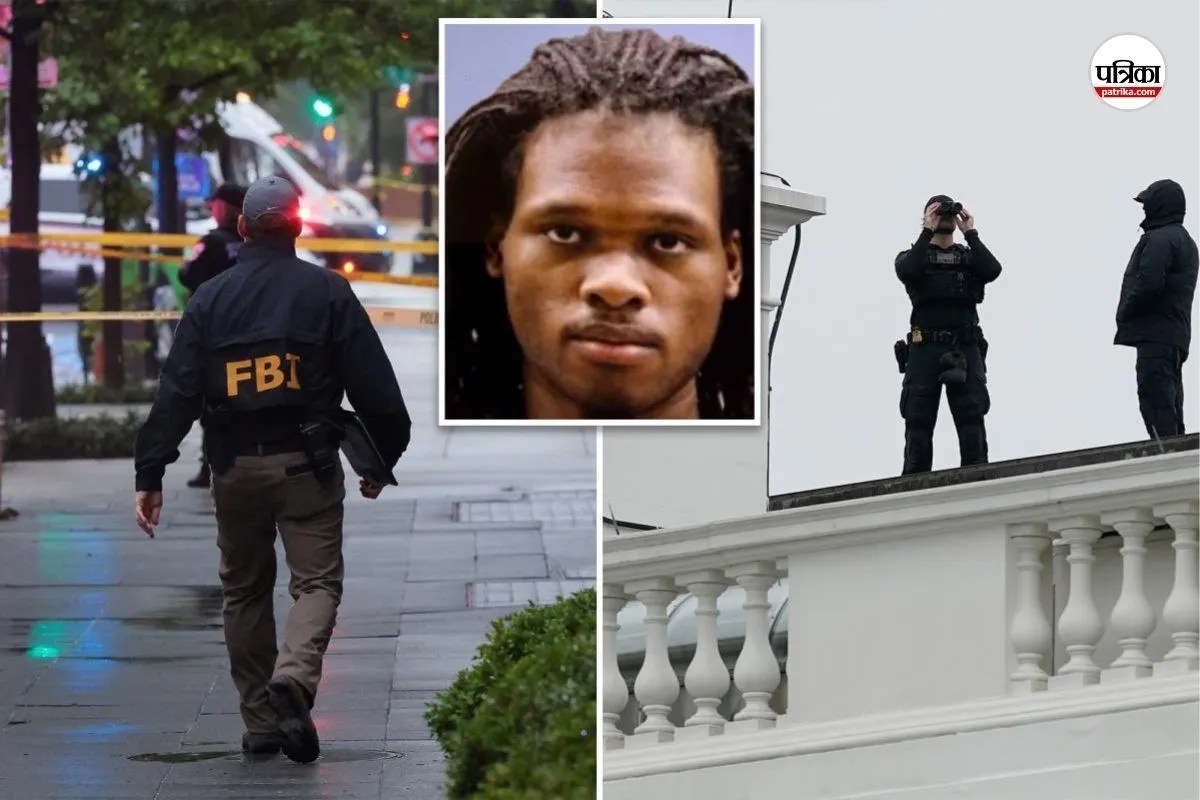
The air around Lafayette Square usually tastes of exhaust, roasted nuts from the street carts, and the heavy, humid history of Washington, D.C. But on a crisp night, that familiar backdrop shattered. Sirens didn’t just wail; they screamed. Blue and red lights sliced through the darkness, painting the white marble of the executive mansion in manic, rhythmic strokes.
Security barricades are built to withstand immense pressure. They are designed to be a definitive stop sign for the world's chaos. Yet, a vehicle had just crumpled against that very perimeter. Inside the vehicle was a man fueled by a delusion so profound it warped reality for everyone within a three-block radius.
We often view threats to global leaders through the lens of cinematic espionage—highly trained operatives with blueprints and suppressed rifles. The reality is far more terrifying. It is unpredictable. It is loud. It is a solitary individual wrapped in a cloak of internet-born madness, standing outside the gates, demanding the world look at him.
The Crashing Halt
Imagine standing watch at the White House complex. You have memorized every shadow, every shift in the wind, every regular tourist who lingers a second too long. Then comes the screech of tires. The dull, sickening thud of metal meeting reinforced steel.
The Secret Service moves with a terrifying, synchronized speed. Within seconds, guns were drawn, perimeter locks were engaged, and the driver was pulled from the wreckage.
His name was Anthony Gonzalez. He was twenty-five years old.
In the immediate aftermath of a security breach, the public waits for a motive. We look for political alignment, foreign backing, or a calculated manifesto. Instead, federal investigators uncovered a psychological funhouse mirror. Gonzalez wasn't just an angry citizen with a grievance. He was a man living in an entirely different timeline, one where he was the protagonist in a cosmic war of identities.
The Rebirth of a Ghost
During the interrogation, the narrative took a bizarre, chilling turn. Gonzalez didn't just deny his own identity; he claimed the mantle of one of the most infamous names in modern history.
He told federal agents he was Osama bin Laden.
Not a follower. Not an admirer. The man himself.
To the rational mind, this is an absurdity that invites a smirk. The Al-Qaeda leader was killed in a compound in Abbottabad in 2011. The mathematics of time and biology make Gonzalez's claim impossible. But to Gonzalez, the reality was absolute. This is the modern face of security threats: the weaponization of profound delusion. When a person believes they are a historical ghost, they no longer operate under human laws or logic. They are fighting a holy war inside their own mind, and the White House is the ultimate stage for their final act.
Consider what happens next when law enforcement dives into the digital footprint of such a mind. The trail didn't begin at the White House gates. It began months earlier in the quiet corners of the internet, where isolation breeds radical certainties. Gonzalez had been broadcasting his intent into the digital void, a flare gun fired into a dark forest, waiting for someone to notice.
A Trajectory of Threats
The erratic behavior wasn't confined to historical identity theft. Gonzalez had also directed his venom toward former President Donald Trump.
Threatening a president or a presidential candidate is a federal felony, a line most citizens understand carries catastrophic consequences. But when you believe you are a deceased global terrorist leader, a federal felony is just a footnote. The threats weren't nuanced. They were direct, violent, and urgent.
This revelation shifts the narrative from a simple traffic accident near a government building to a targeted, ideological assault. It forces us to confront a uncomfortable truth about the nature of modern political violence. The targets remain the same—the highest offices in the land—but the actors are increasingly untethered from any collective political movement. They are lone satellites spinning out of orbit, pulled in by the gravity of high-profile figures.
The Secret Service logs thousands of threats a year. Most are vetted, tracked, and neutralized before the person ever buys a ticket to the nation's capital. The system works through a quiet, invisible net of psychological profiling and digital surveillance. But every so often, someone slips through the mesh. Someone gets in a car. Someone drives until the white pillars of the executive mansion appear through the windshield.
The Invisible Stakes
The true cost of an event like this isn't measured in the dented metal of a security barrier or the cost of a court trial. It is measured in the invisible tightening of the noose around public spaces.
Every time a radicalized individual forces their way toward a symbol of democracy, the space between the people and their government shrinks. Sidewalks get closed. Barricades move further back. The architecture of openness transforms into the architecture of a fortress.
It is easy to dismiss Gonzalez as an anomaly, a singular broken gear in a massive machine. But he represents a growing demographic of the dispossessed—individuals who find community not in their neighborhoods, but in the radical echo chambers of the web, where the line between fiction and friction is permanently blurred. They do not want to change policy. They want to shatter the glass.
The legal system will process Gonzalez. The psych evaluations will be filled out in triplicate. The courtrooms will echo with legalese regarding competency and intent. He will likely spend a very long time in a place where the gates lock from the outside, far away from the halls of power he sought to disrupt.
The sirens eventually faded that night. The flashing lights were switched off, leaving only the standard, pale yellow glow of the streetlamps illumination on Pennsylvania Avenue. The tourists returned the next morning, snapping photos, peering through the iron fences, completely unaware of the phantom that had tried to breach the gates just hours before. The city washed away the skid marks. The world moved on to the next news cycle. But the barrier remains, slightly scarred, a silent testament to the thin, fragile line between orderly democracy and the chaos waiting just outside the perimeter.