The zinc counter at Le Carillon was slick with spilled Kronenbourg and the sweat of sixty people who had spent the last two hours breathing the same stale, electric air. Outside, the Canal Saint-Martin was a dark ribbon cutting through the tenth arrondissement, reflecting the neon green of a pharmacy sign and the flickering blue light of a television screen propped up in a bakery window next door. Inside, nobody looked at the water. Nobody looked at their phones. They looked at the clock.
Eighty-eight minutes.
Football is often described through the cold calculus of statistics. Possession percentages. Expected goals. Passing accuracy. But when a nation reaches the quarter-finals of a World Cup, those numbers dissolve into something primitive. They become a tightening in the chest. A collective holding of the breath that stretches from the packed bars of Belleville to the quiet apartments of the sixteenth.
Consider the sheer weight of what was happening. Eleven men in blue shirts were running across a patch of grass thousands of miles away, yet their movements governed the pulse of an entire capital city.
Every touch of the ball was a collective inhale. Every defensive clearance, an explosive release of air.
The Anatomy of the Ninety Minutes
To understand why Paris erupted, you have to understand the slow, agonizing build-up of the evening. A football match of this magnitude is not just a game; it is a psychological endurance test.
By mid-afternoon, the city had already begun to alter its rhythm. The usual hurried clatter of the metro felt different. People were looking at each other, acknowledging the shared anxiety with brief, tight nods. The cafes were filling up three hours before kickoff, the metal chairs dragged onto pavements to face makeshift screens.
The match itself started as a tactical chess game. France was favored, but favoritism is a dangerous ghost in international sports. It breeds complacency in the stands and suffocates creativity on the pitch. The opponent was stubborn, organized, and entirely unafraid of the French attack.
In the first half, every French possession felt heavy. The ball moved across the backline with a deliberate, agonizing caution. In the bars, the chatter died down to a low, nervous murmur.
"They're playing too slow," someone muttered near the espresso machine.
Then came the breakthrough. A sudden, vertical flash of brilliance that carved open the opposition's midfield. A cross delivered with impossible curl. A header that met the net with a sound that was lost instantly beneath a roar that shook the glass windowpanes.
Joy in these moments is not a gradual realization. It is an immediate, violent transformation. Total strangers collided in embraces that lasted a second too long. Beer rained down on leather jackets. For a brief moment, the ambient anxiety of modern life was completely wiped away, replaced by a pure, uncomplicated euphoria.
But one goal is a fragile thing.
The Longest Half
The second half was an exercise in collective torture. The opposition, with nothing left to lose, threw men forward. The French defense, which had looked impenetrable for weeks, began to bend.
This is where the human element of sports becomes almost unbearable to watch. You can see the fatigue in the players' strides. You see the split-second delays in decision-making. A defender who had been flawless all night suddenly misjudged a bouncing ball, and for three seconds, the entire city of Paris stopped.
The shot went wide. A collective groan, heavy with relief, rippled down the street.
It is during these desperate defensive stands that the true nature of a fan's relationship with a team is revealed. It is entirely helpless. You cannot help them run. You cannot shout loud enough for the midfielder to hear you tell him to turn. All you can do is absorb the tension, letting it knot up in your shoulders until your muscles ache.
The referee looked at his watch. Five minutes of added time.
Five minutes in a normal life is nothing. It is the time it takes to boil an egg or wait for a slow elevator. In a World Cup quarter-final, five minutes is an eternity. It is a slow-motion sequence of aerial duels, desperate clearances, and tactical fouls designed to kill the clock.
The final whistle did not blow so much as it cut through the agony.
The Liberation of the Boulevard
The sound that followed was not just cheering. It was a release of pressure so intense it felt mechanical, like a steam valve blowing open on an industrial scale.
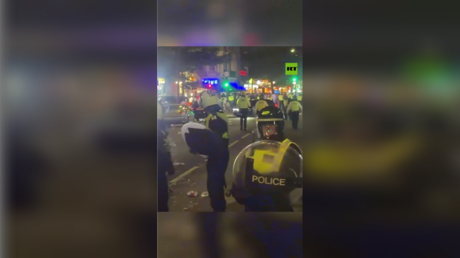
Within ten minutes, the bars emptied into the streets. The Boulevard Magenta became a river of people moving toward the Place de la République. Flares were struck, casting a thick, crimson smoke over the crowd that smelled of sulfur and celebration.
Cars stopped trying to move. Instead, drivers leaned on their horns, creating a rhythmic, deafening symphony that echoed off the Haussmann facades. People climbed onto bus shelters, waving the tricolor flag against the night sky, their faces illuminated by the flash of thousands of smartphones recording a moment they knew they would want to remember decades from now.
What makes a victory like this so potent is not the trophy itself—which is still two wins away—but the rare, fleeting sense of absolute unity it forces upon a city.
Paris is a place of divisions. It is divided by arrondissements, by social class, by politics, and by the daily frictions of urban life. The metro ride home is usually an exercise in polite avoidance; eyes are kept firmly on books or floors.
But on this night, the barriers were temporarily smashed. A teenager from the northern suburbs was singing the Marseillaise arm-in-arm with an elderly woman who had lived in the Marais since the nineteen-sixties. A businessman in a tailored suit was high-fiving a delivery driver who had abandoned his scooter on the sidewalk to join the fray.
For a few hours, the city was not a collection of individuals trying to navigate their own separate lives. It was a single, massive organism experiencing the exact same emotion at the exact same time.
The Morning After the Storm
By four in the morning, the noise had faded to a distant, sporadic honk of a car horn somewhere near the Bastille. The street sweepers were already out, their green trucks moving slowly through the litter of plastic cups and broken glass, the water hoses clearing the remnants of the party from the gutters.
The city will wake up tomorrow with a collective hangover and a return to the reality of delayed trains, work deadlines, and grocery lists. The semi-final looms, bringing with it a whole new iteration of the anxiety that defined this evening. The stakes will be higher, the pressure even more suffocating.
But the beauty of sports lies in these brief intervals between the struggle and the next test. Tonight, Paris did not care about the tactical analysis of the semi-final opponent. It did not care about squad rotation or yellow card accumulation.
Tonight, the city simply slept with the knowledge that for ninety minutes, they had held their breath together, and when they finally let it out, they were still alive, still dreaming, and still moving forward.