The friendship bracelets were already threaded. Thousands of them, glittering with plastic alphabet beads and pastel spacers, sat in neat piles on bedroom vanities across Vienna. They represented more than just a hobby; they were the currency of a subculture built on the radical idea that sixty thousand strangers could gather in a stadium and be perfectly safe in their shared joy.
Then, the screens went dark.
On August 7, 2024, the "Eras Tour" in Vienna was cancelled. It wasn’t because of a storm or a technical glitch. It was because of a nineteenth-century house in Ternitz and the chemical concoctions brewing inside it. Today, as the trial opens for the young men accused of plotting a massacre, we aren't just looking at a legal proceeding. We are looking at the autopsy of a near-tragedy and the terrifyingly short distance between a teenage bedroom and a global catastrophe.
The Architect of a Ghost Stadium
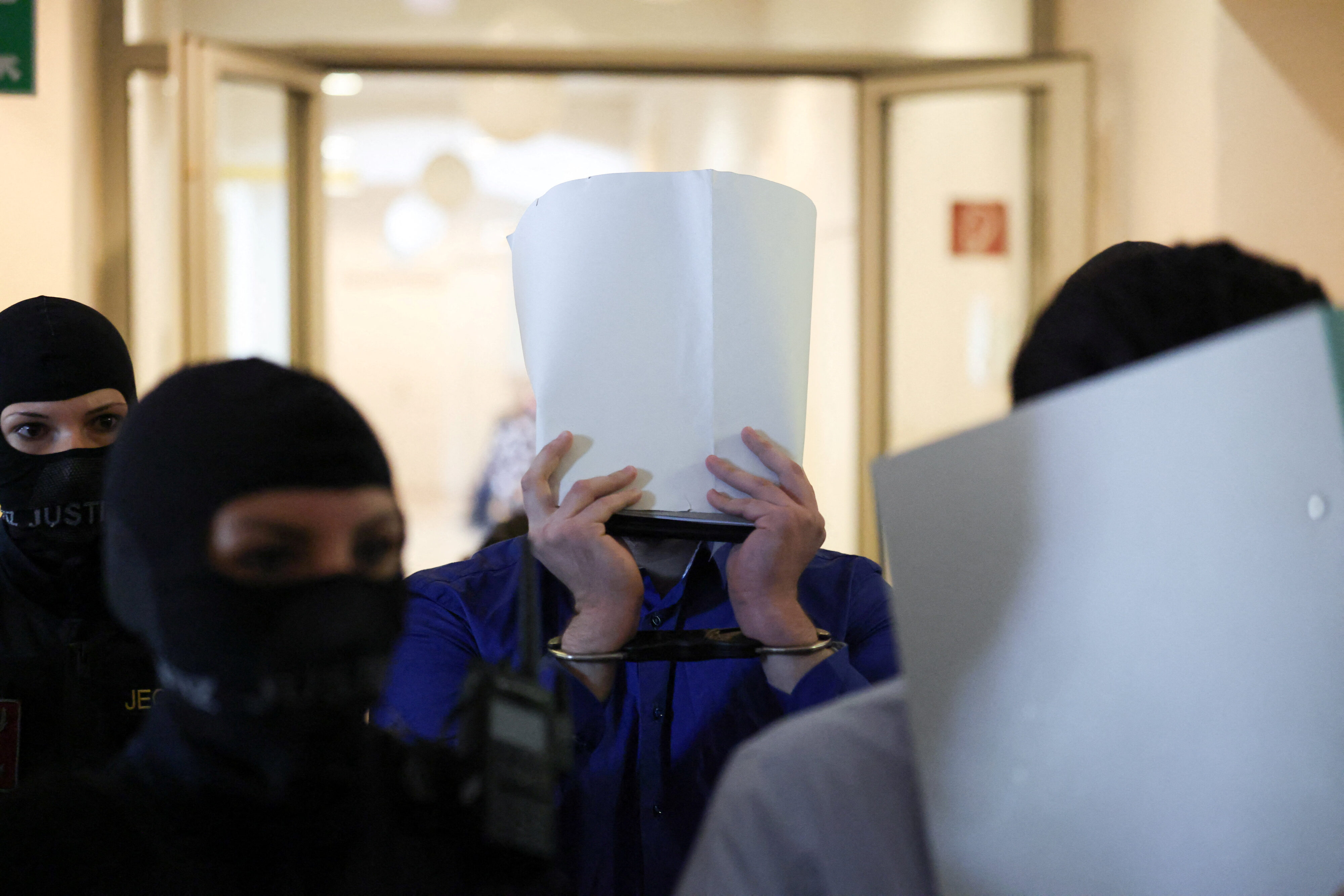
Nineteen years old. That is the age of the primary defendant. In court, he doesn’t look like a shadow-dwelling mastermind. He looks like a boy who might have sat in the back of your chemistry class, quiet and unremarkable. But the evidence presented by Austrian prosecutors paints a different picture.
Imagine a young man standing in a hardware store, his cart filled with hydrogen peroxide, sulfuric acid, and mechanical timers. To a casual observer, he is a DIY enthusiast. To the authorities, he was a chemist of chaos. The prosecution alleges he didn't just want to disrupt a concert; he wanted to hollow out the heart of a city. He had allegedly pledged his soul to the Islamic State, trading his future for a grainy video of an oath and a trunk full of TATP—the highly unstable "Mother of Satan" explosive.
His plan was a clockwork nightmare. He intended to drive a vehicle into the crowds gathered outside the Ernst Happel Stadium, where the "Swifties" who couldn't get tickets would be dancing in the streets. Once the car had done its work, he allegedly planned to emerge with knives and machetes. He didn't just want to kill. He wanted to witness the ending.
The Sound of Silence
Security experts often speak of "soft targets." It’s a clinical term for places where humans are vulnerable because they are happy. A stadium is the ultimate soft target. It is a bowl of concentrated emotion. When Taylor Swift’s team and the Austrian authorities made the call to pull the plug, they did so with the weight of Manchester 2017 pressing against their chests. They knew that once the music starts, the peripheral vision of a crowd disappears.
The trial has peeled back the layers of how close the blade actually came. Intelligence agencies from the United States tipped off their Austrian counterparts, sparking a frantic race against a ticking clock. When police raided the house in Ternitz, they found a functional laboratory. The chemicals were ready. The intent was documented. The only thing missing was the opportunity.
But the real story isn't just about the chemicals. It’s about the radicalization that happens in the silence of a suburban home. We often think of terrorists as being recruited in dark alleys or secret bunkers. The reality is much more domestic. It happens through a glowing smartphone screen, through encrypted chats where a lonely nineteen-year-old is told he can be a hero of a twisted narrative. The prosecution's case rests on the idea that this wasn't a whim; it was a dedicated, months-long descent into a void.
The Counter-Narrative of the Streets
What happens when you take away the one thing a crowd has been living for? Usually, you get a riot. In Vienna, we saw something else.
As the trial recounts the grim details of the plot, it’s worth remembering what happened the morning after the cancellation. The fans didn't go home. They didn't hide in their hotels. They flooded Corneliusgasse, a narrow street in the city center. They hung their friendship bracelets on the branches of trees until the bark was invisible under a layer of neon plastic. They sang the songs that were supposed to be played at the stadium.
It was a defiant, accidental protest. While the defendants were allegedly planning a scene of blood and sirens, the city witnessed a scene of harmony. This contrast is the invisible stake of the trial. The court is weighing the actions of individuals who sought to destroy a community, but the community had already won by refusing to be terrified.
The Mechanics of the Prosecution
The legal battle hinges on a singular question: How far did they go?
In many European jurisdictions, the line between "extremist thoughts" and "terrorist action" is the center of the courtroom drama. The defense will likely argue that these were disenfranchised youths caught up in a fantasy, playing with chemicals they didn't fully understand. They will try to paint a picture of bravado rather than capability.
The prosecution, however, has the receipts. They have the oath of allegiance. They have the blue lights of the police cars that swerved into Ternitz just in time. They have the physical evidence of a car modified to plow through human bodies.
This isn't a trial about a concert. It’s a trial about the fragility of our public squares. Every time we walk into a theater, a stadium, or a parade, we are making a silent contract with the people around us. We agree to be peaceful. We agree to let our guards down. The defendants are accused of trying to tear that contract up and replace it with a permanent state of suspicion.
The Ghost in the Courtroom
There is a person who will likely never step foot in that Viennese courtroom, yet her presence is everywhere. Taylor Swift herself later described the cancellation as a moment of "devastating" fear. For an artist whose entire career is built on the bridge between her and her fans, the idea of that bridge being rigged with explosives is a psychological trauma that few can comprehend.
The trial is the final chapter of a tour that became a target. It reminds us that the spectacle of celebrity isn't just about the person on stage; it’s about the gravity they exert. That gravity pulls in the fans, the commerce, the joy—and, occasionally, the darkness.
As the lawyers argue over intent and chemical compositions, the city of Vienna continues to move forward. The stadium has hosted other events. The fans have moved on to other cities. But the trees on Corneliusgasse still hold the weight of those bracelets. They are a reminder that the plot failed not just because the police were fast, but because the spirit of the target was unbreakable.
The trial will eventually reach a verdict. There will be sentences handed down, and the news cycle will pivot to the next crisis. But the image that remains isn't the face of a defendant in a glass box. It’s the image of thousands of people singing in a street, their voices rising over the silence of a foiled attack, proving that while you can cancel a concert, you cannot cancel the reason people gather in the first place.
The beads are still there, swinging in the wind.