Cold coffee tastes like burnt pennies when you have been awake for thirty-eight hours.
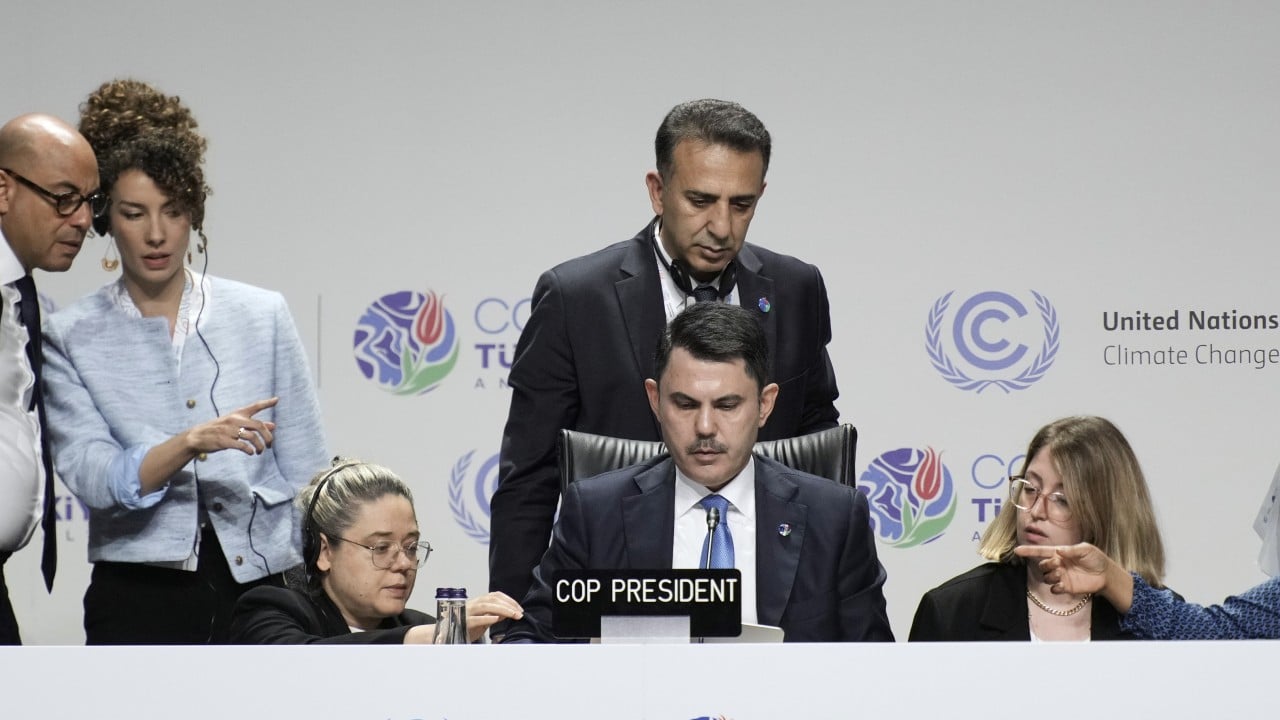
The plenary hall smells of stale sweat, damp wool, and the sharp, metallic tang of overheating microphones. Around the curved mahogany tables, four hundred diplomats are slumped in leather chairs that have lost their cushion. Nobody is looking at the screens anymore. They are looking at the doors.
Silence.
Then, a single gavel strikes wood, and the COP31 climate talks are dead.
You probably read the headline over breakfast this morning. Five words, maybe eight, wedged between a celebrity divorce and a dip in the tech index. COP31 climate talks collapse as EU and others reject deal. You sighed, felt a familiar, heavy ache behind your ribs, and scrolled down. The language of global climate diplomacy is designed to numb you. It speaks in acronyms, fractional degrees, and bureaucratic nouns that feel as distant as the moons of Jupiter.
But the real problem lies elsewhere. When a climate summit collapses, the ink doesn't just dry on an unsigned piece of paper. The temperature in a concrete apartment in Manila ticks up by half a degree. A seawall in the Marshall Islands loses another three inches of funding. A farmer in the American Midwest stares at a cracked riverbed and wonders if he should sell his grandfather’s tractor before the bank takes it anyway.
To understand what actually happened in that fluorescent-lit room when the European Union and a coalition of vulnerable nations walked away from the table, we have to leave the plenary hall. We have to look at the invisible math of survival, and the quiet, terrifying moment when politeness stopped being enough.
The Architecture of a Broken Promise
Think of the global climate negotiations like an old, leaking wooden boat carrying eight billion passengers. For three decades, the people sitting in the dry seats at the bow have promised the people bailing water in the stern that they will eventually fix the hull. Every year, they hold a meeting. Every year, they agree to buy slightly better buckets. Nobody ever touches the hole.
COP31 was supposed to be the year they finally pulled out the timber and nails. Following the bruising battles of Baku and Belém, the mandate on the table was brutally simple. Countries had to submit updated, aggressive national plans to slash carbon emissions, and the wealthiest nations had to guarantee the cold, hard cash needed to help the rest of the world transition off coal and oil without plunging their citizens into poverty.
Instead, the draft text presented in the final hours was a masterclass in linguistic evasion.
Consider a hypothetical negotiator—let’s call her Elena, a mid-level envoy from a southern European ministry who has spent the last decade of her life in windowless conference rooms. At three in the morning, Elena is reading paragraph forty-two of the final draft. The phrasing around phasing out fossil fuels has been watered down so thoroughly that it no longer contains a timeline, a target, or a binding mechanism. It reads like a polite suggestion written by a committee of oil executives.
Across the aisle sits Tariq, a fictionalized composite of the delegates from the Alliance of Small Island States. Tariq’s home country sits four feet above sea level. When he reads paragraph forty-two, he isn't seeing a diplomatic compromise. He is seeing the salt water creeping into his mother’s vegetable garden. He is calculating how many years his niece has left before her elementary school becomes a coral reef.
For hours, the architects of the draft text tried to bully both Elena and Tariq into signing. The logic of these summits has always relied on exhaustion. You starve the delegates of sleep, turn down the thermostats until their fingers go numb, and tell them that a bad deal is better than no deal at all. You warn them that walking away means taking the blame for failure.
This time, the trick didn't work.
The European Union, joined by a fierce bloc of Latin American and Pacific island nations, looked at the paper and saw a death warrant dressed up as progress. Signing it would have allowed the world’s largest polluters to claim victory on television while continuing to expand oil and gas production behind closed doors.
So they said no.
Why No Deal Was the Only Honest Choice
It is easy to look at a collapsed summit and see total failure. I have covered environmental policy long enough to know that cynicism is the easiest armor to wear. You watch brilliant scientists present charts that look like cliffs, and then you watch politicians haggle over whether to use the word "shall" or "should." It makes you want to throw your notebook out the window.
Yet there is a profound difference between a stalled engine and a car driving off a cliff.
When the EU and its allies rejected the COP31 text, they broke a thirty-year taboo. Historically, the United Nations climate process operates by consensus. That sounds democratic on paper, like neighbors agreeing on where to put a fence. In reality, consensus means the slowest, most stubborn, most fossil-fuel-dependent nation in the room holds a veto over human survival. If one petro-state refuses to budge, the entire world has to crawl at their pace.
Look at what was actually buried inside that rejected agreement:
- The Phantom Phase-Out: The text reintroduced loopholes for "unabated" fossil fuels without defining what constitutes legitimate carbon capture, effectively giving coal and gas plants a blank check to operate well into the 2050s.
- The Mirage of Finance: While wealthy nations pointed to a headline figure of hundreds of billions of dollars in climate aid, the fine print revealed that the vast majority of it would come as high-interest loans rather than grants, trapping developing nations in deeper debt every time a hurricane flattened their power grid.
- The Accountability Void: There were no penalties, no review mechanisms, and no consequences for nations that missed their 2030 targets.
If Elena and Tariq had raised their hands and let the gavel fall on that text, the headlines today would be cheerful. Historic Breakthrough at COP31. Markets would have rallied. Politicians would have flown home to praise their own statesmanship. And nothing—literally nothing—would have changed in the upper atmosphere, where carbon dioxide concentrations continue to climb at a pace unseen in human history.
By refusing to sign a lie, the dissenting nations forced the truth into the harsh daylight. They admitted that the emperor has no clothes, and that the multilateral diplomatic machine, as currently built, cannot outrun the physics of a warming planet.
The Invisible Stakes in Your Own Backyard
You might be wondering what a diplomatic meltdown thousands of miles away has to do with the price of your groceries or the air your children breathe. It is completely natural to feel disconnected from a room full of suits arguing over syntax. Honestly, there are days when I look at the sheer scale of the crisis and feel a cold, paralyzing dread that makes me want to close my laptop and go garden. The numbers are too big. Gigatons. Parts per million. Trillions of dollars. The human brain wasn't wired to grieve over a spreadsheet.
So shrink the scale.
Think about the last time your local weather felt completely unrecognizable. Maybe it was the February afternoon you wore a t-shirt while the cherry blossoms bloomed two months early, only to die in a freak April frost. Maybe it was the summer the sky turned the color of a bruised orange for three weeks because a forest a thousand miles north was burning to ash. Maybe it was the notice from your homeowner's insurance company, explaining that your premiums just doubled because your zip code is now classified as a high-risk flood zone.
That is what COP31 was actually about.
The atmosphere does not care about diplomatic compromises. Carbon molecules do not read press releases. Every ton of greenhouse gas emitted today traps heat for centuries, acting like an extra wool blanket thrown over a sleeping person who is already running a fever.
When global talks fail to set a clear, binding path away from fossil fuels, private capital hesitates. Pension funds, banks, and energy companies look at the political confusion and decide it is safer to keep investing in old, dirty infrastructure rather than betting on wind, solar, and grid storage. That hesitation slows down the construction of clean power plants in Ohio. It keeps electric vehicle prices higher in Germany. It delays the drought-resistant seeds needed by farmers in Kenya.
The collapse of COP31 isn't an isolated political drama. It is a market signal, and right now, that signal is flashing yellow.
The Quiet Revolution Happening Outside the Room
Here is the part that the breathless news coverage almost always misses, and the reason why despair is both inaccurate and useless.
The United Nations does not control the global economy. Engineers, mayors, grid operators, and consumers do.
While the diplomats were screaming at each other over commas and semicolons at COP31, something extraordinary was happening in the real world. In the past twelve months alone, global investment in clean energy outpaced spending on fossil fuels by nearly two to one. Solar panels are now so cheap that in most parts of the world, building a brand-new solar farm costs less than simply buying the coal to run an existing power plant.
Consider what happens next when the formal treaties stall.
We are entering an era of "coalitions of the willing." When the big tent collapses, people build smaller, stronger shelters. Watch what the European Union, progressive American states, and major Asian economies do over the next six months. Instead of waiting for consensus from nations that have no intention of changing, they are beginning to use trade policy as a climate weapon.
If you want to sell steel, cement, or aluminum into European markets, you are increasingly going to pay a carbon border tax if your factories run on dirty power. Suddenly, cleaning up a manufacturing plant in India or Brazil isn't about obeying a United Nations resolution; it is about staying in business. Money moves faster than treaties ever will.
At the same time, cities are stepping into the vacuum left by national governments. From mayors electrifying entire municipal bus fleets in Bogotá to local utilities building massive battery arrays in Texas to keep the lights on during summer heatwaves, the energy transition has developed its own unstoppable momentum. Physics and economics have finally aligned. You don't need a unanimous vote in a conference hall to prove that batteries are cheaper than peaking gas plants. You just need an accountant.
What Survives the Wreckage
Still, momentum is not the same thing as speed, and speed is everything. We are winning the economic argument, while slowly losing the race against the clock.
Walking out of that plenary hall was an act of necessary defiance, a refusal to let diplomatic theater masquerade as survival. Yet defiance only matters if it is followed by fury—the quiet, disciplined fury of nations taking unilateral action, of citizens demanding more than empty slogans, of industries refusing to wait for permission to build the future.
Back in that empty conference hall, the cleaning crews have already moved in. They are sweeping up the crumpled drafts, unplugging the translation headsets, and stacking the chairs against the wall. Within a few hours, the air conditioning will be turned off to save electricity, and the room will grow warm and still.
Outside, in the real world, the sun is rising over a coastline that is a fraction of a millimeter higher than it was yesterday, glinting off millions of newly installed solar panels that no diplomat had to approve.