Most nonprofits rush into artificial intelligence backward. They buy expensive software licenses, run a two-hour workshop on prompt engineering, and then wonder why nobody uses the tools six months later.
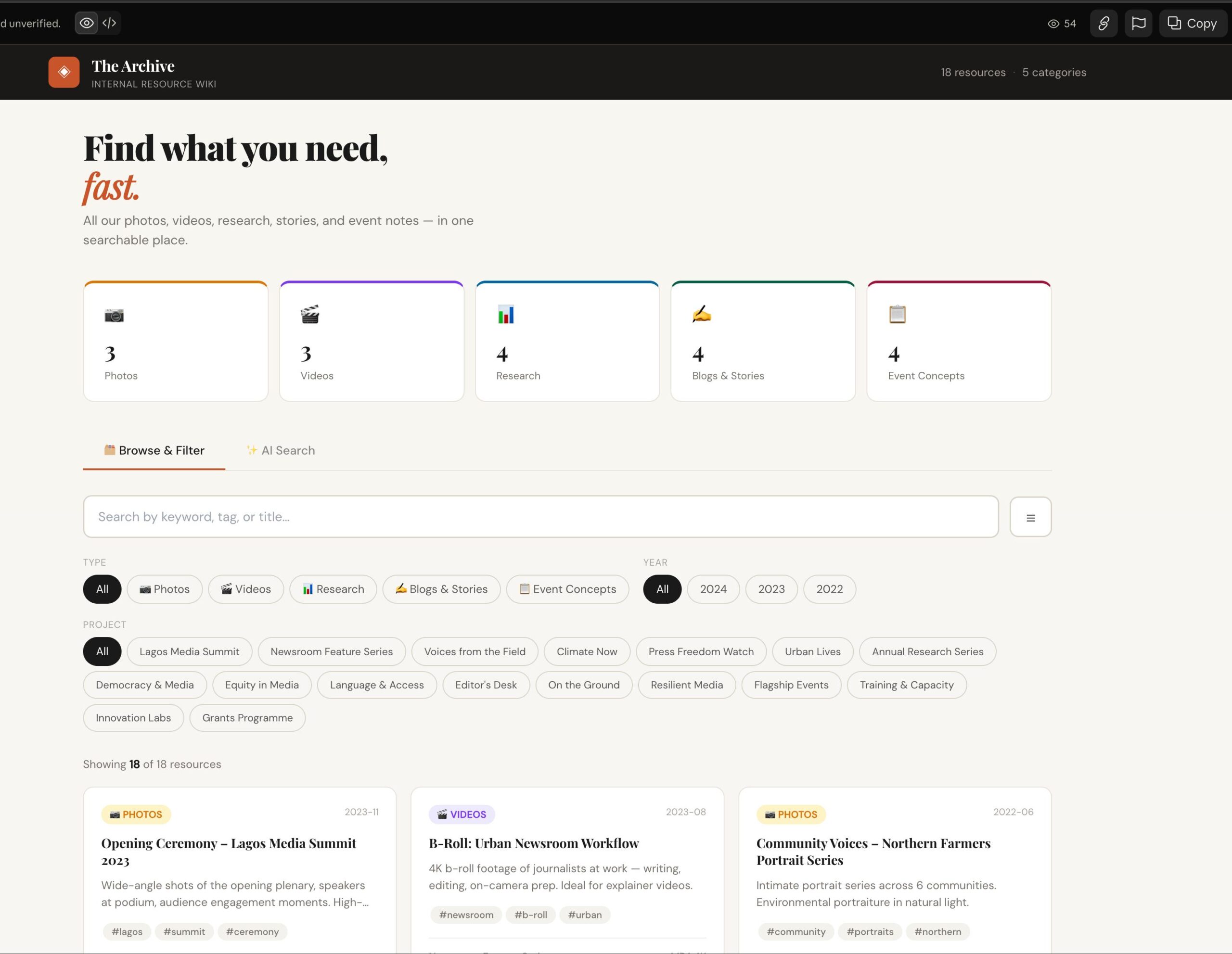
Nigeria Health Watch took the opposite route. Instead of chasing flashy chatbots or automated content generators, this Abuja-based health communication and advocacy organization focused on something far less glamorous—an internal wiki.
And honestly, that decision explains why their AI transition actually stands a chance of working.
When you strip away the hype around generative AI, every model relies on one boring ingredient to be useful inside an organization. Structured, reliable institutional knowledge. Without a clean repository of how your team operates, what your editorial standards look like, and where your past research lives, an AI assistant is just a confident guesser. By building a centralized internal wiki first, Nigeria Health Watch created the exact foundation needed to make AI tools accurate, accountable, and genuinely helpful for public health reporting.
The Hidden Trap of Early AI Adoption in Public Health
Health communication leaves zero room for hallucinated statistics or sloppy sourcing. When an organization tracks disease outbreaks, maternal health policies, or vaccine uptake across West Africa, a single fabricated citation destroys years of public trust.
Yet that's exactly what happens when teams plug generic AI tools into messy Google Drives and scattered Slack threads. I've seen this play out dozens of times across media rooms and NGOs. Someone asks a large language model to summarize three years of policy briefs, and the system pulls from an outdated draft sitting in a random folder because nobody labeled the final version.
Garbage in. Confident garbage out.
Nigeria Health Watch recognized early on that their biggest bottleneck wasn't a lack of AI software. It was fragmented institutional memory. Like most fast-moving advocacy groups, their knowledge lived in people's heads, email chains, WhatsApp groups, and disparate shared drives. New hires spent weeks hunting down basic style guidelines or historical context on health campaigns.
Fixing that fragmentation had to come first. You can't automate workflows you haven't even documented.
How an Internal Wiki Creates True AI Readiness
Think of an internal wiki as the operating manual for your entire organization. When Nigeria Health Watch committed to organizing their internal documentation, they weren't just tidying up folders for the sake of neatness. They were building a single source of truth that both humans and machines can query reliably.
Here is why a well-maintained wiki changes everything for AI readiness:
- Eliminates context blind spots. AI models perform dramatically better when grounded in verified internal documents through retrieval-augmented generation (RAG) or custom knowledge bases. If your wiki holds your editorial policies, past project evaluations, and vetted fact sheets, an AI assistant can reference real organizational history instead of defaulting to generic internet training data.
- Standardizes institutional voice and ethics. Public health journalism requires specific framing around stigma, patient privacy, and scientific uncertainty. Documenting those editorial rules in a central wiki gives both staff writers and AI drafting tools clear guardrails.
- Accelerates onboarding without senior bottlenecks. When standard operating procedures live in searchable wiki pages, junior staff don't have to interrupt editors twenty times a day for basic answers. They check the wiki, or query an internal assistant connected to it, and keep moving.
- Creates clear ownership over data. A wiki forces teams to assign owners to specific pages. Someone is responsible for updating the maternal health policy tracker or the media contact protocols, which keeps the underlying knowledge fresh.
Short-term, it feels slow. Writing down how you do things takes real hours away from daily publishing deadlines. Long-term, it turns scattered tribal knowledge into a compounding asset.
What Most Organizations Get Wrong About Knowledge Management
If internal wikis are so effective, why do half of them turn into digital graveyards within a year?
Because most leaders treat a wiki like a software rollout rather than a cultural habit. They pick a platform—whether Notion, Confluence, or MediaWiki—dump fifty messy PDFs into it, and announce that the team is now "AI-ready." Three months later, nobody trusts the search results because half the pages are outdated.
Nigeria Health Watch avoided that trap by treating documentation as a living workflow tied directly to daily operations. When you embed wiki updates into how projects actually close out, documentation stops feeling like extra homework.
Stop Hoarding Raw Files and Start Writing Syntheses
Uploading a 90-page PDF report to a shared drive isn't knowledge management. Neither humans nor basic AI search tools extract nuanced lessons easily from bloated, unindexed documents.
Effective internal wikis rely on concise, structured summaries written in plain language. Instead of burying key findings inside massive attachments, teams document the core takeaways, methodology notes, and links to primary sources directly on the page. When an AI system indexes clean text with clear headings, retrieval accuracy skyrockets.
Define What Belongs in the Wiki and What Doesn't
Not every chat message deserves a permanent page. One fastest way to ruin an internal knowledge base is cluttering it with ephemeral meeting notes and rough brainstorms.
A functional wiki separates permanent operational truth from temporary chatter. Editorial guidelines, donor reporting templates, vetted epidemiological resources, and post-mortem campaign reviews belong in the wiki. Daily scheduling updates belong in chat. Keeping that boundary strict ensures your future AI tools pull from vetted authority rather than half-baked ideas.
Practical Lessons for Nonprofits and Media Teams
You don't need a massive engineering budget to replicate what Nigeria Health Watch is doing. In fact, smaller organizations often have an advantage because they have less legacy clutter to untangle.
If your team wants to build real AI readiness over the next quarter, start with documentation before buying another subscription.
- Audit your top ten recurring questions. Ask your managers and editors what new hires ask most frequently during their first month. Those ten answers form the skeleton of your initial wiki.
- Document your editorial and ethical guardrails first. Write down your exact standards for fact-checking, source verification, and sensitive reporting. When you eventually introduce AI tools for research or summarizing, these pages become your non-negotiable system instructions.
- Assign page owners with quarterly review dates. Every core wiki page needs a human name attached to it and a reminder to verify its accuracy every ninety days. Unmaintained data is worse than no data at all.
- Test retrieval with simple internal queries. Once your core procedures and past project summaries live in one structured space, connect a secure internal search tool or private AI workspace to that repository and test how accurately it answers real staff questions.
Technology never fixes a disorganized workflow; it just speeds up the confusion. By putting an internal wiki ahead of shiny AI experiments, Nigeria Health Watch proved that the smartest move in modern digital transformation is still getting your own house in order first. Audit your scattered docs this week, pick one core workflow to document cleanly, and build the knowledge base your team actually deserves.