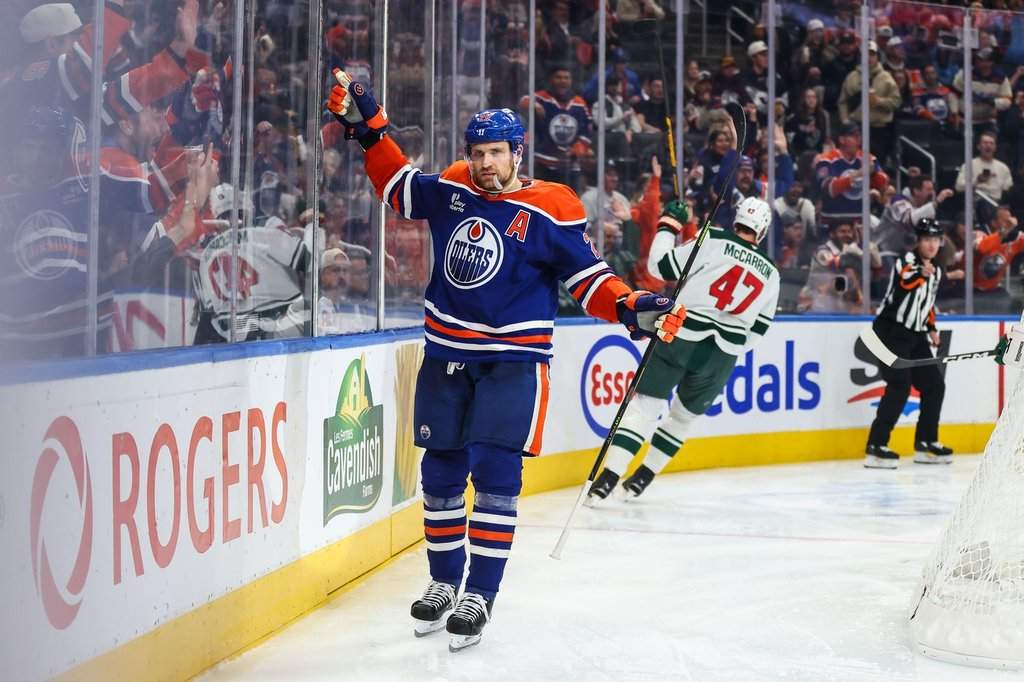
Leon Draisaitl, Logan Cooley, and Cam Fowler earned the NHL’s Three Stars of the Week honors by dominating the scoresheet, yet the league’s standard press release entirely misses the structural shift these three names represent. On the surface, it is just another weekly PR exercise recognizing a superstar forward, a rising young center, and a veteran defenseman. Look closer at how these three players actually generate value, and you uncover the exact blueprint modern general managers are desperate to replicate.
The hockey media machine loves a tidy weekly digest. Every Monday, the league office tallies points, saves, and wins from the previous seven days, stamps three names onto a graphic, and moves on. Most outlets simply rewrite that wire copy, listing goals, assists, and plus-minus ratings without asking why these specific archetypes are thriving simultaneously. That approach treats hockey like a collection of isolated box scores rather than an evolving ecosystem. If you enjoyed this post, you should check out: this related article.
When Leon Draisaitl, Logan Cooley, and Cam Fowler share the spotlight, we are looking at three distinct answers to the same tactical problem. How do you break down modern, hyper-structured defensive systems when neutral-zone traps and collapsed slot coverage have strangled traditional rush offense?
The Death of the One-Dimensional Superstar
Leon Draisaitl has spent years fighting a lazy narrative. For the first half of his career, casual observers dismissed him as a passenger riding Connor McDavid’s coattails or a power-play merchant who feasted on static defenses. That argument died a long time ago, yet the mechanics of why Draisaitl remains nearly impossible to defend still go largely unexplained. For another look on this development, check out the latest update from The Athletic.
Watch Draisaitl on a random Tuesday night in November, and you will notice he rarely looks like the fastest skater on the ice. He does not need to be. While the league has spent a decade obsessing over straight-line speed, Draisaitl perfected the art of pace manipulation and shielding. He slows the game down to a crawl below the goal line, using his massive frame and unusually long paddle-style stick blade to protect the puck from defenders who are trained to swarm.
Modern defensive systems rely on predictable rhythm. Defenders are coached to angle attackers toward the boards, close the gap, and force a quick dump or a low-percentage pass. Draisaitl breaks that rhythm by refusing to rush. He absorbs contact, waits an extra half-second for a weak-side defender to lose sight of the backdoor, and threads passes through seams that simply do not exist for smaller players.
There is also a structural reality in Edmonton that rarely gets enough credit. Carrying a second line without elite wingers requires a center who can manufacture zone entries and sustain cycle time entirely on his own. When Draisaitl goes on a tear worthy of First Star honors, it usually coincides with the Oilers struggling to find secondary scoring elsewhere in the lineup. He is not padding stats in blowouts; he is single-handedly dragging the team's expected-goals share above water during stretches where Edmonton’s depth looks thin.
The gray area in Draisaitl’s game has always been defensive consistency during the regular season. Critics point to moments where he glides back into the defensive zone or cheats for offense at the blue line. They are not wrong. You accept the occasional defensive lapse because the offensive return is so overwhelmingly positive that net puck possession still tilts heavily in his favor. Trying to turn Leon Draisaitl into a conservative two-way grinder would be like buying a Ferrari to haul lumber.
Why Draft Pedigree Finally Caught Up to Patience
Logan Cooley represents the exact opposite end of the developmental spectrum, yet his emergence speaks to a massive shift in how NHL front offices handle teenage talent. Ten years ago, a player with Cooley’s frame and skill set would have been buried on a third line, told to "learn the pro game" by chipping pucks off the glass, and eventually labeled a perimeter player when his confidence cratered.
Instead, we are watching what happens when an organization builds an environment around high-tempo puck support. Cooley’s game is built on East-West deception. Most young centers enter the league trying to beat defenders wide with pure speed, a tactic that works in junior hockey and fails miserably against NHL defensemen who know how to gap up at the blue line. Cooley attacks the middle of the ice by changing his skating angle right before the defensive blue line, forcing defenders to cross their feet and lose leverage.
His inclusion among the NHL's top performers of the week is not a fluke hot streak. It is the predictable result of giving a high-end playmaker actual linemates who can think the game at his speed. Too often, rebuilding teams draft a dynamic center and staple him to two aging veterans whose primary skill is surviving board battles. That mismatch kills offensive chemistry before it starts. When Cooley is surrounded by wingers who attack open ice rather than waiting for the puck along the walls, his vision turns routine breakouts into odd-man rushes.
The Hidden Trap of Early Breakout Weeks
There is a catch to crowning young stars after a dominant seven-day stretch. Opposing coaching staffs adjust fast. Once a player like Cooley hits the national radar, he stops seeing third-pair defensemen and checking lines. Suddenly, he is drawing top shutdown pairs on the road, getting slashed on every faceoff, and seeing zero room on the power play.
The true test of a young center is not the week he wins a star; it is the three weeks immediately following it. Can he maintain his shot-attempt differential when the opposition takes away his favorite entry lane? Does he start forcing low-percentage passes into traffic out of frustration, leading to turnovers that end up in his own net? Cooley’s underlying metrics suggest his game has enough versatility to survive the scouting report, largely because he does not rely on one signature move. He can beat you off the rush, he can distribute from the half-wall on the power play, and his underrated stick-checking creates turnovers high in the offensive zone.
The Quiet Value of the Puck-Moving Veteran
If Draisaitl is the brute-force artist and Cooley is the high-speed prodigy, Cam Fowler is the guy keeping the entire operation from flying off the rails. Defensemen rarely get the credit they deserve in weekly award cycles unless they rattle off a string of multi-goal games. When a veteran blueliner like Fowler lands on the podium, it usually means two things happened simultaneously: his power-play unit finally clicked, and his team survived a brutal stretch of minutes against top competition.
Fowler’s career is a fascinating case study in longevity through adaptation. Drafted in an era when the NHL was just beginning to transition away from bruising, stay-at-home defensemen, Fowler entered the league as a pure skating prospect. Early in his career, that smooth stride covered up a multitude of positional mistakes. He could recover from a bad pinch because few forwards could catch him in a footrace.
Time steals that margin for error. You do not survive past a thousand NHL games on pure athleticism alone. Fowler stayed relevant—and remained capable of swinging games in his mid-thirties—by mastering first-pass efficiency.
Modern forechecking systems are designed to suffocate defensemen. Teams send two forwards deep into the corners, cut off the boards, and force the defender to make a decision under physical duress within half a second. Panic leads to icings, turnovers, and exhausted five-man units trapped in their own zone for two minutes straight. Fowler kills forechecks before they begin. He shoulders his checks early, scans the ice before touching the puck, and delivers crisp, flat passes onto the tape of his center cutting through the middle.
That skill rarely shows up on highlight reels. You do not see a ten-foot pass from behind the goal line featured on nightly sports broadcasts. Yet that single play is the difference between spending forty seconds defending your own crease and immediately transitioning into an offensive zone possession. When Fowler piles up assists over a four-game span, it is rarely because he is launching slap shots from the point. It is because he is facilitating clean exits that allow his forwards to attack unorganized defenses.
How the League Manufactures Narratives
Understanding why these three players won is one thing; understanding the mechanics behind the selection process is another. The NHL’s Three Stars is not an analytical award. There is no panel of data scientists weighing expected goals above replacement or micro-stats from puck-tracking cameras. It is a media and marketing tool, plain and simple.
The selection committee prioritizes three specific factors:
- Raw Point Totals: A four-point night on a national broadcast carries infinitely more weight than three consecutive games of dominant two-way play in small markets.
- Team Context: If a player’s hot streak pulls a struggling franchise back into the playoff conversation, the narrative boost almost guarantees a spot on the list.
- Star Power Balance: The league actively avoids giving the award to the exact same three players every single month, even if the underlying numbers suggest Connor McDavid, Nathan MacKinnon, and Cale Makar belong there permanently.
This creates a massive blind spot in how hockey is covered. By anchoring weekly coverage around whoever racked up the highest raw point totals, traditional sports media reinforces the idea that scoring is the only metric that matters. A defenseman who plays twenty-six minutes a night, shuts down the opponent's top line, kills four penalties, and finishes with zero points will never sniff a Three Stars mention. Meanwhile, a winger who scores two empty-net goals and picks up a secondary assist on a blown coverage play gets celebrated as the player of the week.
What General Managers Actually Take Away From This
Front offices do not care who wins the weekly press release, yet the exact combination of Draisaitl, Cooley, and Fowler mirrors the roster-building blueprint every contender is trying to execute right now. Look at the salary cap structure of the last five Stanley Cup champions, and you will see this exact triad.
You need a line-driving engine at center who can win matchups without needing sheltered zone starts. That is Draisaitl. You need cost-controlled, high-upside youth outperforming their entry-level contracts to balance out the cap hits at the top of the roster. That is Cooley. And you need stabilizing veterans on the blue line who can exit the zone cleanly under pressure without demanding eight-million-dollar price tags. That is Fowler.
Teams fail when they confuse these roles or overpay for the wrong archetype. Signing a thirty-two-year-old middle-six winger to a six-year contract destroys the flexibility required to surround your young centers with speed. Trading away first-round picks for rental defensemen who cannot move the puck leaves your elite forwards starving for possession in the playoffs.
The box scores from this week will be forgotten by next Tuesday when a fresh batch of names hits the wire. Another goalie will post back-to-back shutouts, a sniper will rattle off a hat trick, and the cycle will reset. Yet the underlying mechanics that put Leon Draisaitl, Logan Cooley, and Cam Fowler at the top of the league remain the only currency that actually matters when the games get heavy in April. Build a roster around pace manipulation, middle-ice deception, and clean exits, and you do not need a press release to tell you who is winning.