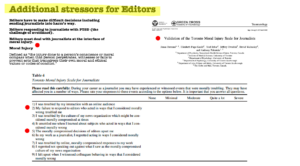
Newsrooms are breaking. We talk constantly about the trauma reporters face on the frontlines of war zones, natural disasters, and mass shootings. We set up peer support networks, distribute safety gear, and offer counseling stipends for investigative journalists. But we ignore the people steering the ship. Newsroom leadership is facing a quiet, crushing mental health crisis that receives almost zero attention.
Editors, bureau chiefs, and executive producers are drowning. They absorb the secondary trauma of their teams while carrying the structural weight of a dying business model. It's an impossible balancing act. They must remain empathetic bosses while hitting brutal budget cuts and managing relentless 24-hour news cycles.
The industry treats managers like emotional shock absorbers. It is a massive mistake. When newsroom leaders burn out, the entire editorial operation suffers. Decision-making slows down. Empathy vanishes. Good journalists quit.
We need to talk honestly about what happens to the human brain when you put it in charge of managing chaos.
The Hidden Toll of Secondary Trauma in Newsroom Leadership
Most people think trauma in journalism only happens to the person holding the microphone or the camera. That's wrong. Secondary traumatic stress hits editors just as hard, sometimes even harder, due to the sheer volume of exposure.
A field reporter might cover one horrific event a week. An editor reviews hundreds of raw, graphic images and video clips every single day to make editorial decisions. They see the unedited footage of violence, the bodies, and the grief that never makes it to air or print. They do this for years.
The Dart Center for Journalism and Trauma at Columbia University has studied this extensively. Their research shows that repeated exposure to graphic user-generated content and raw footage can cause PTSD symptoms similar to those experienced by first responders.
But for newsroom leaders, the trauma is double-layered. You aren't just processing the story. You are processing the pain of your staff.
When a reporter returns from a brutal assignment with clear signs of distress, the manager absorbs that burden. You have to listen, support, and guide them. Yet, who does the manager turn to? In most media companies, the answer is nobody. You are expected to be the rock. Showing vulnerability is still widely viewed as a career-ending weakness in senior editorial ranks.
The Toxic Myth of the Bulletproof Editor
Journalism culture loves its myths. We still romanticize the cynical, heavy-drinking, sleepless editor who screams across the room and survives on black coffee. This archetype is dangerous.
It creates a culture of silence. Senior editors feel immense pressure to appear invulnerable. They believe that admitting they are struggling will undermine their authority or signal to executive leadership that they can't handle the pressure.
Consider what a typical day looks like for a top editor at a major metro daily or a cable news producer.
- 6:00 AM: Wake up to a barrage of slack messages about a breaking local tragedy.
- 9:00 AM: Lead a budget meeting where corporate demands a 10% staff reduction.
- 1:00 PM: Console a young reporter who is receiving death threats on social media over an investigative piece.
- 4:00 PM: Make the final call on whether to publish graphic photos of a crime scene.
- 8:00 PM: Answer late-night calls from lawyers regarding a defamation threat.
This isn't just hard work. It's emotional whiplash.
When you operate in this state of chronic stress, your prefrontal cortex begins to struggle. That is the part of the brain responsible for executive function, impulse control, and emotional regulation. When it burns out, managers become reactive, irritable, and isolated. They make poor editorial judgments and alienate their teams.
Corporate Neglect and the Middle Manager Squeeze
The problem goes deeper than just the stories being covered. The economic realities of modern media have turned newsroom leadership into a meat grinder.
Middle managers are caught in a brutal vise. From above, they face intense pressure from corporate executives or publishers who demand higher digital traffic, more video views, and lower overhead costs. From below, they face a demoralized, overworked staff looking for guidance, raises, and emotional support.
You want to protect your team from corporate greed, but you also have to keep your job. It's a lonely position.
Most media organizations provide zero management training. Journalists get promoted to leadership positions because they were excellent reporters or copy editors. Suddenly, they are thrust into roles requiring advanced psychological literacy, conflict resolution, and budget management. They are completely unprepared for the emotional labor required to lead people through crisis.
HR departments are usually useless here. They are designed to protect the company from legal liability, not to provide deep psychological support for executives handling daily trauma. Standard Employee Assistance Programs (EAPs) offer generic therapy options. These therapists rarely understand the unique, fast-moving pressures of an active newsroom.
How Burned Out Leaders Destroy Newsroom Culture
When newsroom leadership operates on empty, the entire culture rots from the top down. Burnout isn't a personal problem; it's a systemic contagion.
An exhausted, traumatized manager cannot provide the psychological safety that journalists need to do risky, ambitious work. Instead of encouraging bold reporting, a burned-out editor defaults to risk aversion. They don't have the mental energy to fight legal battles or deal with public backlash. They choose the safe, boring stories.
Worse, toxic behaviors start to manifest. Irritability gets taken out on junior staffers. Critical feedback becomes harsh and unconstructive. Micro-management spikes because the leader feels a total loss of control over their environment.
This triggers a wave of resignations. The industry loses its best talent not because the journalists hate reporting, but because they can no longer tolerate the chaotic, unsupported environments created by overwhelmed leaders.
Practical Shifts for Media Organizations
We have to stop treating newsroom leaders like machines. If media companies want to survive, they must actively protect the mental health of their management teams.
First, establish mandatory peer support groups specifically for managers. Editors need spaces where they can speak candidly without their subordinates listening and without fear of corporate retaliation. Knowing that another bureau chief across the country is dealing with the exact same insomnia or dread changes everything.
Second, decouple performance reviews from sheer endurance. Stop rewarding the managers who answer emails at 3:00 AM. Executive leadership needs to explicitly praise and model boundary-setting. If a managing editor takes a real, uninterrupted two-week vacation, it signals to the rest of the organization that recovery is allowed.
Third, bring in specialized trauma experts for leadership teams. The Dart Center provides excellent training, but it needs to be integrated into standard corporate operations, not just treated as a one-off seminar after a major tragedy occurs.
Finally, build redundancy into leadership tracks. No single person should be the sole gatekeeper for breaking news 365 days a year. Cross-train editors so that responsibilities can be rotated seamlessly. It reduces the hyper-vigilance that ruins mental health.
Steps You Can Take Right Now
If you're currently running a newsroom or leading an editorial team, you don't have to wait for corporate HR to fix this. You can make small, immediate changes to protect your sanity.
Start by setting hard digital boundaries. Turn off Slack and email notifications during specific blocks of your off-hours. Designate a backup editor who handles emergencies during those windows, and rotate that responsibility weekly.
Audit your daily media intake. If your job requires viewing graphic material, use techniques to minimize its impact. Shrink the video window on your screen. Turn off the sound if you only need to verify visual details. Avoid looking at graphic imagery right before you go to sleep.
Most importantly, find a therapist who specializes in trauma or first-responder stress. Regular talk therapy is fine, but you need someone who understands how repeated exposure to crisis rewires the nervous system.
Stop pretending you are fine. Your team doesn't need a superhero. They need a human being who models resilience, boundaries, and self-care. Speak up about the pressure you face. It's the only way the culture changes.