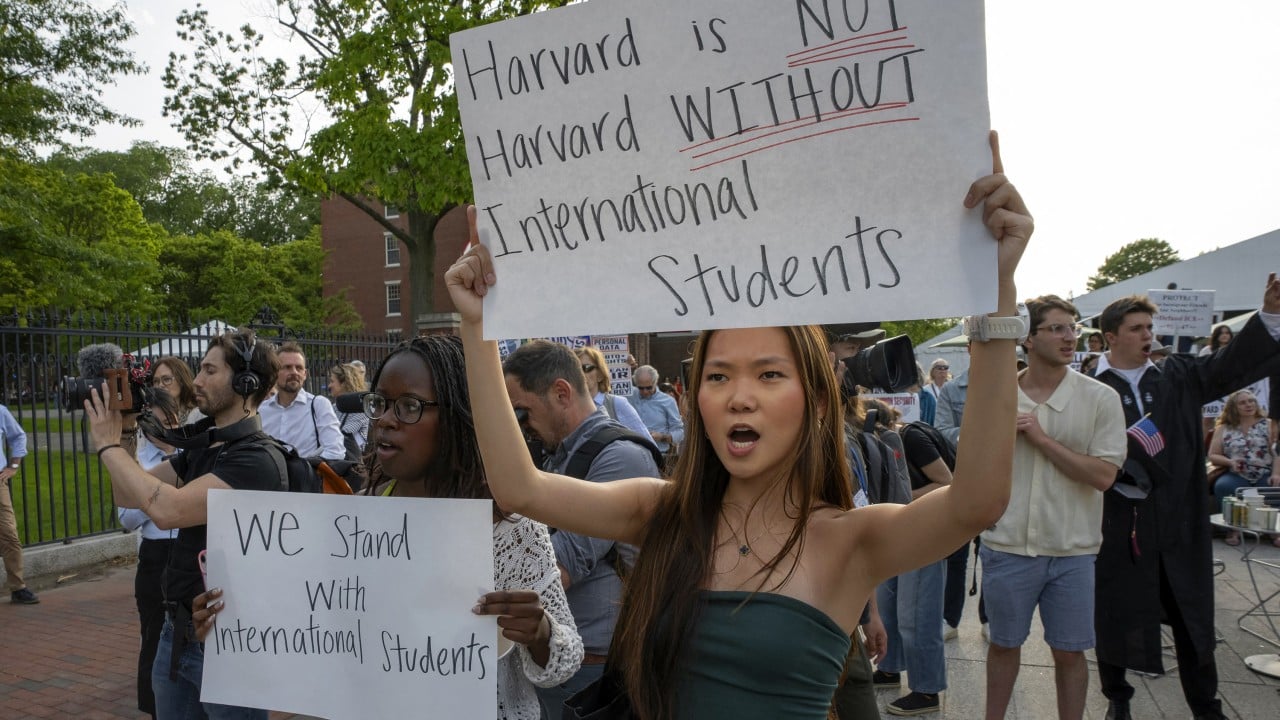
Washington just threw a massive wrench into international education and global journalism. Under the guise of national security, the Department of Homeland Security finalized a rule that obliterates the decades-old "duration of status" system. For years, international students and foreign media could stay in the US as long as their programs or jobs lasted.
Not anymore.
The Trump administration just capped student and cultural exchange visas at a hard four years. Foreign journalists get slashed to 240 days. But the real hammer fell on Chinese nationals. If you're a reporter from mainland China, you now get exactly 90 days before you have to beg for an extension.
Unsurprisingly, Beijing is furious. Chinese Foreign Ministry spokesperson Lin Jian wasted no time warning that China reserves the right to take "reciprocal countermeasures".
If you think this is just a minor bureaucratic policy shift, you're missing the bigger picture. This policy doesn't just target individuals; it actively dismantles America's soft power, disrupts the business models of universities, and invites a dangerous cycle of media censorship that will ultimately leave Western audiences in the dark.
The Math Behind the Visa Crackdown
Let's look at what's actually changing on the ground. The Department of Homeland Security claims it's overwhelmed. The agency noted that more than 1.8 million student visa admissions were recorded in 2024 alone—an 11% jump from the previous year. Throw in half a million exchange visitors and tens of thousands of media workers, and DHS says it can no longer properly monitor everyone.
DHS Secretary Markwayne Mullin argued the new rule closes loopholes that allowed people to stay for decades on student status. So, the government's fix is to impose rigid, arbitrary clocks on everyone.
Here's why the new timelines are a logistical nightmare:
- The 30-Day Post-Grad Grace Period: Previously, international students had 60 days after graduation to secure a job or transition their visa status. The new rule cuts that in half to 30 days. Anyone who has ever navigated the corporate hiring world knows that 30 days is barely enough time to get past a second-round interview, let alone finalize an H-1B sponsorship.
- The Journalist Extension Loop: For Chinese reporters, a 90-day visa means living in a constant state of paperwork. By the time an extension is approved, it's practically time to file the next one.
David J. Bier, the director of immigration studies at the Cato Institute, pointed out the sheer lack of practical logic here, noting that forcing students who spent years in the US to scramble or face immediate deportation shows a fundamental misunderstanding of how real life works.
Why Universities Are Panicking
American higher education relies heavily on international tuition dollars, and Chinese students represent the largest single slice of that pie. Forcing a student into a rigid four-year cap creates massive friction for anyone pursuing a PhD, medical degree, or dual-degree program that naturally stretches past four years.
Graduate students are also explicitly banned from changing their "educational objectives" or transferring to another university without formal federal authorization. If a student realizes their chemistry lab isn't a good fit and wants to switch to data science, they can't just change majors. They have to ask Washington for permission first.
This bureaucratic red tape sends a loud message to global talent: go somewhere else. Universities with smaller endowments are already feeling the pinch of declining international enrollment. By making the US look hostile and unpredictable, the administration is effectively routing the world's brightest minds directly to campuses in Canada, the UK, and Australia.
The Information Blackout
The 90-day cap for Chinese journalists isn't just an administrative headache—it's a direct threat to press freedom. Advocacy groups like Reporters Without Borders and the Committee to Protect Journalists have condemned the policy. They argue that a short, rolling visa window forces reporters to self-censor. If you know your extension depends on the good graces of the administration, you're going to think twice before publishing an investigative piece that ruffles feathers in Washington.
But the domestic impact is only half the problem. Geopolitics is a game of mirrors. When Washington squeezes Chinese state media reporters, Beijing responds by kicking out reporters from the New York Times, The Wall Street Journal, and The Washington Post. We saw this exact script play out during the pandemic when a previous spat over media credentials led to the mass expulsion of American journalists from China.
By choking out Chinese journalists in America, the US is giving Beijing the perfect excuse to completely blind Western newsrooms operating inside China. At a time when understanding China's economic shifts and foreign policy decisions is vital, we're cutting off our own eyes and ears on the ground.
Navigating the New Reality
If you're an international student or an employer who relies on foreign talent, waiting for Congress to overturn this rule isn't a viable strategy. While lawmakers can technically reject federal rules, it almost never happens. The policy takes effect 60 days after publication, meaning the clock is already ticking.
If you are a student, your immediate step should be coordinating with your Designated School Official (DSO) to audit your program timeline. Do not wait until year three to map out your extension paperwork if your degree requires a fifth year.
For corporate recruiters, the 30-day post-grad window means you must alter your university hiring timelines. If you find a brilliant international candidate, the traditional, slow-moving corporate HR process will result in losing them. Interview early, make offers before graduation, and have immigration counsel ready to file paperwork the moment the degree is conferred.
Washington wants to project strength through tighter borders, but the collateral damage here falls squarely on American innovation and the public's right to clear information. Turning global education and journalism into a geopolitical battlefield doesn't make the country safer; it just makes it isolated.