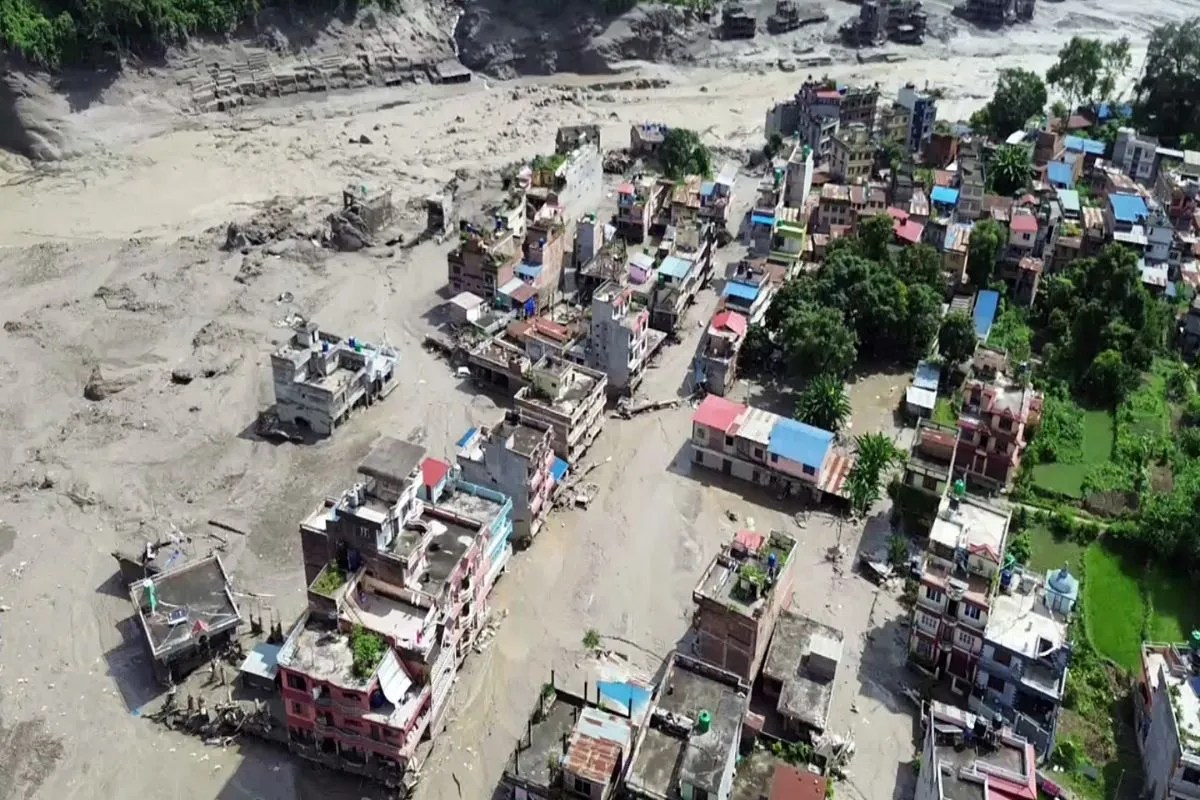
The ground across parts of Nepal has barely stopped trembling from a devastating initial deluge when fresh alarms started sounding along the upper reaches of the Himalayas. If you think the danger passed with Wednesday's flood waves, satellite data and hydrological reports from the border suggest otherwise. A massive blockage on the Lhende Khola on the Tibetan side has created an unstable natural barrier lake, threatening downstream communities along the Bhote Koshi river system with a potential secondary wave.
Understanding what's happening right now requires looking past brief news headlines and digging into the physical realities of high-altitude hydrology. The disaster didn't begin with standard seasonal monsoon rains. Instead, it kicked off due to a massive high-altitude ice and rock collapse near the Nepal-Tibet border. When tons of glacial debris crashed down into the river valley, it choked off the natural water flow, creating a temporary barrier lake that subsequently ruptured, sending a destructive wall of water, mud, and boulders downstream.
Now, a secondary threat has emerged roughly eighteen kilometers up from the Rasuwagadhi border point, where the flow of the Lhende Khola remains obstructed. Satellite imagery points to a growing body of water covering roughly eleven hectares, with millions of cubic meters of water pooling behind a fragile mass of debris. Chinese water resource authorities and Nepal's Department of Hydrology and Meteorology have issued urgent warnings that this pooling water could breach its makeshift banks as inflow rates accelerate.
Living or traveling near these Himalayan river basins means recognizing how quickly environmental conditions can deteriorate. Early warning systems in high-altitude zones face massive structural limitations. When a flash flood originates miles away across rugged terrain, local water-level measurement stations often have only seconds or minutes to react before the surge arrives. That leaves very little margin for error.
Authorities have cast a wide net of caution, placing districts along the Bhote Koshi, Trishuli, and Narayani-Gandak river basins on high alert. Emergency response units, local administrations, and residents in low-lying pockets across Nepal and neighboring northern regions of India have been told to stay far away from river banks.
Protecting yourself or your operations in these vulnerable corridors comes down to a few hard rules. First, ignore rumors on social media, but treat official meteorological bulletins and district-level emergency notices as absolute law. Second, if you're involved in transport, trade, or travel near the Rasuwagadhi border crossing, pull back to higher ground immediately. Do not wait for water levels to visibly rise before moving. Flash floods fueled by high-altitude debris dams move with terrifying speed, leaving zero time for evacuation once the break occurs. Stay clear of the channels, monitor official channels for continuous updates, and prioritize safety over property.